by Maggie Molloy
It’s a new year and there is a new Sound in Seattle—the Sound Ensemble, to be precise.

Founded and directed by conductor Bobby Collins and tuba player Jameson Bratcher, the Sound Ensemble is a new music collective dedicated to performing innovative and transformative classical music concerts that defy traditional concert hall expectations. With a flexible lineup of winds, brass, strings, piano, and wide-ranging percussion, the ensemble crafts performances that are at once thought-provoking and accessible for contemporary classical newcomers and seasoned new music enthusiasts alike.
This Saturday, Jan. 7, marks the second concert in their inaugural season at the Chapel Performance Space at the Good Shepherd Center in Wallingford. Cheekily titled “Life After Y2K,” the concert features a full program of music written after the turn of the 21st century.
First on the program is the world premiere of a brand new chamber orchestra work composed by Sound Ensemble flutist Sarah Bassingthwaighte. Titled Further Letters from the Earth, the piece calls for a whole range of extended techniques and unfamiliar sounds inspired by the world’s most primordial music: the sounds of nature.
Life After Y2K also features new works by local composers Greg Dixon, Sean Osborn, and Marcin Paczkowski, and New York-based composer Daron Hagen’s fiercely mystical Chamber Symphony concludes the evening.
We wanted to hear a bit more about what’s in store for the Sound Ensemble, so we sat down with Bobby Collins, Jameson Bratcher, and Sarah Bassingthwaighte to get an inside scoop:
Second Inversion: What was the inspiration behind starting the Sound Ensemble?
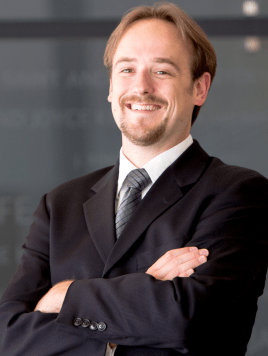 Bobby Collins: In starting the Sound Ensemble, Jameson and I sought to create a flexible ensemble that could morph to fit the needs of our community, both audience and performer.
Our goal is two-fold: firstly, to create an exploratory and welcoming environment in which our audience can experience contemporary classical music and discover their own connections to the music without feeling intimidated by the culture of classical music.
We want to curate a listening experience for the audience that more accurately represents their listening at home through diversity of style, ensemble size, and instrumentation. As someone who loves the classics but has found a home in the music of our time, I work to create in-roads to contemporary music for those who might otherwise be scared away by the infamous term “new music.” By demonstrating connections to pop music and music of earlier times, I believe we can engage a wider range of music appreciators than might otherwise attend “classical” concerts.
Secondly, we work to create an organization that can help our members fulfill their artistic goals. When we recruit performers, we look for highly-skilled and creative musicians who are eager to share their artistry with those around them. As Music Director, I welcome their input about future programming and outreach ideas that will help us connect with the community. If one of our performers has an idea for a concert or particular piece, I will work with them to make it part of our season.
SI: Can you tell us a bit about the Life After Y2K performance and the repertoire you selected?
BC: The programing of Life After Y2K goes to the heart of what the Sound Ensemble is working to accomplish. In our experience of classical music, we often unconsciously think of great composition ending after 1900 or 1950 at the latest, but there is so much beautiful, playful, and profound music being composed to this day.
For Life After Y2K, we chose music that represents the wide range of compositional techniques currently in common use, including premieres by Greg Dixon and Sarah Bassingthwaighte, plus other new works by local composers Sean Osborn and Marcin Paczkowski. We will round the concert out with Daron Hagen’s Chamber Symphony.
The title Life After Y2K is a playful jab at our inclination as performers and audience members to think that musical life practically ended once we reached the 20th century, just as we all thought the world was going to end after Y2K. Thankfully, we are all here to keep enjoying music together.
SI: What makes the Sound Ensemble unique?
Jameson Bratcher: The Sound Ensemble hopes to engage with our audience in a more intimate way than the usual concert experience. Rather than retreating backstage, the musicians hang out in the audience when they are not performing and are readily available to chat. The Sound Ensemble has a refreshing humility to it; the “rules” of music are changing so continually that we don’t have time to be dogmatic. We perform whole-heartedly and passionately, but not with closed minds.
SI: What type of listening experience do you create at Sound Ensemble concerts?
JB: I like to think of our concerts like having a bunch of friends over for a meal. The Sound Ensemble as the host does a lot of prep beforehand and is certainly busy in the kitchen as our guests arrive. When it is time to perform, just as in a great meal, we engage with our guests and we all get to enjoy the fruit of the hard work together. At the Good Shepherd Center the stage is hardly higher than the floor, which diminishes the separation between musician and audience that is felt at most halls.
Audience members can expect to hear some new and unusual things but in a casual atmosphere. Back to our meal, just as you might ask about what ingredients are in a dish or what method of cooking was used, our musicians are available and excited to talk about the music and also learn about what your favorite parts are. We are all hungry for beauty and understanding of the world around us and our concerts are aimed to whet that appetite.
I personally love when younger students attend our concerts as they have no deep-seated expectations of how things “should” go. No one really knows where the future of music is going so we want to discover it for ourselves as a community.
SI: Can you tell us a bit about your piece Further Letters from the Earth?
 Sarah Bassingthwaighte: The inspiration for Further Letters from the Earth is the complex relationship between humans and the natural world since the year 2000. I spend a lot of time in our beautiful mountains, as well as on the water, and the first part of the piece, “Playful,” features some of the sounds that I enjoy so much: splashing water, rain, wind, birds. I use a drone to represent the sense of quiet I experience when I’m out backpacking—which is a little ironic, since it actually is the escape from the drone of everyday electronic noise and traffic that I love.
Then the tension increases in “Heat,” and the sounds of heat, melting, burning, and stress replace the playful sounds. This gradually leads to the third section, “Unleashed,” which is driving and energetic. This section is inspired by the hurricanes, typhoons, earthquakes and so on that have occurred in the last decade and are caused, in part, by humans. This section is the most rhythmically compelling, and the most traditional musically. The last section, titled “After,” represents an uneasy peace with the natural world.
Further Letters from the Earth is a follow-up piece to one that I wrote for the Seattle Percussion Collective in 2011. That group did an amazing job, and a few of the sounds from that piece (and some of the message) made it into this one: a gravel box, (which the percussionist runs in), bed sheets that are torn, and a giant pot of water for splashing sounds.
Overall, the sounds throughout the piece are unusual and otherworldly. I call for exercise bands threaded through the strings of the piano (and operated by the other instrumentalists)—these create an eerie sound that has no attack, that sort of floats above the rest of the music. Each instrument has special capabilities, such as helicopter tonguing in the bassoon, growling in the tuba, or singing while playing the flute. Plus I really enjoyed experimenting with ping pong balls on the strings of the piano—a great sound!
SI: What are you most looking forward to with the Life After Y2K performance, and with the future of the Sound Ensemble?
SB: It is my hope that performing this piece, and listening to it, is actually pretty fun. Each player explores unusual sounds on their instruments, from multiphonics to wind sounds to percussive techniques, and most of the players get up out of their chair at some point to make sound inside the piano (so there’s a bit of a visual element to the piece).
The Sound Ensemble is an exciting and inspiring group for me to work with. Everyone in the group has a sense of adventure as well as technical mastery of their instrument, and the energy is so positive and stimulating. Bobby is a strong, organized, and inspirational leader, and he helps pull together this amazing group of musicians.
And at the concerts, the players mix with the audience at every opportunity to discuss the music and the instruments. I’m hoping that some audience members will be interested in our unusual instruments and techniques, and give us the opportunity to demonstrate.

The Sound Ensemble’s Life After Y2K performance is this Saturday, Jan. 7 at 7 p.m. at the Chapel Performance Space at the Good Shepherd Center in Wallingford. For tickets and additional information, please click here.

 “The Witch” is the 8th vignette in a 13-piece song cycle titled Unremembered from fabulous composer Sarah Kirkland Snider. Aggressive strings and a militant orchestration set the scene for a spooky narrative that takes us into shadowy woods full of subtle horrors. Shara Nova’s growling vocals capture both the beauty and foreboding of this imagistic and vivid score. Snider’s “The Witch” is layered, grisly and intense from start to finish. Highly recommended for listeners of all ages, just maybe not before bedtime. – Rachele Hales
 Starting the new year swamped with work and already behind from the previous year is not ideal, but it is the situation many of us find ourselves in this January. Alarm Will Sound’s version of Aphex Twin’s Mt. Saint Michael is the perfect music for this situation. Perhaps embracing the chaos along with pursuit of self-care
  You could say the 20th century experimental composer and expatriate Conlon Nancarrow was a bit of an introvert. He lived most of his life in isolation, and for decades composed only for player pianos—working alone, by hand, to produce and perfect a massive library of swingin’ blues and boogie-woogie piano rolls, his famous 49 Studies for Player Piano among them.
 I have to confess that I was super biased to love this piece even before I heard it; as a clarinetist, I am a huge fan of the unaccompanied clarinet repertoire, and as a musician, I am huge fan of Lisa Bielawa. Incredible, bizarre, enigmatic works have been written for clarinet alone by composers like Igor Stravinsky, William Bolcom, and Shulamit Ran. As they require one single voice to command the listener’s attention, they are tremendously difficult to compose and perform. Luckily, the clarinet’s huge range provides ample opportunity to create a wide variety of colors and characters, and a bit of extended techniques can help as well. Bielawa’s work presents the performer with a number of different fragments and gives them free reign to decide the order in which they are played, and how many times they are used. The idea behind “What I Did Over Summer Vacation” and the other 14 Synopses (all with six-word titles) is tied to Hemingway’s six-word short story “For sale, baby shoes: never used.” Apparently, Bielawa’s musical fragments each represent a different vacation activity. BMOP’s clarinetist Michael Norsworthy does a lot of trilling and running around the register of the instrument – sounds like he had a busy summer vacation.
 Second Inversion and the


