ALBUM REVIEW: Seattle Symphony “Dutilleux”

by Maggie Molloy

855404005072_SSM1007_Dutilleux_iTunesThe Seattle Symphony is no stranger to contemporary classical—earlier this year they earned a Grammy Award for their breathtaking recording of John Luther Adams’ innovative masterpiece “Become Ocean.” Over the years they have garnered international acclaim for their innovative programming, commissioning of new works, and extensive recording history—and they’re certainly not slowing down anytime soon.

The Seattle Symphony’s latest contemporary classical endeavor is a three-disc, multi-year recording project of all the orchestral works by the late French composer Henri Dutilleux. This August, they are releasing Volume 2 of “Dutilleux,” featuring a studio recording of the violin concerto “L’arbre des songes” (“The Tree of Dreams”) with violinist Augustin Hadelich and gorgeous live performances of “Métaboles” and Symphony No. 2 (“Le double”).

Under the directorship of French conductor Ludovic Morlot, the Symphony brings passionate virtuosity and drama to Dutilleux’s vividly colorful orchestration. In fact, Dutilleux’s refined ear for aural color and texture has led many to characterize him as the principal heir of Debussy and Ravel in the line of influential French composers. His music extends the legacy of these earlier composers while also adding a little more bite; his music’s rhythmic verve, dramatic urgency, and unapologetically frequent use of dissonance show clear ties to Bartók and Stravinsky.

But like the Impressionists, Dutilleux was also very inspired nature. His five-movement “Métaboles,” written in 1964, takes its title from the Greek metabolos, meaning “changeable.” Dutilleux cited the primary inspiration for the piece being the constant flux and ceaseless flow of nature—the ongoing transformations and metamorphoses of organic life.

The piece unfolds in five connected movements which musically imitate these evolutions. Each of the first four movements features a different family of instruments—woodwinds, strings, brass, and percussion—allowing the Symphony to fully showcase its incredible breadth of musical talent. From the straining sonorities of the first movement to the sweet lyricism of the second, from the jazzy brass of the third to the pointillist palpitations of the fourth, the Symphony passes through each transformation seamlessly. The wildly chaotic fifth movement brings the entire orchestra back together in a bold and thunderous finale.

Next on the album is Dutilleux’s 1985 violin concerto “L’arbre des songes” (“The Tree of Dreams”) featuring violinist Augustin Hadelich. Dutilleux strays from the typical three-movement concerto form, instead opting for four movements connected by three interludes. Hadelich flies furiously up and down the fingerboard through each of the four distinct movements, showcasing his stunning technique and beautiful tone.

The first movement is rich with gorgeous, long-breathed melodies that shoot straight up into the stratosphere. The second movement skitters and jitters across restless rhythms before transitioning to the wistful and rhapsodic dream that is the third movement. The piece ends with a wildly theatrical fourth movement that showcases Dutilleux’s brilliant orchestration and bold style. Each of the wide-ranging movements are connected by strikingly imaginative interludes—listen for the third, in which Dutilleux actually composed an episode that is meant to sound as if the orchestra is tuning and warming up!

“All in all,” Dutilleux wrote in a preface to his score, “the piece grows somewhat like a tree, for the constant multiplication and renewal of its branches is the lyrical essence of the tree.”

Evolution is a key theme of Dutilleux’s “Le double” symphony as well. He strayed from the standard symphonic procedure of juxtaposing musical themes, instead creating his symphony from the variation and transformation of short musical ideas. He also made innovative use of the orchestral timbres: within the full ensemble he created a smaller group of 12 instruments—oboe, clarinet, bassoon, trumpet, trombone, timpani, harpsichord, celesta, two violins, viola, and cello—creating in a sense two orchestras, hence the title “Le double.”

Written in 1959, the piece is reminiscent of a modern-day concerto grosso, but unlike the traditionally Baroque form, in “Le double” the smaller ensemble acts as a mirror or ghost of the larger one, creating a fascinatingly complex and richly textured musical panorama.

“I endeavored to avoid the stumbling block of the somewhat archaic form,” Dutilleux said. “The 12 musicians of the smaller orchestra considered separately do not constantly play the role of soloists; it is the mass they form that constitutes the solo element. This mass does not merely confront and dialogue with the larger formation, but at times fuses with, or superimposes itself upon the latter, leaving ample opportunity for polyrhyhthmics and polytonality.”

The Seattle Symphony dances with precision and grace through the dense textures and intertwined solos of the first movement, the delicately colored timbres and haunting lyricism of the second, and finally the convulsive rhythms and fascinating orchestration of the third. The piece ends with a deeply contrasting passage of slowly changing sonorities which spread up and down the orchestra’s pitch range before settling into a serene silence.

And after the full album’s 75 minutes of mesmerizing harmonies, remarkably complex rhythms, and brilliantly colored orchestral textures, that silence sounds beautifully crafted.

A Shared Lesson

by Joshua Roman

Roman_15There’s something about stretching the limits, pushing the boundaries, that turns me on. When it’s a shared experience, the reward is greatly magnified. I recently had the honor of working with young musicians in a setting that kept all of us on our toes. In partnership with my series at Town Hall Seattle, the Seattle Youth Symphony called on some of their lovely players and alumni to join me and a few colleagues acting as mentors for a concert of 20th and 21st century string ensemble music.

It’s important to demonstrate to young musicians that ours is a tradition of innovation and creativity. Classical music is a living, breathing thing, not stuck in the past. The same discipline used to bring a Beethoven Symphony to its peak form can be turned to the task of helping birth a new work, and share a new idea. One of the most fruitful ways of passing along a teaching is to lead by example, and I’m ever so grateful to my friends from the Seattle Symphony and other orchestras who played in our ensemble as mentors. Sitting alongside their future colleagues, working together to prepare a very challenging program and present it in a few short days was not an easy task. Through Town Hall Seattle’s partnership with Second Inversion and KING FM, we also gave these aspiring musicians a chance to participate in a video recording session, the results of which are now viewable online.

The program: the world premiere of Running Theme by Timo Andres, which was commissioned by Town Hall. Then, John AdamsShaker Loops; and lastly, Béla Bartók’s Divertimento. The schedule: 6 rehearsals including the recording session and the dress rehearsal, from a Wednesday to a Saturday. A chance for the young musicians to have a glimpse of the condensed and intensive experience professional musicians are often faced with.

The diversity of style within the program was integral to its success in creating a powerful experience for the students. The Divertimento is a fantastically fun work that retains much of Bartok’s folk influence, while delving into more chromatic and idiosyncratic ideas in the slow movement. It’s a difficult work, and there are many solos, another opportunity for our mentors to lead by example. Shaker Loops has long been one of my favorite works, and to me represents minimalism at its most exciting and transportive. To see musicians who had never played this kind of music learn to embrace and inhabit a new way of feeling musical structure and phrasing over a few short days was very cool.

Perhaps the best part was the way they rose to the challenge of putting together Running Theme, an entirely new piece of music for which they could not sit and study previous recordings or hear in concert before taking on the responsibility of presenting it to the world for the first time. Every piece in the canon had a birth, every composer in history has counted on musicians and audiences to give them a shot at leading into the unknown. The evolution of one’s feelings as moments begin to be recognized, form really takes shape, and the conviction borne of seeing both the big picture and feeling the importance of subtlety is a beautiful process, one that for me is so integral to how we then share our hearts with the audience.

What’s the value of this experience? Hopefully, for the protégés, a glimpse of what it takes to be a professional musician. To learn to be prepared at rehearsals, on the ball and focused regardless of the familiarity of the music. To be inspired by the level of the mentors, and of course hear the little tips that come along the way. And to be empowered by the notion that they can be a part of the amazing lineage of classical music and its creation, by working directly with an exciting – and in this case young – composer.

For the mentors, to see the growth and feel the energy of youth, and be challenged to lead by example. Also, to be reminded of the wonder they felt sitting in such a group for the first time when they were that age, and the confidence that develops as something unknown becomes a familiar tool in now capable hands.

For me, the incredible joy of seeing the chemistry between musicians, mentor and protégé. And the honor of leading the team as we work together to the best of our ability to convey something that will transport an audience to a place where the impossible becomes possible, and our inner selves are given a common voice.

MUSIC ON ROTATION:
Fiona Apple – Tidal (album)
Timo Andres – Shy and Mighty (album)
Olivier Messiaen – Fête des Belles Eaux – performed by Ensemble d’Ondes de Montreal (2008)

ALBUM REVIEW: Some Places Are Forever Afternoon by Wayne Horvitz

by Maggie Molloy

Horvitz_byRobinLaanenan

“When you start to write, you carry to the page one of two attitudes, though you may not be aware of it,” wrote the Pacific Northwest poet Richard Hugo. “One is that all music must conform to the truth. The other, that all truth must conform to music.”

Hugo was a proponent of the latter. The quote comes from “The Triggering Town,” his 1979 book of lectures and essays on poetics. Throughout the essays he advocates an approach to poetry based on “triggering” subjects and words. According to Hugo, triggering subjects help the poet enter into the realm of the imagination—they enable the poet to explore, to seek the unknown, and to create without limitation.

This unique notion of triggering was one of the things that inspired Seattle-based composer and pianist Wayne Horvitz to explore Hugo’s poetry through music. His latest album, titled “Some Places Are Forever Afternoon,” is a collection of 12 instrumental compositions inspired by Hugo poems. There is one major difference, though: Horvitz uses no words.

“This was something entirely new for me, to accept this concept that it’s not the poem at all—there are no words in it,” Horvitz said of the project. “But it is some kind of reincarnation musically of the poem.”

The album features a musical amalgamation of two of Horvitz’s quartets: the jazz troupe Sweeter than the Day and the contemporary classical chamber group the Gravitas Quartet. On the album, Horvitz plays piano, organ, and electronics alongside cornetist Ron Miles, bassoonist Sara Schoenbeck, cellist Peggy Lee, guitarist Tim Young, bassist Keith Lowe, and drummer Eric Eagle.

Each piece unfolds slowly and patiently, much like Hugo’s poetry. Borrowing from jazz, classical, electronic, and improvised musical styles, Horvitz evokes the frayed landscapes, the rural stillness, and the compressed images present in much of Hugo’s work.

“[With this record] I was a little more willing to let the ideas develop in a certain way, to let each phrase lead quietly to the next phrase—because he does that a lot in his poems, they unfold slowly in a really beautiful way,” Horvitz said.

Each piece gets its title from one of the lines in a corresponding Hugo poem—whichever line triggered Horvitz. As for the album’s title track, “Some places are forever afternoon” is a line from a poem which appears at the end of the album.

“Words are the same as music,” Horvitz said. “You love a phrase and it gets stuck in your head and you want to hear it again. That’s the way I felt about that line—I just wanted to hear it over and over again.”

From the melancholy calm of “Money or a story” to the moody dissonance and despondency of “you drink until you are mayor,” each piece comes from a different place, a different story, a different poem.

Many of Hugo’s poems were inspired by small towns and odd places he visited—seemingly dreary dwellings where he found a sparkle of inspiration. Horvitz’s “those who remain are the worst” embodies a slow and contemplative atmosphere with soft, soulful glimmers of hope shining through the cornet and guitar solos. “Nothing dies as slowly as a scene” is brimming with Americana nostalgia, at times even evoking the groove of a jukebox before the scene burns out.

“I like to imagine what people’s lives are like,” Horvitz said of his compositional process. “And that’s exactly what Hugo did. He’d go into a town and hang out in a café or a bar, and he wasn’t concerned with his poetry being accurate, he was just concerned with where his imagination went. But he took inspiration from the people he saw and the places he went—and I think that’s something we have in common.”

Horvitz’s “in some other home” brings to mind a rustic, rural landscape—a quiet and unassuming gem of a town. A gently glimmering piano riff opens this charming and sweet little tune before the piece leisurely wanders through a string of solos.

The longest piece on the album is “The car that brought you here still runs,” a piece inspired by Hugo’s most famous poem, “Degrees of Gray in Philipsburg.” The piece drifts through a delicate opening chorale before shifting through free jazz improvisations and chamber music stylings. Listen for the charming piano and cello theme about halfway through—Horvitz counts it as one of the loveliest moments on the album.

But there are plenty of memorable moments on this record; each piece is brimming with nostalgia for both real and imagined landscapes. Although according to Hugo, the music is more important than the reality anyway.

“Besides,” Hugo wrote, “If you feel truth must conform to music, those of us who find life bewildering and who don’t know what things mean, but love the sounds of words enough to fight through draft after draft of a poem, can go on writing—try to stop us.”

Grant Awarded!

New Music USA collage

We are over the moon! Second Inversion was one of 54 awardees in the most recent round of New Music USA funding! This generous support helped fund our music videos from January 1-April 18, including The WesterliesThird Coast Percussion & Joshua RomanMatt Haimovitz & Christopher O’RileyAshley Bathgate from Bang on a Can All-Stars, Jherek BischoffSeattle SymphonyDeviant SeptetTurtle Island Quartet, and Simple Measures.

Stay tuned for more great video projects and of course, new and unusual music from all corners of the classical genre, streaming 24/7.

Second Inversion was supported by New Music USA. To follow the project as it unfolds, visit the project page.


Staff & Community Picks: July 29

A weekly rundown of the music our staff and listeners are loving lately! Are you interested in contributing some thoughts on your favorite new music albums? Drop us a line!


the_little_death_album_cover_1-1Religion + hormones + hip hop beats = nihilist pop opera.  The Little Death Vol. 1 is boppy, fun & sentimental.  Strong vocals from Mellissa Hughes and Matt Marks’ twisted take on the traditional “boy meets girl” story make this one of my favorite CDs in our music library.  I dare you not to dance to “I Don’t Have Any Fun.” – by Rachele Hales


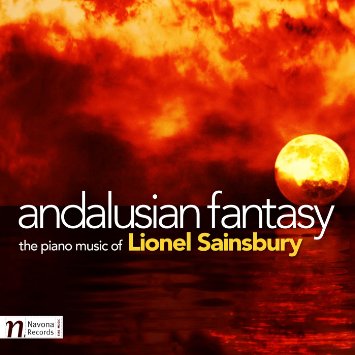
71GJwJ+HBtL._SY355_If you enjoy Spanish and Latin American music, you’ll find a lot to love in “Andalusian Fantasy,” a collection of pieces written and performed by pianist Lionel Sainsbury. The compositions embrace the darker, more romantic side of traditional Latin music, incorporating a pleasantly crunchy chord just seldom enough to keep things melodic overall. Imagine if tango, Debussy, and Gershwin all met in one album, and you’ll get a sense for Sainsbury’s music. – by Jill Kimball


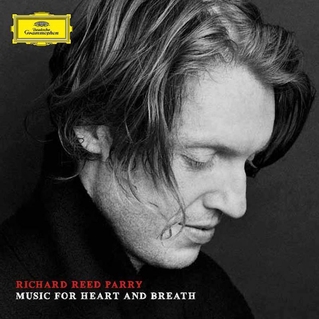
homepage_large.e22fb394I’ve been a huge Arcade Fire fan for years, and I was completely awestruck when this album came out.  The whole idea behind the works on this album – letting the human body dictate the tempi, is one of the most revolutionary concepts I’ve encountered in new music.  I can’t really think of many albums that represent Second Inversion SO WELL – the composer/genre/artist crossover, the musicians on the album – yMusic, Kronos Quartet, Nadia Sirota, Nico Muhly, Aaron and Bryce Dessner – all are revolutionaries in the new music world and helping to create music that completely breaks the mold of classical, despite the instruments they’re playing. – by Maggie Stapleton