
ALBUM REVIEW: Young American Inventions by Steven Ricks

by Maggie Molloy

America has always been a cultural melting pot, and throughout the 20th century composers grappled with the idea of what it means to make specifically American music.

71OzgbhOv8L._SY355_American composers like Charles Ives were inspired by Protestant hymns, patriotic songs, and parlor music, while others like George Gershwin were influenced by jazz and popular music. Henry Cowell and John Cage were inspired by all sounds, opening themselves up to “the whole world of music” (as Cowell famously stated). Still others like Steve Reich and Philip Glass preferred to strip down the vast musical possibilities and instead focus on observing the internal processes of the music through repetition, phasing, and gradual transformation.

So in a melting pot filled with such rich and diverse musical influences, how can any composer make truly American music? Composer Steven Ricks explores precisely this question in his new album, “Young American Inventions.”

The album combines several colorful strains of the American compositional tradition into a mashup of music as innovative, ambitious, and diverse as America itself. His musical influences range from modernism and minimalism to found sounds and strip mall culture. Each of the eight pieces on the 14-track album explores our conflicted relationship with technological affect and mainstream media, inviting the listener to consider fragments of our musical culture divorced from their original context.

Fittingly, the album begins with a mixed-up, mashed-up electroacoustic piece titled “Ten Short Musical Thoughts.” The musical thoughts are intentionally scatterbrained—Ricks presents a series of texturally diverse episodes garishly narrated by an automated voice with an untraceable accent. The result is a witty, mottled musical collage that transports the listener through a number of distinctive (and often unidentifiable) timbres and textures.

The piece is followed by the title track, a piano and electronics piece named after English composer Steve Martland’s “American Invention” and David Bowie’s “Young Americans.” From its pointillistic piano plinks and its echoing electronic waves to its straightforward drum samples and long stretches of near-silence, the piece is a conscious reflection on mashup culture. And in true 21st century fashion, Ricks also includes a “Young American Inventions REMIX” later on in the album, recycling fragments of his original composition to create an entirely new work.

Next on the album is “Extended Play,” named after the “EP” records made popular by punk and indie bands in the 1970s. (EPs are longer than singles, but shorter than full studio albums.) The piece’s four distinct movements mimic the common four-track EP format while making musical nods to the funky jazz of Steely Dan, the circling piano motives of Steve Reich, and even the ethereal surrealism of Jefferson Airplane. The work is scored for the unusual instrumentation of saxophone, guitar, piano, percussion, and boom box. Yes, boom box.

The electroacoustic “Ossifying (Keeping us from…)” takes quite a different approach to music: inspired by John Cage’s philosophy, the piece aims to irritate, causing productive aural discomfort in order to “keep us from ossifying.” The piece is an eclectic amalgamation of sonic disturbances, ranging from bowed cardboard to stereophonic static to echoes in an indoor water park.

The only vocal work on the album, titled “Geometria Situs,” is a jumbled, jittery piece inspired by two photographs by Edward Burtynsky of highway and strip mall culture. Scored for mezzo-soprano, flute, recorders, trumpet, and piano, the piece is a poetic rumination on our banal existence in this crowded, crazy world.

The piece is followed by “Sounded along dove dōve,” an electroacoustic composition in which Ricks digitally manipulates the recorded speech of a poem written by Martin Corless-Smith. Fragments of speech flatten out into hums or are transformed into stutters and flurries, evoking some of the poem’s haunting maritime imagery.

Ricks again switches gears for “Waves/Particles,” a three-movement exploration of energy and matter through music. The piece transports the listener through a musical illustration of atomic structure, fully charged and ever-changing.

The album comes to a close with “Stilling,” a programmatic tone poem of sorts for solo piano. Based on the poem of the same name by Donald Revell, the piece is a surprisingly intimate ending to an intentionally chaotic album.

Within just over an hour, the album skitters and jitters through the history of recorded sound, exploring the furthest reaches of American sonic culture. And in the end, Ricks abandons the electronics, the remixes, the recordings, and even the boom boxes, and instead writes for a single instrument—translucent, ethereal, and unplugged.

CONCERT SPOTLIGHT: June 11-13

by Maggie Molloy 

This week’s concert calendar spans the musical gamut from viola da gamba to Morton Feldman!

Morton Feldman’s “For John Cage”

Morton Feldman

In true New York fashion, composer Morton Feldman first met John Cage at a New York Philharmonic performance of Anton Webern’s Symphony, Op. 21. Disturbed by the audience’s disrespectful reaction to Webern’s work, the two had each individually stepped out into the lobby, where they began talking.

Both composers went on to become pioneers of indeterminate music—and perhaps more importantly, close friends. The two influenced each other over the course of their careers, and in 1997 Feldman wrote “For John Cage,” a 75-minute piece for violin and piano.

This week the University of Washington’s contemporary music ensemble, Inverted Space, is concluding its Long Piece Fest with a performance of this epic (and lengthy) work. Violinist Luke Fitzpatrick and pianist Brooks Tran will breathe life into this unique piece, which is meant to be performed at a barely audible volume. The piece combines Feldman’s expansive harmonies with Cage’s interest in silence and stasis, thus delicately exploring poetic dissonance in a state of prolonged stillness.

The performance is this Thursday, June 11 at 7:30 p.m. at the Chapel Performance Space at the Good Shepherd Center in Wallingford.


Joshua Roman Performs Gregg Kallor’s Chamber Music

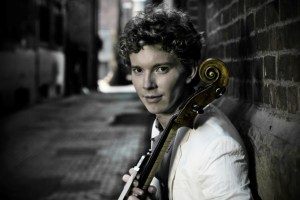
joshua-roman-683x455Cellist Joshua Roman is well-known in the Seattle classical music community—after all, he became the youngest principal player in Seattle Symphony history at just 22 years old. But his reputation as a gifted and innovative musician expands far beyond just his Seattle achievements. He has performed as a soloist around the world, and this week we have unique opportunity to hear him perform in one of the major classical music centers of America: New York City.

Miranda Cuckson by Beowulf SheehanRoman will be performing a dazzlingly lyrical piece titled “Undercurrent” by composer and pianist Gregg Kallor, the inaugural composer-in-residence at SubCulture in NYC. The performance also features world premieres of two new pieces written by Kallor, performed by violinist Miranda Cuckson, mezzo-soprano Adriana Zabala, and baritone Matthew Worth.

gregg-kallor2-683x1026Kallor’s works blend classical and jazz traditions with a distinctly New York flavor. But since it’s a long flight to NYC, we thought we’d bring the music to you: Second Inversion is going to record the live performance and broadcast it later on our website for your listening pleasure.

The performance is this Thursday, June 11 at 7:30 p.m. at SubCulture in New York. We’ll keep you updated on the details for our Second Inversion broadcast!

Colleen and Hanna Benn

lisbon-st-george-church-23-may-2013-far-out-and-beyond-3-600x400

Violas da gamba may have been popular instruments during the Baroque period, but for the past several centuries the violin family has dominated the classical music scene—which is why one French musician is giving the age-old viola da gamba a new-age makeover.

Colleen is the alias of Cécile Schott, a French musician who reimagines the possibilities of acoustic instruments by taking them out of their usual contexts and pushing them into new musical territory. Over the course of her five albums, she has created a wide-ranging repertoire of compositions spanning from meditative and mysterious to playful and percussive. This weekend, she’s coming to Seattle to present a performance which merges old and new music traditions: viola da gamba with live electronic processing and singing.

Seattle composer and vocalist Hanna Benn will open the show with a rare solo set.

soldoutnew

The performance is this Saturday, June 13 at 8 p.m. at the Chapel Performance Space at the Good Shepherd Center in Wallingford.  UPDATE: This concert is sold out! Please refer to Colleen‘s website and Hanna‘s SoundCloud for future performance info.


ALBUM REVIEW: “Music for Wood and Strings” by Bryce Dessner + So Percussion

by Maggie Molloy

So Percussion 0125So Percussion 0131 copy

To say that guitarist and composer Bryce Dessner thinks outside the box would be a bit of an understatement. After all, why limit yourself to the dimensions of a typical hollow-bodied acoustic string instrument when you can create your very own amplified hammered dulcimer?


Though perhaps best known as the guitarist for the indie rock band the National, Dessner is also a distinguished composer and innovator in his own right. He recently released “Music for Wood and Strings,” a 36-minute piece scored for amplified, dulcimer-like “Chordsticks” and performed by the experimental percussion quartet Sō Percussion. Dessner designed the instruments with the help of instrument builder Aron Sanchez of Buke and Gase, a Brooklyn-based musical duo.

Each Chordstick resembles two electric guitar necks laid out next to each other in opposite directions, though the instrument is played more like a hammered dulcimer. Each instrument has eight double-course strings and is tuned to a pair of chords. Using sticks or violin bows, the percussionists can sound either of the two harmonies, play individual strings, melodies, drones, and tremolos, or create a wide range of percussive sounds. The Chordsticks vary in pitch range, and the group is anchored by a bass instrument that can play fretted chromatic lines, as well as by occasional, muted interjections from a bass drum and woodblocks.

Commissioned by Carnegie Hall, “Music for Wood and Strings” seamlessly combines elements of post-minimalism, avant-garde, and folk musical influences. The effect is mesmerizing. Dessner creates a remarkably rich range of musical timbres within a circling, post-minimalist framework, crafting a beautiful and kaleidoscopic sound world through his dense contrapuntal rhythms and constantly shifting musical textures.

“I thought the instruments are so beautiful, I’m going to make [the piece] a really rich sound world—very consonant, also inspired by American folk songs, which are based on these open chords and open tunings,” Dessner said. “So the piece itself has that sound about it, where it’s played by these percussionists and the rhythm is incredibly difficult and layered and precise, but then it’s done with harmonies that are really sweet, actually.”

The work is charming and sincere, employing the perfect balance of silence and sound to create a fully captivating sonic meditation. Dessner’s colorful musical palette features hocketed rhythms, mirrored inversions, drones, tremolos, rhythmic repetition, contrapuntal textures, and a primarily tonal musical language, creating a vivid and distinctive sound that pulls the listener in from start to finish.

Writing the piece for four of the most renowned percussionists in contemporary classical music also doesn’t hurt. Sō Percussion’s perfect blend of rhythmic precision and organic expressivity brings the score to life, immersing the listener in an unforgettable soundscape filled with sweet strings and shimmering rhythms.

Who knew you could craft such an entrancing and intricate sound world from just a few pieces of wood and some strings?

NEW VIDEOS: Turtle Island Quartet

We’re excited to release two brand new videos with the Turtle Island Quartet, recorded here in our studios!

“Crossover” is a term that is thrown around a lot with genre-mixing music. TIQ violinist David Balakrishnan explained their take on “crossover” in a recent Seattle Times article.  It’s brilliant:

“Crossover is often associated with classical musicians trying to do something they don’t know how to do.  In our case, we were formed for the express purpose of doing what we’ve wanted to do since childhood: play improvised music and jazz using our classical training as string players. What we’ve ended up doing isn’t crossover, because how can you cross over when you’re already there?

Our request?  Keep on keepin’ on!

LIVE CONCERT SPOTLIGHT: June 5-7

by Maggie Molloy

This week’s concert calendar expands beyond music and into poetry, mythology, philosophy, and more!

formal-pillars1-4x3-600x400

Friction Quartet and Christian Pincock

Only a small fraction of classical musicians play with the ferocity and force of the San Francisco-based Friction Quartet. The group is committed to expanding the string quartet repertoire and audience for adventurous new music through collaborations with composers and artists of all disciplines.

This weekend, you can see them perform a works by local Seattle composers, including world premiere performances of Roger Briggs’ “Friction,” Tom Baker’s“Invisible Cities,” Nathan Campbell’s “Treescape” and a new work by John Teske.  The program also features John Adams’ dynamic and dramatic String Quartet No. 1.

Trombonist and composer Christian Pincock will open the performance, combining digital music and a DIY aesthetic to present solo works scored for trombone and computer—all while using homemade controllers and software for live control of sound processing.

The performance is this Friday, June 5 at 8 p.m. at the Chapel Performance Space at the Good Shepherd Center in Wallingford.

Kate Soper and Seattle Modern Orchestra Present “Sound Me Out”

SOPER-photo-by-Richard-BurbridgeThe story of Orpheus and Eurydice is an ancient Greek legend—Orpheus, with a voice so beautiful he could charm all living things, descends into Hades in a fruitless attempt to bring his dead bride Eurydice back to life. And while the myth has been recreated again and again in opera and music for centuries, this weekend you have the chance to experience a not-so-classical setting of this classic tale.

For its season finale, Seattle Modern Orchestra is presenting two works for soprano and ensemble by American composer and vocalist Kate Soper, including a world premiere of a new ensemble version of her piece “now is forever: I. Orpheus and Eurydice.” Through a combination of music, drama, rhetoric, and fearless expressivity, the piece explores a discrete moment in the story when Orpheus and Eurydice first meet.

Soper and Seattle Modern Orchestra will also perform the Seattle premiere of her passionate and poignant piece “Door” for soprano, flute, saxophone, electric guitar, and accordion. The program also features two more Seattle premieres: Italian composer Fausto Romitelli’s philosophical “Blood on the floor, Painting 1986” and Georg Friedrich Haas’s virtuosic “Monodie” for 18 instruments.

The performance is this Saturday, June 6 at 8 p.m. at the Chapel Performance Space at the Good Shepherd Center in Wallingford. A pre-concert presentation will begin at 7:30 p.m.

EKSTASIA: Pursuing Ecstasy and the Search for the Divine

ekstasia-web-banner

“In Heaven a spirit doth dwell, whose heart-strings are a lute” wrote Edgar Allan Poe in an 1831 poem. That spirit is Israfel, the Muslim archangel of song. But you don’t have to leave Seattle to hear his heavenly music—next weekend the Esoterics are uniting with Skyros String Quartet to present vivid choral settings of “Israfel” and other divine poems.

The Esoterics and Skyros will be performing composer Tarik O’Regan’s “The Ecstasies Above,” an unearthly setting of Poe’s “Israfel” filled with daring modal harmonies and driving rhythms. They will also present Charlie Leftridge’s poignant “Of Seasons I Have Sung.” The a cappella portion of the program includes Aaron Jay Kernis’ ethereal “Ecstatic Meditations” and Eric Banks’ evocative “I am Among Them.”

Performances are Friday, June 5 at 8 p.m. at St. Stephen’s Episcopal Church in Seattle, Saturday, June 6 at 2 p.m. at First Christian Church in Portland, and Sunday, June 7 at 3 p.m. at Holy Rosary Catholic Church in West Seattle.