
by Maggie Molloy

Second Inversion and the Live Music Project create a monthly calendar featuring contemporary classical, cross-genre, and experimental performances in Seattle, the Eastside, Tacoma, and places in between!

Keep an eye out for our flyer in concert programs and coffee shops around town. Feel free to download, print, and distribute it yourself! If you’d like to be included on this list, submit your event to the Live Music Project at least 6 weeks prior to the event and tag it with “new music.”
November 2018 New Music Flyer
Wayward Music Series
Concerts of contemporary composition, free improvisation, electroacoustic music, and sonic experiments. This month: spatial explorations, dramatic incantations, sonic meditations, and a whole lot of drummers.
Various days, 7:30/8pm, Good Shepherd Chapel | $5-$15
Creativity in Hard Times: The Federal Music Project of the 1930s
Pianist Leslie Amper presents a multimedia lecture-recital telling the story of President Roosevelt’s Arts Initiative. The performance includes images, historic recordings, and piano performances of music by William Grant Still, Ernest Bloch, Henry Cowell, Roger Sessions, Ruth Crawford, and Aaron Copland.
Thurs, 11/1, 7:30pm, UW Brechemin Auditorium | FREE
Seattle Modern Orchestra: The Invisible
The depths of the unknown are explored in this program of sobering works ranging from George Crumb’s Eleven Echoes of Autumn to Chinary Ung’s Still Life After Death. Music by Yigit Kolat and Rebecca Saunders complete the program.
Thurs, 11/1, 8pm, Good Shepherd Chapel | $10-$25
Pacific Northwest Ballet: All Premiere
Haunting sounds from Dustin Hamman, King Creosote & Jon Hopkins, Ólafur Arnalds, and Nils Frahm form the basis of Silent Ghost, a new PNB premiere with choreography by Alejandro Cerrudo. It’s presented alongside performances featuring the music of Michael Giacchino, Haydn, Beethoven, and Schubert.
11/2-11/11, Various times, McCaw Hall | $37-$189

Hanna Benn. Photo by Mallory Talty.
Seattle Collaborative Orchestra: Sankofa
In the Twi language of Ghana, ‘Sankofa’ translates to “Go back and get it.” It’s also the title of Hanna Benn’s musical meditation on the ways in which our heritage shapes our future. Seattle Collaborative Orchestra performs the piece alongside world premieres by Northwest composers Julian Garvue and Makenna Carrico.
Fri, 11/2, 7:30pm, Roosevelt High School Theatre | $10-$20
Sæunn Thorsteinsdóttir with the UW Symphony
Schelomo (Hebraic Rhapsody) was the final work in Ernest Bloch’s “Jewish Cycle,” a series of compositions exploring his musical and religious identity. The fiercely lyrical cello solo, performed here by Sæunn Thorsteinsdóttir, was envisioned as the incarnation of King Solomon, with the orchestra representing the world around him. Music of Hindemith and Brahms complete the program.
Fri, 11/2, 7:30pm, Meany Theater | $10-$15

Cellist Sæunn Thorsteinsdóttir.
Music of Remembrance: 20th Birthday Celebration
For the past two decades, Music of Remembrance has honored victims of the Holocaust through music. In this special anniversary performance, they are joined by guests from Spectrum Dance Theater and the Northwest Boy Choir for an evening of opera, dance, choral, and chamber works.
Sun, 11/4, 4pm, Nordstrom Recital Hall | $55
Cornish Presents: Gamelan Pacifica
The sacred echoes of gongs, chimes, and wide-ranging percussion make up the traditional gamelan ensembles of Indonesia. Gamelan Pacifica honors and expands upon that history with a unique blend of traditional and contemporary musical forms.
Sun, 11/4, 7pm, PONCHO Concert Hall | FREE
Bremerton Symphony Orchestra: From the Silver Screen
Sci-fi fans rejoice! This concert of classical music from the movies features a triad of pieces from 2001: A Space Odyssey, including György Ligeti’s haunting Lux Aeterna, Johann Strauss’s The Blue Danube, and the opening of Richard Strauss’s Thus Spoke Zarathustra. Plus, music from The Godfather, ET, and more!
Sat, 11/10, 7:30pm, Bremerton Performing Arts Center | $10-$28
Meany Center Presents: Brooklyn Rider
A string quartet for the 21st century, Brooklyn Rider explores the healing properties of music in this concert of brand commissions from four of today’s top composers (all of whom happen to be women): Reena Esmail, Gabriela Lena Frank, Matana Roberts, and Caroline Shaw.
Tues, 11/13, 7:30pm, Meany Hall | $40-$48

Brooklyn Rider.

Black Violin.
STG Presents: Black Violin
It’s not everyday you see a hip-hop duo playing classical instruments—but violinist Kev Marcus and violist Wil B. are redefining both genres. They bring their unique brand of “classical boom” to the Paramount Theatre.
Thurs, 11/15, 7:30pm, Paramount Theatre | $31-$61
Philharmonia Northwest: Seattle Sounds
The sounds of the Pacific Northwest take center stage in this concert of music by contemporary Seattle composers. Hear William Bolcom’s jazzy Seattle Slew Suite, Ken Benshoof’s lyrical Concerto for Cello and String Orchestra, and the world premiere of Sarah Bassingthwaighte’s enchanting Sleeping in the Forest.
Sun, 11/18, 2:30pm, St. Stephen’s Episcopal Church (Seattle) | $15-$20
UW Percussion Ensemble: Percussion Music as Revolution
The visceral energy and powerful sounds of percussion ensemble are on full display in the U.S. premiere of Yiheng Yvonne Wu’s Violent Tender, performed alongside Edgard Varèse’s groundbreaking Ionisation and Philip Schuessler’s The Glass Abattoir for speaking percussion ensemble, among other works.
Fri, 11/30, 7:30pm, Meany Theater | $10
Emerald City Music: The Daedalus Quartet
Beethoven’s infamous Kreutzer Sonata (and the dramatic tale behind it) form the basis of this concert exploring how the Kreutzer theme inspired future composers. String quartets by Leoš Janáček, Sergei Taneyev, and Tchaikovsky are performed alongside a quartet arrangement of Beethoven’s original Kreutzer Sonata.
Fri, 11/30, 8pm, 415 Westlake | $45


 As an avid hiker, I couldn’t resist Vincent Raikhel’s Cirques. A reflection of the glacial geological formations so often encountered in the Cascade Mountains, this piece immediately transported me to a faraway corner of the imposing mountain range in Seattle’s backyard. In the context of the Spooky Music Marathon, this piece made me think of the creeping claustrophobia that one might feel in a cirque, especially as the sun sets, as it does so quickly in the mountains. It’s curious, how something so open to the sky, so large and static, can suddenly feel as if it is closing in on you in the waning light… –
  It just wouldn’t be a Halloween marathon without a spooky clown—and Arnold Schoenberg’s Pierrot Lunaire is nothing if not haunting. A masterpiece of melodrama, the 35-minute work tells the chilling tale of a moonstruck clown and his descent into madness (a powerful metaphor for the modern alienated artist). The spooky story comes alive through three groups of seven poems (a result of Schoenberg’s peculiar obsession with numerology), each one recited using Sprechstimme: an expressionist vocal technique that hovers eerily between song and speech. Combine this with Schoenberg’s free atonality and macabre storytelling, and it’s enough to transport you to into an intoxicating moonlight. –
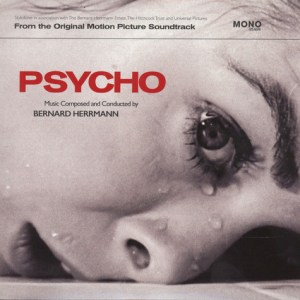 This piece is so timelessly cool and undeniably scary. Like John Williams’ Star Wars score borrowed the dark side of the Force from the dojo-dominating “Mars, the Bringer of War” in Holst’s The Planets, Herrmann borrows the creepy suspenseful stringiness of Norman Bates from the dancing skeletons in Camille Saint-Saens’ Danse Macabre (and maybe from Mussorgsky’s Bald Mountain witches).