New Music Grammy Nominees 2016

We are thrilled that seven of our Albums of the Week received 2016 Grammy nominations!  Here’s a recap of these awesome new music releases:

Seattle Symphony’s Dutilleux: Métaboles; L’Arbre Des Songes; Symphony No. 2, ‘Le Double’  (Best Orchestral Performance, Best Classical Instrumental Solo, & Engineered Album, Classical)

855404005072_SSM1007_Dutilleux_iTunes

“The Seattle Symphony dances with precision and grace through the dense textures and intertwined solos of the first movement, the delicately colored timbres and haunting lyricism of the second, and finally the convulsive rhythms and fascinating orchestration of the third.” – Maggie Molloy (on Symphony No.2)


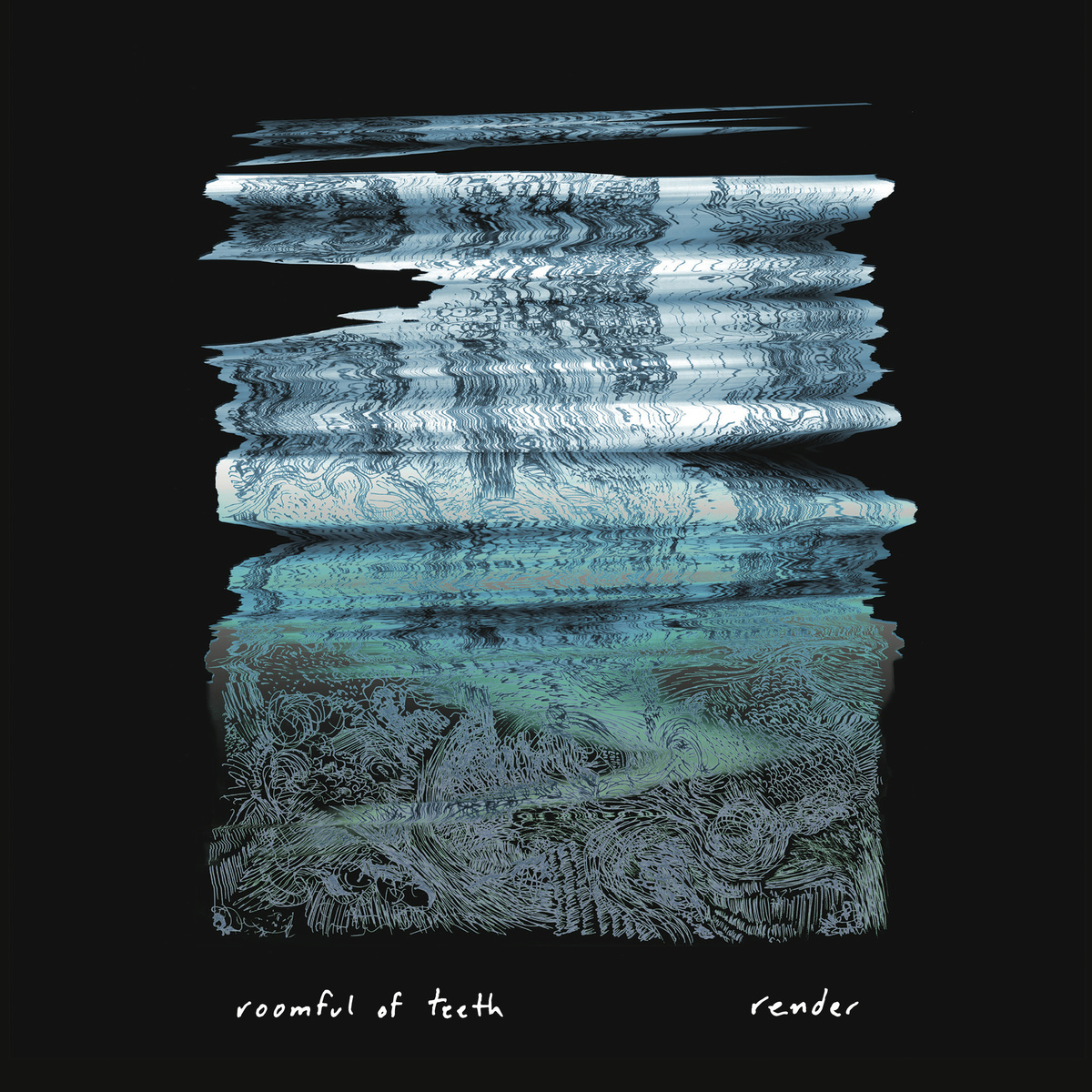
Roomful of Teeth’s Render (Best Chamber Music/Small Ensemble Performance)

a4015364653_10

“The last piece on the album is the title track, also composed by Brad Wells, which was inspired by David Eagleman’s short story ‘Search.’ The ensemble’s voices ebb and flow in soft waves, gracefully gliding in and out of near-silence to create a serene and mystical sound world.” – Maggie Molloy


eighth blackbird’s Filament (Best Chamber Music/Small Ensemble Performance)

filament

“It goes without saying that the performance quality on this disc is top-notch, no less fine than any of eighth blackbird’s past albums. You’re luxuriously free to focus solely on the compositions themselves, all of which are worth contemplating at length. In an age when most albums’ connecting filaments are somewhere between ultrathin and nonexistent, it’s a pleasure to listen to a set of pieces with such close ties.” – Jill Kimball

Julia Wolfe’s Anthracite Fields (Best Contemporary Classical Composition)

anthracite_fields

“Anthracite Fields is not an easy listen, but I don’t think Julia Wolfe wanted it to be. We Americans tend to gloss over unpleasant parts of our history when, in order to make peace with our past, we’d do better to confront it. In telling these miners’ stories through vivid music, Wolfe has brought an important but often ignored chapter of our country’s story to the forefront…. You’ll learn a little about life in late-1800s Pennsylvania, you’ll contemplate energy usage and workers’ rights, and if you’re like me, you’ll have a good cry.” – Jill Kimball


Anna Thorvaldsdottir’s In the Light of Air (Producer of the Year, Classical – Dan Merceruio)

41p3B2lPqhL

“As a composer, Thorvaldsdottir is known for creating large sonic structures that reveal a vast variety of sustained sound materials—and both of these pieces are a perfect example of her visionary style. Throughout the album, her subtle timbral nuances, poetic textures, and lyrical gestures immerse the listener in austere, somber, and utterly spellbinding soundscapes.” – Maggie Molloy


ZOFO’s ZOFO Plays Terry Riley (Producer of the Year, Classical – Dan Merceruio)

81lmJzLayhL._SY355_

“‘ZOFO Plays Terry Riley’ proves that the musical magic of piano extends far beyond a pianist’s 10 fingers. Through their exploration of Riley’s works, Zimmermann and Nakagoshi paint a vivid and colorful picture of the immense textural, timbral, and stylistic possibilities of piano duets. After all, it’s amazing what a pianist can do with an extra hand or two.” – Maggie Molloy


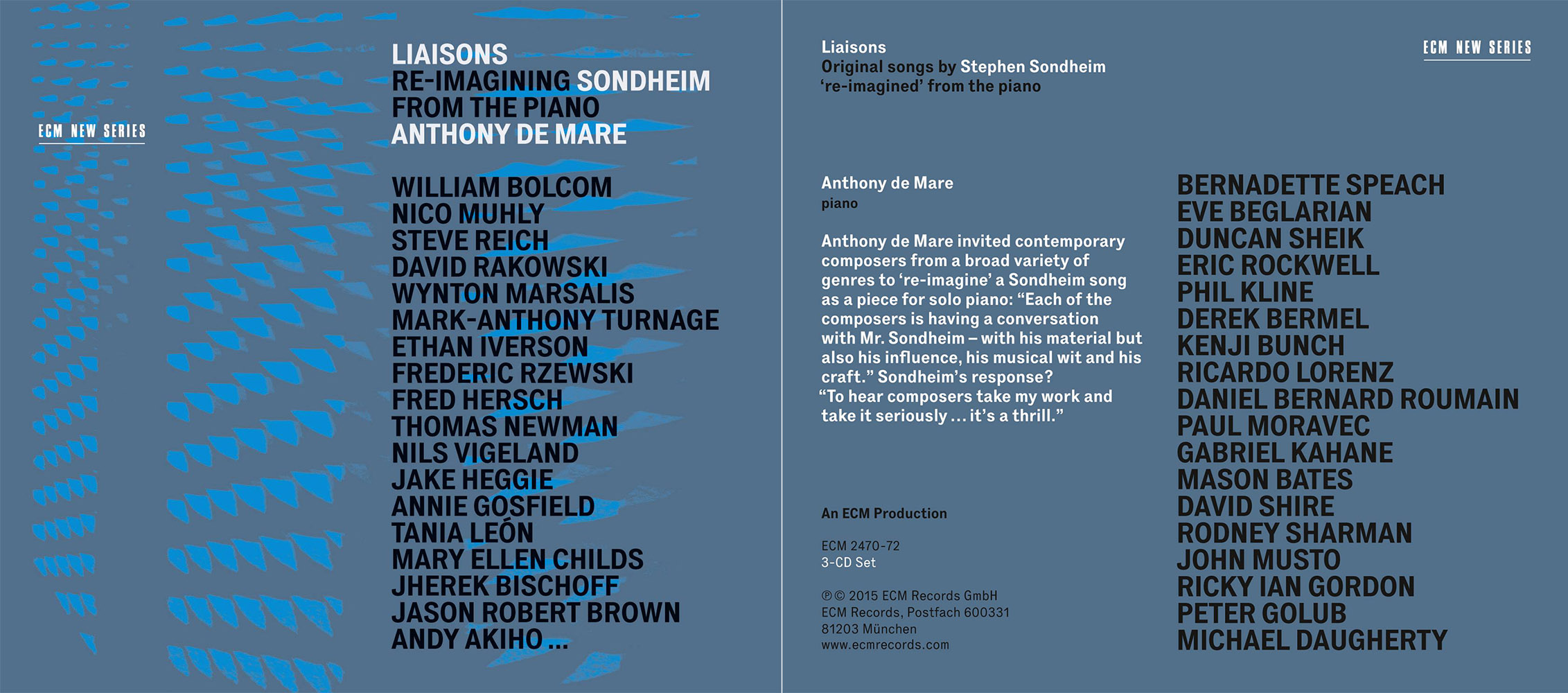
Anythony de Mare’s Liaisons – Reimagining Sondheim from the Piano (Producer of the Year, Classical – Judith Sherman)

1444893095_cover“Having just a vision’s no solution, everything depends on execution.  Anthony de Mare’s work on this project has, bit by bit and piece by piece, amounted to a thoroughly enjoyable collection that sounds like thirty-six composers having a musical conversation with America’s preeminent composer of musical theatre.  Liaisons offers up something familiar, something peculiar, something for everyone.” – Rachele Hales

ALBUM REVIEW: Shiksa by Lara St. John

by Rachele Hales

wisconsin2_hirez

photo credit: Martin Kennedy

Lara St. John is well-known and well-praised for her catalog of previous releases, much of which have focused on Bach. Her latest release, Shiksa, is a collection of music from Eastern Europe with a focus on the Jewish Diaspora. It seems like an odd choice for the Canadian artist until one learns that she’s been collecting music from Armenia, Russia, Serbia, Greece, Palestine, etc since her first trip to Hungary as an 11-year-old girl. The selections on this album have imbued her spirit from a young age and her joy for the culture is obvious on this recording.

Shiksa (the Yiddish for a female gentile) kicks off with “Czardashian Rhapsody,” a mashup of Liszt’s “Hungarian Rhapsody No. 2” and Monti’s “Czardas.” St. John commissioned the eyes and ears of Martin Kennedy for the new interpretation and writes, “He made the violin part for “Czardashian Rhapsody” as preposterous as possible, expecting me to nix nearly everything. Instead, I kept it all, added some, and asked him to make the piano part even more prominent, because… Matt Herskowitz.” Kennedy’s creation is an energetic showpiece for both performers and a delight to listen to. In fact, St. John and Kennedy stopped by our studios to record this piece live!

Rhapsody soon turns into a downright brawl in track 2’s “Bar Fight (Variaiuni),” which was heavily inspired by a traditional Romanian hammer dulcimer tune. St. John and Herskowitz set their version in the Old West. At St. John’s website you’ll find a great music video of this piece wherein the feud turns into a free-for-all and even Herskowitz gets a punch in… while still playing the piano!

Quentin Tarantino fans may recognize Yuri Boguinia’s arrangement of “Misirlouri,” a traditional Jewish folk song that was covered in Pulp Fiction. Boguinia has built his version around the scale of the tune rather than the tune itself, but none of the distinctive vigor present in most Jewish folk music was lost in this interpretation.

Perhaps the most recognizable piece on the album, Herskowitz himself folded the traditional Jewish folk song “Hava Nagila” (Let Us Rejoice) inside his own original melody to create “Nagilara.” The original pokes its head out, but the high-octane arrangement wrapped around it will addle your mind in the best of ways, leaving you dizzy and giddy from all the rejoicing going in in these 8 minutes. Herskowitz writes, “The familiarity of the melody opened up the prospect of new ways of delivering it. I decided to create the effect of a conversation by dividing the tune between the two instruments, with one completing the melodic phrase started by the other – a game of ‘follow the tune.’”

This reviewer’s favorite track is “Oltenian Hora,” a traditional piece loosely based on a song St. John heard on an old scratchy record in Romania. It sounds largely improvised and my hand to heaven she’s hitting notes on that violin that only dogs can hear. It’s zippy, animated, and packed to the hilt with “improvised Romanian violin tricks, twists and turns.” With respect to Herskowitz, it’s St. John’s fierce shredding of the violin that makes this piece a standout.

St. John has carried some of these melodies with her from childhood, others she picked up from barflies and scratchy records heard in her travels. Classical with a bit of gypsy flair, Shiksa has St. John and Herskowitz delivering heritage music with passion, furor, and spectacular extemporization.

SNEAK PEEK AUDIO LEAK: Loop 2.4.3’s Time-Machine_music

by Maggie Stapleton

Second Inversion presents new and unusual music from all corners of the classical genre… and we mean NEW. Sneak Peek Audio Leak is your chance to stream fresh sounds and brand new music of note with insights from our team and the artists.

LOOP243_Kozumplik_(c)Jamal_Ahmed

Loop 2.4.3 has been producing percussion and electronics-driven music since 2004. Founder Thomas Kozumplik guides the ensemble, varying in size from solo to octet (but most often 2-3 performers), through his vision of exploration and freedom. The group’s name comes from a place near and dear to Thomas’ heart – Powers Hall 243 at Central Michigan University, where he and a “Loop,” of close friends spent countless hours making music together.

Time-Machine_music is an entirely solo composition and performance venture for Thomas. This 6-track collection has juxtaposing acoustic and electronic textures in every pore and fiber of the 36 minutes. Thomas’ electro-acoustic percussion set-up includes Chinese tom-toms, Indian bells, crotales, log drums, tambourim, bass drum, percussion sample pad, tape echo, and delay. The fun doesn’t stop there – he also plays marimba, vibraphone, Thai gongs, piano, Wurlitzer, steel drum, kalimba, and uses vocal samples.

(this album is no longer available for streaming via Second Inversion, but you can visit Music Starts from Silence to order your copy!)

As the name of the album implies, time is of the essence, and explores manipulations of time through a cathartic journey. Thomas goes on to elaborate that Time-Machine_music, “explores the vast and tiny spaces, the worm holes, or the connections between points in time, and even singular points of time where an overwhelming multitude of thoughts, ideas, and emotions occur simultaneously. It acknowledges that brilliance and sagacity may come from a place that is entangled with conflict, controversy, emotional instability, and the surreal, hyperreal, hallucinatory receptors of the mind. It explores the illusion of the individual trapped in the phalanx of society, moving forward, backward and sideways all at once. It is an overwhelming cry for life and freedom, an escape from a world trapped under its own weight.”

Loop 2.4.3’s sound is rooted in classical chamber music, but with psychedelic rock, jazz, and improvisation influences, stemming from Thomas’ upbringing playing in garage bands, metal bands, thrash bands, and jazz bands in Michigan. I might describe it as minimalism meets heavy metal meets techno DJ beats. “Art music” is how Thomas best describes it, and goes on to say, “It’s definitely longer listening than pop music. It takes time to build, but then you get the reward. I suggest you turn it up really f*ing loud (laughing).” Agreed! The opening track, “Out to War,” is anything but a subtle introduction. The opening throaty, dark, repetitive “Mind Control” chanting hearkens back to acidic rock from the past, but soon breaks free to ambient piano, steel drums, and textures that are beautiful, calming, and serene.

The use of human voice is eerie and captivating throughout the disc. Events in Thomas’ life inspired the lyrics, but tie into broader topics. Stay tuned for the full scores with lyrics which will soon be available from MusicStartsFromSilence.com. Voice sampling opens “MK Ultra,” unfolding in a long form to cascading, pattering, sounds of the marimba that interweaves with the voice and flow back into the keyboard percussion.  The title track, clocking in at a significant length of 12 minutes, was the genesis for the body of work and holds the foundation of instrumentation, sounds, and approach. The voice is presented differently here, in single-word, echoing samples from this poem by Thom:

“Stories of power, control, love, and enlightenment are a constant in the history of man. Our idea of TIME is shaped by personal and cultural events.

The history of man floats in the ether of deep SPACE. We must venture there, to learn the secrets of our elders.”

While much of the material in this work has a rather dark quality, “Moving Finger of Time” has a lighter feel to it – more straight-ahead in form and with a bit of humour. The final track in the collection, ironically called “Prelude (for Sophia)” brings the distortion of time full circle. The dedication to Sophia means something to Thomas, like much of the other music here “is open for immersive experience and interpretation.”

Ultimately, I was curious about Thomas’ goal with Time-Machine_music. His response? “I’m not sure it’s about a specific accomplishment. The need to create and express things is most important. I suppose I hope to share it with people. Maybe the biggest accomplishment would be keeping my sanity by spending time working through things and being absorbed in the music. I hope that people will listen to it and know that it’s okay to feel things…to confront the darkness but also to see the beauty. Sometimes the world makes you want to scream… and sometimes maybe you should.”

Whether you scream, cry, laugh, it’s always better out than in. Go forth and express!

Diary: How to Read John Cage – Part VI

by Maggie Molloy

This post is part of a series on John Cages Diary: How to Improve the World (You Will Only Make Matters Worse). For earlier installments of the series, please visit: Introduction, Part I, Part II, Part III, Part IV, and Part V.

John Cage

Since its invention in the early 18th century, the piano has been the cornerstone of the Western classical music tradition. It has been the conduit for the musical masterpieces of Bach, Beethoven, Chopin, Liszt, Rachmaninoff, and countless other composers. It has been the staple instrument in all studies of Western music theory, the standard instrument for accompanying soloists, and the shimmering star of recital stages around the globe.

The depth and breadth of classical piano repertoire is astounding. As an instrument, it has garnered a reputation as one of the most beautiful and most perfect modes of human expression—and John Cage threw a wrench in it. Literally.

In 1940 Cage invented the prepared piano: a grand piano that has had its sound altered by placing everyday objects such as screws, bolts, and pieces of rubber on or between the strings.

His creation shocked and intrigued audiences around the world. To place everyday objects inside a grand piano seemed almost sacrilegious—or at the very least, iconoclastic.

But what he created was a new type of beauty. What he created was an entire percussion orchestra from just a single instrument.

Prepared PIano

“There are two kinds of music that interest me now,” Cage says in Part VI of his “Diary: How to Improve the World (You Will Only Make Matters Worse).” “One is music I can perform alone. Other’s music that everyone (audience too) performs together.”

And while the notion of a prepared piano may seem unconventional, eccentric, or even extravagant to the Cage critics among us, he actually created this musical contraption in response to a very genuine need: while working as a composer and accompanist at Seattle’s own Cornish College of the Arts, he was commissioned to write music for a dance by Syvilla Fort. Presented with the challenge of writing dance music for a small stage with no room for a percussion group, he simply—well, improvised.

Cage wrote extensively for percussion because, as he himself admitted: “I certainly had no feeling for harmony.” And in a way, I guess he didn’t have much feeling for melody either.

“When I was in the sixth grade, I signed up for the Glee Club,” he says drearily into my left headphone. “They said they’d test my voice. After doing that, they told me I didn’t have one.” His voice meanders over into my right headphone: “Now there’re more and more of us, we find one another more’n’more interesting. We’re amazed, when there’re so many of us, that each one of us is unique, different from all the others.”

Perhaps Cage wasn’t a very good musician in the traditional sense—but that’s precisely what enabled him to explore music in new and nontraditional ways. It’s what allowed him to push the boundaries and open new doors to what music could be and how everyone, not just the classically-trained professionals, could be a part of it.

“To raise language’s temperature we not only remove syntax,” he says slowly, “We give each letter undivided attention, setting it in unique face and size; to read becomes the verb to sing.”

Cage_Diary.jpgMaybe that’s what inspired the colorful collage of different typefaces that constitute the entire diary. The language takes on a physical as well as an aural presence—conveying the music of the words through the visual variances between them.

“Ancient Chinese was free of syntax,” Cage says blandly. “Words floated in no-mind space. With the passing of centuries, fixed relations between words became increasingly established. The history of Chinese language resembles that of a human body that, aging, becomes arthritic.”

When you stop and think about it, music and syntax are really quite similar: both are about arranging sounds to create pleasant, balanced, or meaningful statements. But these guidelines and rules limit us; they hinder our creativity, make us stiff and boring. After all, it was the infinite possibilities of the unpleasant, the imbalanced, and the unintentional that most inspired Cage.

“As we were walking along, she smiled and said, ‘You’re never bored, are you,’” Cage recalls softly. “(Boredom dropped when we dropped our interest in climaxes. Traffic’s never twice the same. We stay awake and listen or we go to sleep and dream.)”

At times, it’s difficult to tell when Cage is awake and when he’s dreaming. Throughout his diary he’ll shift quite abruptly from a serious discussion of technoanarchism to a whimsical analysis of racial politics, then drop off the edge of reality altogether with a humorous story or a surrealist musing.

“When can we get together?” Cage asks plainly. “‘It’s hard to say: I’m going out of town tomorrow and I’ll be back sometime today.’”

The notion of time as a social construct is yet another interesting notion throughout Cage’s music and philosophical meanderings.

Last summer I studied music composition at the Institut de Recherche et Coordination Acoustique/Musique in Paris, and on my first day our guide took us on a tour of the entire institute. The most fascinating room was the anechoic chamber: a room designed to absorb all reflections of sound, allowing for complete and total silence. They’d only let us stay inside a few minutes at a time, since the silence gets to people.

“John Cage used to spend hours in here,” the guide told me in a charming French accent. “But that’s not really legal.”

I left Paris enlightened.

“The outside walls of buildings in Paris are used for transmitting ideas,” Cage says. “Rue de Vaugirard, I read: La culture est l’inversion de l’humanité.”

Anechoic Chamber

Go to the next installment: Diary: How to Read John Cage – Part VII

Gratitude

by Joshua Roman

20151128_174440

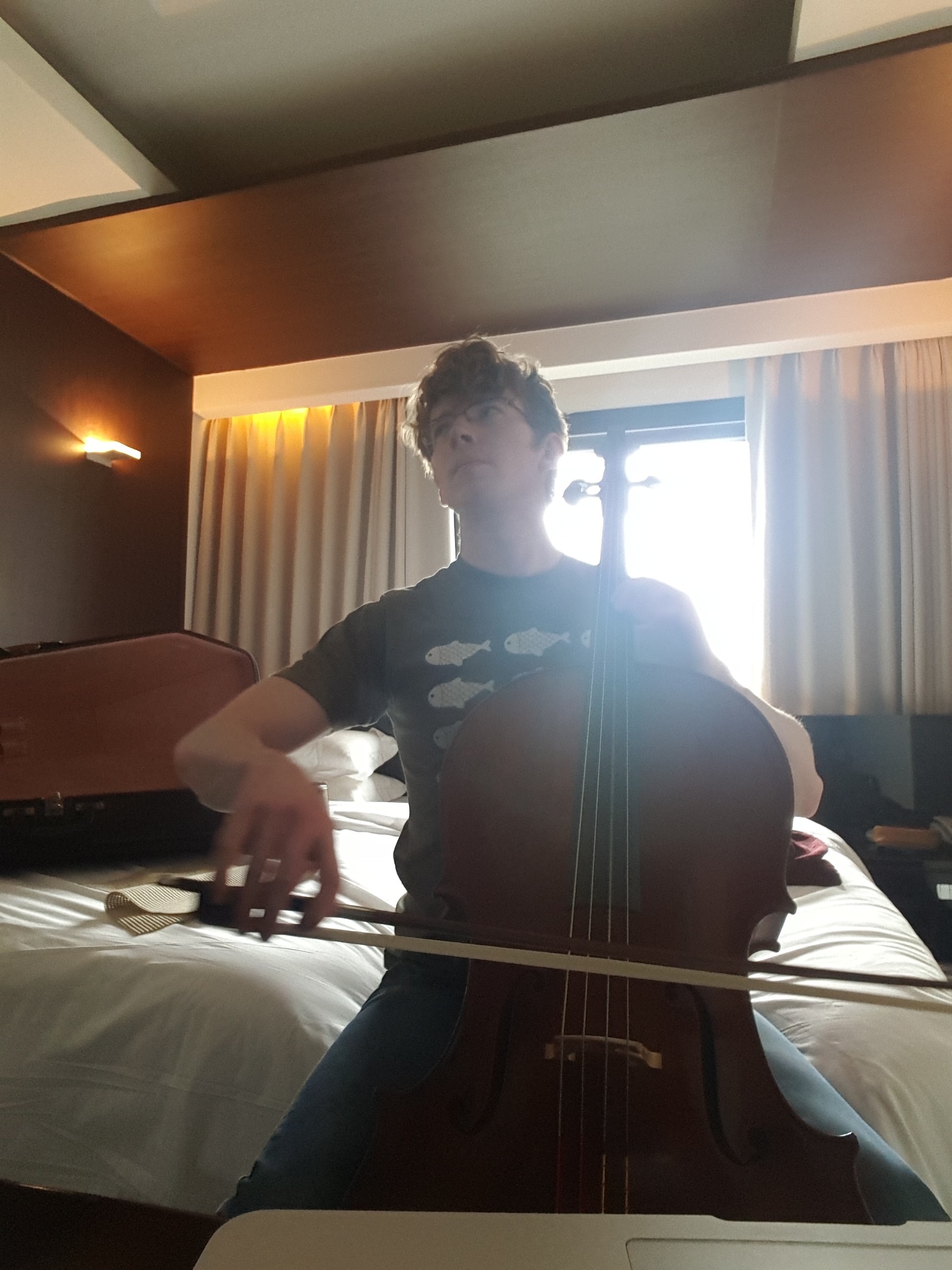
I write this as I sit in a very comfortable business/first seat on a flight from Asia back home to New York City, reflecting on my visit to Seoul. One of my close friends had his wedding there, and I was fortunate enough to be free and able to be with him and his new wife for this important occasion. We spent some amazing time together in the city, and I got to play at his wedding, on a cello made by his father. The flight upgrade is happily a result of my frequent flier status, which makes a big difference on such trips.
20151128_151112

Music has a powerful effect in the world. It’s all around us every day, whether we choose it or not. We use music during gatherings of all kinds to create a unified spirit or deepen bonds, music pervades the other forms of entertainment to enhance desired emotional effects, and we have special occasions (concerts) where music is the centerpiece. Music is not only about community, these days most people have their own  collection of music that they can tap into depending on their mood or activity. You can take this even further through music therapy, and other forms of healing both mental and emotional. It’s also used to influence us to purchase certain products, to attract us to a location or entice us to stay longer – even sometimes to drive us away.

I listen to a lot of music. Often, I listen in a kind of work capacity – finding new artists and composers, researching styles and genres, programming concerts, checking out recommendations, etc. Of course, it doesn’t usually feel like work, I love listening to music. I also use music as a way to relax, focus, become energized, and have a kind of spiritual experience. There have been occasions when the power of music has transcended anything I could have said or done, often when I’m listening, and sometimes as a performer as well. I get to work through thoughts and feelings in a way that feels even more direct than words. Most recently I was able to do this on a large scale through the writing of my cello concerto. In the past there have been instances where I’ve turned to music when alone to help me face dark thoughts, and find a safe release valve.

How does this relate to gratitude? The role of music in our lives is undeniably present, and can manifest in any number of ways. I’m so incredibly grateful that my life is very connected to music every day. There are so many wonderful people in my life who I know through music making. Obviously this includes my musician friends, but it goes far beyond that – people who support what we do, audience members who have become close friends, and connections through communities like TED that have come about because of the cello. The breadth of connections in my life that stem from music is overwhelming, and in some instances I believe the depth goes beyond what is possible without this abstract yet binding force. Because I make my living through music, I’m also grateful for being able to eat (that’s a big one), to live in New York, and to travel throughout the world (I’ve played on six continents so far).

The list of reasons to be grateful for music in my life could go on and on, and very quickly I begin to feel responsibility to give back. Strictly artistically speaking, I take this very seriously. It’s one of the reasons I’ve become so passionate about new music, and dedicated to encouraging unique musical voices. Music can be so powerful, so relevant, so meaningful, but I don’t think it is ever more so than when a musician is able to reach deep within and bring something personal to the table. Hopefully I can share this passion through the quality of my performances, the content of my programming, the musicians and other artists with whom I share the stage, the music that I write, and other platforms including this blog. I can also strive to give back on a personal level to those around me, and use the resources that have come my way through music to do things like fly to Korea to be there for my friend on his wedding day.

It’s been a big few years, I’ve added a lot of artistic endeavors to my plate. At times it’s been confusing, but I’m beginning to gain clarity and focus. Now is the time for me to show my gratitude by honing in on the path in front of me and committing to developing a kind of rhythm and consistency with the projects I take on.

How are you grateful for music in your life? How are you inspired to give back? Please share your stories in the comment section below, whether they’re specific moments or general practices.

Currently listening to…
Seattle Symphony: Become Ocean
Ayub Ogada: En Mana Kuoyo
Cleveland Orchestra/Boulez: Rite of Spring