ALBUM OF THE WEEK: Ryan Streber’s “Concentric”

By Maggie Molloy

Ryan Streber

Math and music have always been intertwined. In fact, numbers pervade nearly every aspect of music—form, rhythm, meter, even intervals. But while mathematical studies such as arithmetic and algebra have often been linked with music, few composers have explored the relationship of music to geometry.

New York-based composer and audio engineer Ryan Streber is changing that.

In Streber’s new album, he experiments with a unique geometrical concept as it relates to music: concentricity. The album, titled “Concentric,” explores ideas of shape and symmetry through sound.

“The intimation through musical time of such a non-temporal idea as concentricity is something that fascinates me, as is the way in which a piece can simultaneously tell a linear narrative while still invoking a cyclical or center-oriented continuity,” Streber said. “In their own ways, all of the works on this album engage in this interplay.”

[Buy the album here!]

Each piece is inspired in some way by notions of concentricity, whether through symmetrical musical forms, experimentation with visual and spatial orientation (both in performance and in the stereo field), or the permutational patterns of pitch and rhythm structures used.

Streber studied composition with Milton Babbitt at Julliard, as evidenced in the modernist and experimental aspects of his work. However, he avoids characterizing his music as belonging to any particular aesthetic school, instead focusing on exploring his own musical voice by creating compositions which engage the listener in multiple ways.

Streber’s commitment to new and innovative music is further exemplified in his recording studio, Oktaven Audio. He is the engineer and owner of the studio, which specializes in classical, jazz, and acoustic music recording. In fact, Streber recorded, edited, mixed, and mastered “Concentric” himself at Oktaven.

He also enlisted the help of a few local friends in order to bring his musical vision to life. These include his close colleagues and collaborators, the New York-based ensembles counter)induction, Line C3 Percussion Quartet, and musicians of ACME and ICE, all of whom are featured as performers on the album.

The album begins with Streber’s single-movement String Quartet performed by counter)induction. The piece begins with snarling string melodies creating a dramatic and restless musical atmosphere. This tension eventually gives way to a slow and intimate middle section, which features a delicate violin melody flowing sweetly over a variety of quasi-improvised string backdrops. The music then returns to the drama and tension of the beginning, thus framing the middle section and creating a concentric musical form.

Concentricity takes on both a physical and visual form in “Cold Pastoral,” a much more ambient and translucent piece performed by Line C3 Percussion Quartet.  The piece is performed with all four musicians oriented symmetrically around a small collection of shared instruments. Each note lingers in the air long after it is played, expanding outward from the concentric circle in a series of widening sound waves.

Streber switches gears in “Compassinges,” where he explores the unique instrumentation of electric guitar, violin, viola, cello, percussion, and voice. The piece features a short song setting of A. R. Ammons’ poem, “Love Song (I).” The vocal part is an ethereal melody drifting in and out of the musical forefront, often hiding just behind the electroacoustic accompaniment. Short melodic motifs from each instrument encircle the delicate vocal part, creating a constantly shifting musical texture.

Streber’s three-movement “Dust Shelter” explores the rich timbral and textural possibilities of flute, viola, and cello. The first and third movements are an enchanting ebb and flow of different musical textures, with angular and aggressive motifs building in intensity and then flowing back to soft and peaceful melodies. The second movement features a gorgeously expressive viola cadenza, thus creating a delicate, intimate central movement framed by two bold and dynamic movements.

Streber’s “Concentric” succeeds in exploring a wide circumference of musical ideas and forms, but at its center, the album showcases his true commitment to following his own creative voice and expanding the boundaries of his musical language.

ALBUM OF THE WEEK: Improvisations for Theremin and Piano

by Maggie Molloy

Ku_CarolinaEyck_Bild2

The theremin is not just for eerie sci-fi film soundtracks anymore—theremin prodigy Carolina Eyck is proving that the instrument once restricted to flying spaceships and intergalactic sound effects could just maybe have a wider range than we thought.

Eyck studied theremin from a young age with one of history’s most influential thereminists, Lydia Kavina. By the time she was 14, Eyck had developed her own technique, which she later published at age 17 in a book titled “The Art of Playing the Theremin.”

Now one of the world’s foremost theremin virtuosi, Eyck has performed and taught workshops around the world, and has collaborated with many prominent artists in both classical and contemporary musical settings.

In her latest project, she collaborated with pianist Christopher Tarnow to create an album of improvised theremin and piano pieces which push the boundaries of this electronic instrument beyond simply outer space.


The result is a new type of otherworldly sound—one that is haunting and ethereal, dark but unmistakably sincere.

The album, titled “Improvisations for Theremin and Piano,” combines primarily classical harmonies and counterpoint with the spontaneity and freedom of more avant-garde and experimental musical genres.

Though the two Leipzig-based musicians had originally considered recording an album of through-composed classical music, after discussing repertoire with their producer Allen Farmelo the three decided to create a fully improvised album.

“I was craving a more daring and collaborative approach to working together, one that would allow the studio to become a site of mutual creation rather than just documentation,” said Farmelo, who produced, recorded, mixed, and mastered the album. Farmelo is the founder and director of Butterscotch Records, the label on which the album was released.

In accordance with this egalitarian spirit, the musicians decided not to edit any of the material on the record. Instead, each of the pieces appears on the album just as it was performed in the studio.

“On this record what you hear is exactly what was played, and in my opinion the absence of editing lends these performances an organic vulnerability that is not always heard from meticulous virtuosos,” Farmelo said. “With vulnerability comes depth as we sense something slightly uncertain moving out on the horizon beyond mastery. I wouldn’t trade that depth for any amount of perceived competency, and I consider it one of this record’s most potent qualities.”

In order to create a sense of focus for each of the pieces, Farmelo wrote short phrases on dozens of sheets of paper and gave them to Eyck and Tarnow. Each phrase provided a general image or free-associative idea from which the musicians then created an improvised piece. The eight pieces which made it onto the album get their titles from the phrases that inspired each of them.

For instance, “Earth and Sky” features Tarnow performing as the earth and Eyck as the sky. Her theremin whispers shrilly above Tarnow’s rumbling and echoing bass chords, creating an austere but entrancing musical texture.

The musicians switch to a fuller sound for “Somber Waking Up,” which features a repeated melodic theremin motif weaving in and out of a softly pedaled piano backdrop.

“A Whale in Love” takes a more thematic approach, with the theremin’s tone as large and lethargic as a whale floating slowly through Tarnow’s intermittent harmonic waves and glistening melodic bubbles.

“Quiet Snowfall” features vivid musical imagery as well. Tarnow’s piano melodies sparkle softly above Eyck’s ambient, icy theremin backdrop, reminiscent of delicate snowflakes twinkling on a foggy winter night.

The timbre changes again for “Deep in the Earth,” in which Eyck’s theremin growls and rumbles as though it is drilling deep into the ground, the piano echoing its descent with its ominous intermittent chords.

The album ends with the unforgettable “Haunted Ballerina.” Tarnow sets the stage with jingling piano motif that repeats itself over and over like an eerie, broken music box. His haunting piano motifs dance with Eyck’s ghostly, low-pitched theremin melodies to create a lingering sense of darkness that lasts long after the final notes have been played.

With its remarkably wide range of musical timbres and textures, “Improvisations for Theremin and Piano” proves that the theremin is capable of much more than just cheesy sci-fi sound effects. It showcases the instrument as a genuinely heartfelt and expressive musical instrument, and in doing so, it pushes the theremin into truly uncharted territory.

Only a few days left!

BlogDec30

Procrastinators’ alert! We’re almost done, but have just a few days left in our power2give campaign! We want to bring you more new music on-demand in 2015 and now is your time to step up and show your support so we can take full advantage of the matching dollar opportunity offered by ArtsFund. Donate here!

power2give/PugetSound is a regional arts crowd funding platform presented by ArtsFund.

ALBUM OF THE WEEK: Bill Seaman and John Supko’s “s_traits”

by Maggie Molloy

sFuYQlHnjCWkbkPZ0ZlLN6gZwuGSmE-STxxFahgo9qINWuFUtqCFaMpOjud0xHq2eXbXn5aaY2TqQx9Ea_XWrg

In a world where you are constantly being bombarded by new styles of computer music, it can be tricky to get your bearings. Electro, electronica, electroacoustic—the list goes on and on. At times the possibilities are so overwhelming that you just wish you had a computer program to sift through all the countless sounds and styles and bring you something truly innovative.

John Supko created a music program to do just that. Supko’s bearings_traits is a generative music engine which is capable of creating new music from an enormous database of audio source material. Supko designed the program in order to sift through over 110 hours of music and sounds which he and media artist Bill Seaman compiled over the past three years.

The duo’s database included field recordings, analog and digital noise, acoustic and electronic instruments, old cassettes from Supko’s juvenilia, recordings of Seaman and Supko playing the piano (both inside and out), and documentary soundtracks from the 60s and 70s. Supko’s newly developed software then selected audio samples of varying lengths from the database and combined them in different ways to create new aleatoric, multitrack compositions.

Seaman and Supko took 26 of these computer-generated “first drafts” and transformed them into an ambient, otherworldly album titled “s_traits.” One artist shaped all of the odd-numbered tracks and the other shaped all of the even-numbered tracks—but they’ll never tell who worked on which.

“On its own, bearings_traits came up with things that were totally charming and strange and wonderful, but sometimes a bit too mechanical or impassive,” Supko said. “Our approach was to keep the computer’s crazy inventiveness but to refine it in ways only a human (at least for the moment) can. So, for instance, if I heard something that had some emotional attraction for me, I would enhance the effect. If I heard a ghostly melody, I’d try to support it in the texture. If there was potential for a dramatic moment of attack or climax, I’d try to bring it out.”

Another more human element they added to the album was a text written by Seaman. The full text appears on the CD cover, and each track opens with Seaman reciting a few words from it. These text fragments were assigned randomly by bearings_traits, and function as both an introduction and a title for each of the pieces.

The fragmented texts perfectly echo the album’s ethereal and experimental tone, at times even helping to shape the listener’s perception of the distinctive musical textures. Despite the vast range of acoustic and electronic audio clips incorporated into this musical project, overall the album is very cohesive in its wistful and contemplative soundscapes.

“The computer did things we would probably never do, because it was able to search vast amounts of music very quickly, and put together many fragments in ways that would have taken us many months to try out ourselves,” Supko said. “The results are both unpredictable—since it’s impossible to know which fragments from the 110 hours of material the computer will select and spin into melodies, rhythms, and harmonic accompaniments—and yet oddly coherent.”

The result is a collection of whimsical sound waves and ethereal static which washes over the listener and immerses them in the depths of mesmerizing new acoustic and electronic timbres.

Still, the exploratory nature of the ambient melodies and ghostly static give these pieces a distinctly human quality. The skeletons of these works may have been crafted by a computer, but the melodic and harmonic polishes that bring these pieces to life could only have been created by humans.

LIVE CONCERT SPOTLIGHT: December 18-21

by Maggie Molloy

This week’s concert calendar features marching bands, Mark O’Connor, and many more Northwestern musicians!


Seattle Rock Orchestra Performs New Works

1380516417-99_seattle_rock_orchestra_4362

The Pacific Northwest is known for its beautiful mountains, its gorgeous coast, its cool climate, and its commitment to the environment—but it is also known for its rich and unique musical culture, which spans everything from folk to grunge to punk, rock, indie, and even classical.

This Thursday, Seattle Rock Orchestra is honoring the Pacific Northwest’s latest contributions in contemporary music with the third installment in its New Works series. The program features chamber orchestra works by several PNW composers, including Iain Emslie, Willow Goodine, Whitney Lyman, Aaron Otheim, Wes Price, Michaud Savage, and Emily Westman.

The concert will also feature special guest singer Tamara Power-Drutis, a Seattle-based singer-songwriter with a background in indie, folk, classical, and Irish traditional music.

The performance is this Thursday, Dec. 18 at 8 p.m in the Chapel Performance Space at the Good Shepherd Center in Wallingford.


MarchFourth Marching Band at the Historic Everett Theater

©-Jon-Margolis-MarchFourth-Marching-Band

A lot of marching bands tend to blend together—the loud, brassy music, the synchronized marching, the ill-fitting uniforms…If you’ve seen one, you’ve seen them all, right? Wrong.

MarchFourth Marching Band is a multidisciplinary music group which combines the classic marching band aesthetic with elements of funk, rock, and jazz. Known as M4 to its fans, the 15- to 20-piece group features percussion corps, brass, funky electric bass, guitar, and even vocals.

The band is known for its DIY ethic. M4 proudly writes and arranges all of its own musical material, designs its own unique marching band costumes, and even creates its own choreography. (Sorry, did I forget to mention that their performances include dancers, stilt walkers, and acrobatics?)

M4 will be marching through Everett this weekend as part of their nationwide tour. They will be performing at the Historic Everett Theater on Friday, Dec. 19 at 7:30 p.m.


Nat Evans’ “The Lowest Arc”


photo 1

Winter solstice is typically never as widely celebrated as summer solstice—but this year Seattle composer Nat Evans is brightening up the darkest day of the year with a unique new outdoor site and time specific sound installation.

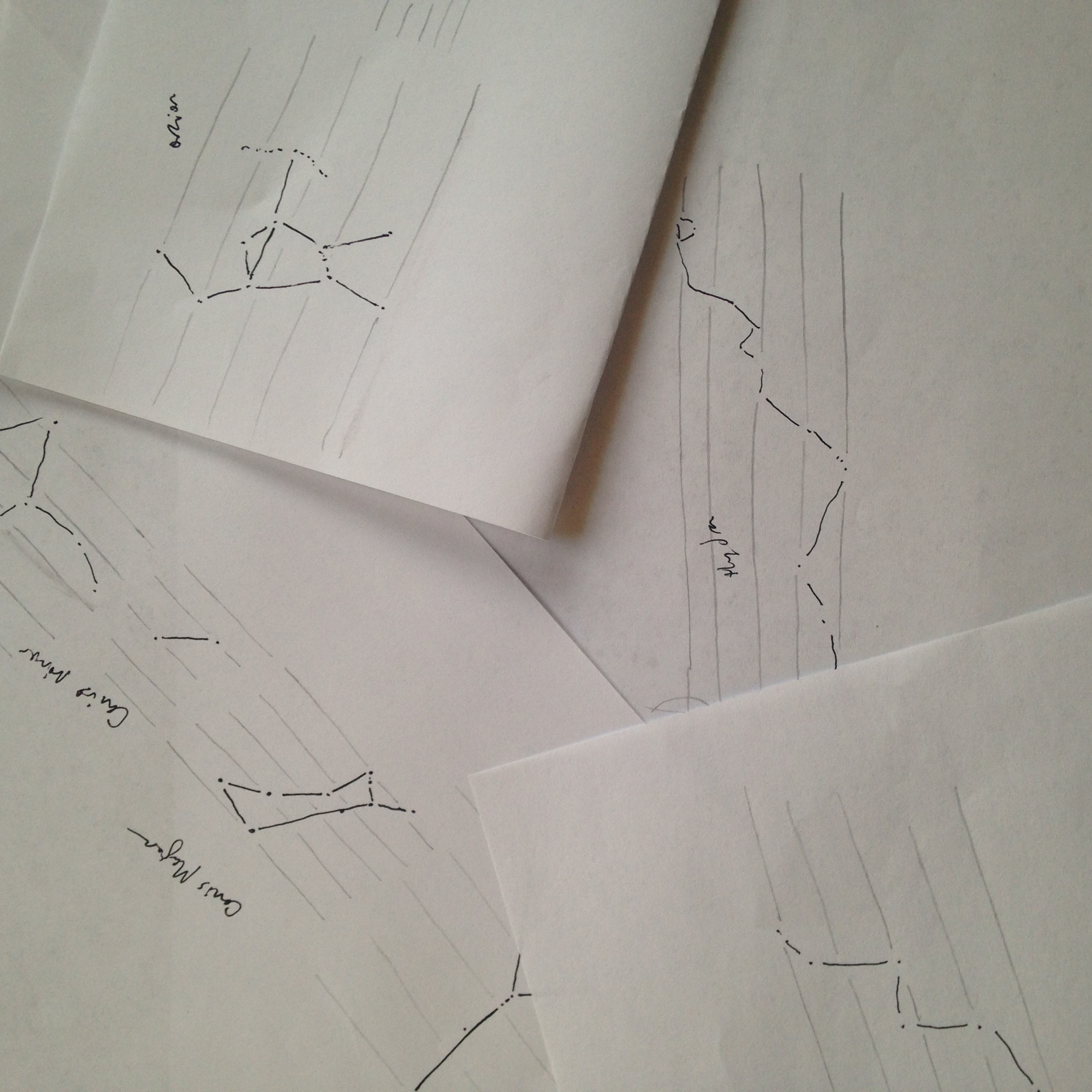
The piece, titled “The Lowest Arc,” will be installed this upcoming Sunday for an indeterminate exhibition period at ALL RISE. The piece is written for six speakers, each with music inspired by different natural elements. On this Sunday night only, performers will join in the sound sculpture with custom music boxes that produce an aural translation of the constellations visible from Earth during winter. Evans determined the specific music notes by superimposing the constellations on a traditional musical staff.

This aleatoric performance exploring the limits of sound and space will take place this upcoming Sunday, Dec. 21 from 4-5:30 p.m. at the ALL RISE site located at 1250 Denny Way, Seattle.


Mark O’Connor’s “An Appalachian Christmas”

Mark-OConnor-Christopher-McLallen

Grammy award-winning violinist Mark O’Connor is coming home for the holidays this year. Though his multifaceted music career has led him all over the world, this week he is returning to Seattle with his band to share an evening of holiday music from his album, “An Appalachian Christmas.”

“Growing up in the O’Connor musical household, Christmas time was a wondrous mixture of Christmas carols, fiddling, bluegrass and other traditional American music,” said O’Connor. “And that is the spirit of ‘An Appalachian Christmas.’”

The concert is this Sunday, Dec. 21 at 7 p.m. at the University of Washington’s Meany Hall for the Performing Arts.