
Cheers to another year of new and experimental music on Second Inversion! Our hosts celebrate with a list of our Top 10 Favorite Albums of the Year. From a quiet ocean of percussion to the shimmering orchestras of Iceland and the bold harmonies of Beijing, our list celebrates musical innovation within and far beyond the classical genre.
Michael Gordon: The Unchanging Sea
Released Aug. 2018 on Cantaloupe Music

It’s easy to get lost in the haunting majesty of Michael Gordon’s The Unchanging Sea, the sheer force of its rolling waves echoing across the piano in the hands of Tomoko Mukaiyama with the Seattle Symphony. Gordon’s ocean of sound swells to overwhelming proportions, each wave cresting higher and higher, surging and submerging you in its growling depths. Though originally conceived with an accompanying film by Bill Morrison—a gritty collage assembled from deteriorating film reels and historic footage of Puget Sound—the piece’s sonic imagery is equally vivid on its own.
It’s paired on this album with Gordon’s shimmering Beijing Harmony, a work inspired by Echo Wall at the Temple of Heaven in Beijing, where sounds reverberate from one side of the structure to the other. In performance, the wind and brass players are spread out across the stage—and when you listen with headphones, the music echoes from left to right and back again, all around and through you. – Maggie Molloy
Ken Thomson: Sextet
Released Sept. 2018 on New Focus
 Clarinetist, saxophonist, and composer Ken Thomson is known primarily for his work with the Bang on a Can All-Stars. But as it turns out, he’s been living a sort of musical double life as a jazz musician for, basically, ever, much like Ron Swanson as Duke Silver. Unlike Swanson, Thomson has decided to let his alter ego run free. I hear strains of Miles Davis’ Kind of Blue in Thomson’s Phantom Vibration Syndrome, Dave Brubeck’s Time Out in the time signatures, maybe even a little Charlie Parker when the improvisation builds to a frenzy. Thomson brings the complex compositional structures—the details of which I will not pretend to understand—of new music and improvisation together on this album in a way that can only be described as fun. – Dacia Clay
Nils Frahm: All Melody
Released Jan. 2018 on Erased Tapes

Nils Frahms’ latest solo album is striking in its simplicity—the compositions distilled down to their most potent melodies. The album features the composer himself on his usual keyboard collection of pianos, synthesizers, and pipe organs—but here expanded to feature an ethereal choir of vocalists along with subtle strings and percussion. The resulting tracks are an ambient mix of minimalism, mid-tempo dance grooves, and broad, synth-laden washes of sound. Though each song is expertly crafted in iridescent detail, the individual pieces also fit together into a larger whole, the album unified in its wistful harmonies and muted colors. Understated but immersive, it reminds us of the simple pleasure and the intimate perfection of a good melody. – Maggie Molloy
The Hands Free: Self-Titled Debut
Released May 2018 on New Amsterdam
 Over the course of the past decade, the four composer-performers who make up the Hands Free have performed together in a variety of contexts. They found that what they loved doing the most was holding informal late-night jam sessions—which is what led to the quartet’s inception. Comprised of violin, accordion, bass, and guitar (plus the occasional banjo), the ensemble likes to perform unamplified, sit in a circle, and integrate a mix of genres ranging from folk music to jazz and improvisation. Their resulting debut album features a beautifully eclectic mix of sounds that depict an immense variety of places and emotions—all while maintaining the warmth and spontaneity of an impromptu jam session. – Gabriela Tedeschi
Anna Thorvaldsdottir: AEQUA
Released Nov. 2018 on Sono Luminus
 Anna Thorvaldsdottir finds inspiration in nature—her music is its own ecosystem, the nuanced textures shared, traded, and transformed among individual instruments over the course of her works. The delicate balance of nature is at the heart of AEQUA, a collection of chamber works (plus one solo piano piece) performed by musicians of the International Contemporary Ensemble. Like the stunning natural landscapes of her native Iceland, Thorvaldsdottir’s compositions echo with the full subtleties of timbre, the music expanding and contracting, breathing and humming and vibrating like the earth. – Maggie Molloy
Éliane Radigue: Œuvres Électroniques
Released Dec. 2018 on INA GRM
 This beautifully-produced 14-CD set documents Radigue’s career as the mother of dark ambient music. Laboring humbly and hermetically with an ARP 2500 synthesizer and some tape recorders, Radigue spent the 70s, 80s, and 90s perfecting her brand of dense, slow-changing drone music. The works from that time are often inspired by descriptions of states of consciousness in Tibetan Buddhism, bearing such titles as Death Trilogy or Elimination of Desires. They’re best confronted in darkness, without distractions, allowing the mind and ear to absorb their long timeframe (from 17 minutes to well over an hour) and complex sonorities. – Michael Schell
Third Coast Percussion: Paddle to the Sea
Released Feb. 2018 on Cedille Records
 Paddle to the Sea was a book that was made into a movie that was made into a live show and album by Third Coast Percussion. In Holling C. Holling’s original 1941 children’s book, a First Nation boy in Ontario carves a wooden canoe and on its side, he writes “Please put me back in the water. I am Paddle-to-the-Sea.” He puts the boat into the Great Lakes where it begins its adventure, and the book follows it on its journey. (Spoiler alert: years later, the boat winds up in a newspaper story that ends up in the hands of the boat’s original creator, who is by then a grown man.) The film, which was released in 1969, added a focus on water pollution to the original story.
Third Coast Percussion composed a new score to perform live alongside the film, including existing works by Philip Glass and Jacob Druckman, plus traditional music from Zimbabwe. Third Coast broadens the focus of the story a little more, asking us to think about our relationship to water and waterways on a grander scale. Their addition to the story doesn’t moralize; it instead draws listeners’ attention to the fact that the water is us—we are Paddle to the Sea. – Dacia Clay
Nordic Affect: He(a)r
Released Oct. 2018 on Sono Luminus

“Hér” is the Icelandic word for here. That idea of being present—of listening, of connecting here and now through music is at the heart of Nordic Affect’s newest album. He(a)r is a collection of seven world premiere recordings penned by women composers and performed by women musicians. Wide-ranging sound worlds from Halla Steinunn Stefánsdóttir, Anna Thorvaldsdottir, María Huld Markan Sigfúsdóttir, Mirjam Tally, and Hildur Guðnadóttir comprise the album, each offering a distinct perspective on the ways in which we hear and create sound—our individual voices and the ways in which they interact. – Maggie Molloy
Invisible Anatomy: Dissections
Released March 2018 on New Amsterdam
 Drawing inspiration from the experiments of Leonardo da Vinci, facial polygraphs, and more, Invisible Anatomy’s Dissections uses medical metaphors to explore the risks and joys of opening yourself up to others. The avant-rock ensemble combines the theatricality of performance art with the drama of jazz and classical music, creating haunting songs of danger, intimacy, and dissection.
Fay Wang’s vocals layer and weave into intricate composite melodies and eerie disonances, asking powerful questions about the ways humans interact. With its thought-provoking text and complex, dramatic texture, Dissections is an impressive, hauntingly beautiful debut. – Gabriela Tedeschi
My Brightest Diamond: A Million and One
Released Nov. 2018 on Rhyme & Reason Records
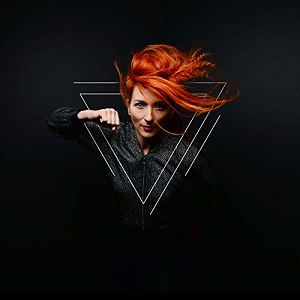
Few artists inhabit both pop and classical worlds so freely and convincingly as Shara Nova, the operatically-trained singer and composer behind the art rock band My Brightest Diamond. A Million and One tilts further into electronic and pop worlds than her previous albums, her lustrous voice dancing above synth-laden backdrops and pulsing drumbeats. While the drama and dynamic range of the songs hint at her operatic background, the vulnerability of the lyrics and the sheer danceability of the tracks bring a pop music immediacy to her work. The resulting album is visceral, unconventional, and free—emblematic of the modern day dissolution of genre. – Maggie Molloy
 Back in 1996 Seattle composer/percussionist Stuart McLeod initiated a project called Tetraktys, pronounced “teh-TRAK-tis” and named after a Pythagorean shape with ten points arranged in a pyramid. Considered by some to hold mystic significance, this shape is also a font of mathematical relationships, which in McLeod’s hands evoke musical structures that are varied but unified. Logic dictates having ten Tetraktys pieces in all, one for each point, and having produced a recording of four of them in 2015, McLeod chose this past December 19 (his 53rd birthday) to release the remaining six.
 Later pieces are less direct in their numerical correspondences. The gamelan-like Tetraktys 8 isn’t a study in octaves as you might expect, but more of a monophonic version of In C where the melodic snippets subtly transform themselves sequentially rather than overlapping by chance. Tetraktys 9 features synthesized clangs and “MIDI orchestra” sounds that remind me of the late Hardy Fox’s “contraptions” released under his Residents nom de plume Charles Bobuck.


