
CONCERT PREVIEW: It’s Neo-Classical! Q&A with Jessie Polin

by Maggie Molloy

We’ve all seen live performances of works by the classical music giants: Haydn, Mozart, (early) Beethoven—but how often do we get to see live performances of works by the neoclassical music giants?

That opportunity comes this Saturday at Seattle Modern Orchestra’s “It’s Neo-Classical!” concert at Resonance at SOMA Towers. The concert highlights neoclassicism in wind and brass music of the early 20th century, featuring chamber works by Stravinsky, Poulenc, and Dahl.

SMOCE-Poster-v_3-770x1190After the emotional excess and perceived formlessness of the Romantic era, the neoclassicists sought to return to the aesthetic principles of the Classical period, such as order, balance, clarity, and emotional restraint. But the composers did not just copy the Classical masters—they expanded and updated the music of the Classical period by incorporating 20th century trends like expanded tonal harmonies, folk melodies, jazz elements, humor, satire, and more.

Thus, the works performed in this neoclassical chamber concert showcase the wit and charm of modern composers while also highlighting the virtuosity of the musicians themselves.

Julia Tai Photo
“Seattle Modern Orchestra is a musician-driven organization,” said conductor and co-artistic director Julia Tai. “It was really because of the musicians’ passion for new music and joy of playing with each other that the group started almost six years ago. We’re very lucky to have a group of extremely talented and dedicated musicians who love music from the 20th and 21st centuries and want to bring it to the audience.”

The musicians took the initiative to pick out repertoire, organize rehearsals, and set the concert date—and they also assisted with grant writing, marketing, and organizing the musician roster.

So to find out more, we talked with flutist Jessie Polin, a performer in Seattle Modern Orchestra who played a key leadership role in putting this program together.

Second Inversion: What do you think is most unique or inspiring about this concert program and about 20th-21st century classical music in general?
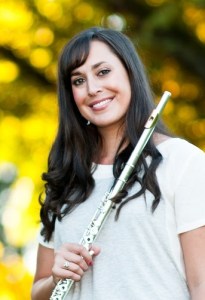
Jessie PolinJessie Polin: This particular concert is unique in that it showcases some of the best chamber music repertoire for winds and brass. Especially with the Stravinsky and Poulenc, we’re exploring the neoclassical style in the context of a small chamber concert.

I feel really excited that I continue to have opportunities to explore 20th and 21st century classical music. I’ll admit that modern music can be pretty challenging, both as an audience member and as a performer, but I find a great deal of value in the challenge. I think it’s important to continue to expand our definition of “classical music” and to recognize that there is so much diversity within those parameters. In this concert, our audience can experience some of the earlier repertoire of what we now consider “contemporary” music. The Dahl was composed and premiered in the 1940s and is the most recent piece on the program; by our standards today, that’s not incredibly modern. However, I think all three pieces on this program make a wonderful introduction to the world of modern music.


SI: Seattle Modern Orchestra specializes in 20th and 21st century music, ranging from minimalism to spectralism, serialism to electronic, and everything in between. What do you find to be some of the unique challenges and rewards of performing works from the neoclassical period specifically?

JP: All contemporary music has a unique set of challenges. I like neoclassical music because it’s like a reimagining of music that is so familiar to us. I think when non-musicians think about classical music, they think of what Mozart and Haydn sound like. And then when they hear neoclassical music, it’s like it’s familiar but also not, which is fun and interesting. Because of that, I think it’s a great introduction to modern music in general, because while it does have new and different sounds, it’s a little more approachable for a modern music newcomer.

As a performer, I think a lot about things like articulation and extreme dynamics when I approach neoclassical music. I think it’s really important to exaggerate all the gestures so that the classical ideas come across, while also showing how much the palate of stylistic choices has expanded since the Classical period.


SI: A concert program of all wind and brass music is relatively rare—what inspired you to curate a concert program without strings or percussion (other than piano)?

JP: This didn’t start out as a program for all wind and brass music, necessarily, although I am pretty excited it turned out that way. Julia and I were in grad school together at the University of Washington, and she conducted a performance of the Stravinsky, which was the first time I had played it. We’ve talked off and on for a long time about doing it again because it’s such a great piece, and this season we decided to just make it happen. I also really love the Poulenc, and felt like it would be a great pairing with Stravinsky, so at that point, it seemed natural to keep the program strings free.

Of course, the string chamber music repertoire is expansive and wonderful, but I do feel like it overshadows what else is out there to a large extent. I’m really excited about showcasing what I think is hands down some of the best chamber music in the classical repertoire, both including music for strings and not.


SI: What are you most looking forward to with this performance?

JP: I’m excited about the chance to collaborate with a truly excellent group of musicians on some of my most favorite repertoire ever. We really have an all-star cast for this concert, and working with these people is invigorating and inspiring. I also feel like in the day-to-day of being a working musicians, it’s easy to get bogged down with just keeping up. This concert is happening just because we were excited about it and decided to do it, and that feels refreshing.


SI: What do you hope audiences will take away from the concert?

JP: I hope that our audience will be excited (and maybe surprised!) by how great this repertoire is. I also hope that people will find the fun and outright joy in this “serious” classical music. I think if anything, it’s great to approach neoclassical music with a little bit of humor, and I really hope our audience finds that in this concert.

Seattle Modern Orchestra Chamber Ensemble’s “It’s Neo-Classical!” concert is this Saturday, March 26 at 2 p.m. at Resonance at SOMA Towers in Bellevue. For tickets and information, please click here.

Guest Blogging at New Music Box

by Maggie Stapleton

box-header-D2

Last month, I had the great pleasure of blogging over at New Music Box, a publication from New Music USA. My topics ranged from careers in music to community to classifying genre to the state of radio. If you missed any of them, we’ve got a recap for you here!

Workshop at university. Rear view of students sitting and listening in lecture hall doing practical tasks on their laptops. ** Note: Shallow depth of field

What I Didn’t Learn in Music School: “If you’re earning a comfortable wage and living a happy life doing Exactly What You Thought You’d Do With Your Degree(s), I applaud you. Sincerely! I am among the many people in the music world who are not, but I couldn’t be happier with where I landed…” Read the full post here.

forklift handling the container box at dockyard

Overthinking Genre: Second Inversion is a project dedicated to rethinking classical music, presenting new and unusual music from all corners of the classical genre. What does that mean? All corners of the classical genre? Even just ‘genre’? And how does one describe, define, and label this sonic palate that is perhaps most commonly referred to as ‘new music’? It’s a question I confront daily, but there’s no clear answer and it’s a hot topic in recent blog posts and Facebook discussions within the community…” Read the full post here.

Speaking together media concept as two crumpled pieces of paper shaped as a human head with talk bubbles or speech bubble icons taped as a communication symbol for business understanding and compromise agreement.

An Ode to Community: “Which communities do I belong to? Why are they important to me? What is my role in each one? Does community mean the same thing to me as to other people? What value do they add to my life? How can I impact my fellow community members in positive ways? Though I’m a part of many communities, I realize now that I’ve spent much of my life simply existing and participating in them, but not fully appreciating the innumerable facets of beauty and possibility that they offer….” Read the full post here.

Car Stereo Car Radio Personal Accessory Volkswagen Air Duct Air

The Case for Radio: “‘Is radio dying?’ I’ve been hearing this ominous question for years, especially in the context of the plethora of digital music platforms—Spotify, Pandora, our personal music collections, YouTube, SoundCloud, Bandcamp, and many more. Can good old-fashioned radio continue to thrive among the other options out there? I believe the answer is yes; radio is evolving, not dying, and there are foundational principles of radio that can’t compete with fancy new technologies…” Read the full post here.

And for fun, a related info graphic from the University of Florida.

The Evolution of Musical Tools

ALBUM REVIEW: Pink Floyd’s “Wish You Were Here” Symphonic featuring Alice Cooper with the London Orion Orchestra

by Rachele Hales

Wish You Were Here SymphonicWish You Were Here Symphonic is a project produced and masterminded by Pete Smith, who also helped produce the wildly successful Us and Them: Symphonic Pink Floyd.  He’s joined this time by some friends and fellow Floydians.  Makes sense.  After all, it was Pink Floyd who pioneered the idea of inviting well-known musicians to make guest appearances on their albums (including Yehudi Menuhin and Roy Harper).  Smith collected collaborators from around the world, including New Zealand’s maestro Peter Scholes, who arranged the music and conducted the recording.

Oddly, the album opens with a non-symphonic version of the title track with macabre vocals from Alice Cooper.  Neither the vocal nor the instrumental versions of “Wish You Were Here” are symphonic, which is a damn shame considering the highlight of the album is the symphonic orchestration.

The brief orchestra warm-up following the title track is a nice touch, however.  It serves to prepare your ears for the shift in tone as the guitar and piano are joined by a full symphony playing the instantly recognizable opening to “Shine On You Crazy Diamond, Pt. I-V.”  The bare, industrial ambience of the original is in every way enhanced by the ethereal orchestration, which delivers the melody that the vocals supply in the original.

Alice Cooper returns in “Welcome to the Machine,” a bleak critique of the music industry and said industry’s corporate fatcats.  Cooper’s style works better here in conveying a feeling of utter disaffection.

The London Orion Orchestra takes on “Have a Cigar” and we’re again treated to exhilarating symphonic arrangements with top-notch electric guitar work that gradually ascends in prominence.

Keeping things in their original album order, “Have A Cigar” fades out and an instrumental version of “Wish You Were Here” performed by Australian Pink Floyd begins.  Kudos to Aussie Floyd for beautifully conveying the tenderness and melancholy of the original version.  That said, after the lush symphonic thrills of the previous songs I found I missed that sweep and scale here.

After the second half of “Shine On You Crazy Diamond” we get a little bonus song: a symphonic version of Dark Side of the Moon’s final track “Eclipse.”

I cannot write about this album without also mentioning the artwork.  The iconic artwork in Pink Floyd’s 1975 release depicts two men in suits shaking hands (the handshake symbolizing empty gestures), while one man is on fire, literally “getting burned.”  All this was meant to convey Pink Floyd’s musical critique of the music industry and a general feeling of absence. Tiernen Trevallion’s take on the artwork for this symphonic album conveys a similar vacuity and disgust but it is so much cooler!  Replacing business suits with space suits?  Smart.  Taking lyrics from the title track and incorporating them into the artwork?  Smart.  The symbolism of a pig with a duct-taped butt gorging on a trough of money?  Smart and funny!  Trevallion just became my new favorite graphic artist.

Wish You Were Here Symphonic Back Cover

Getting back to the music…  Fans of Pink Floyd will definitely enjoy the musical fantasia of Wish You Were Here Symphonic.  Those who are less familiar with Pink Floyd will also find a lot to love in this recording.  You listen to this album for the symphonic arrangements and in every way they deliver.

This was Smith’s first go at producing an album by himself and I’d call it a great success.  I hope to hear symphonic versions of Pink Floyd’s other classics in the future.  Hint hint, Pete Smith.  Tell us, where will you go from Here?

Wish You Were Here Symphonic Art Print

VIDEO PREMIERE: Heyr þú oss himnum á by Anna Thorvaldsdottir (Skylark Vocal Ensemble)

by Maggie Stapleton
8865168Skylark is a professional chamber choir of world-class musicians with a passion for small ensemble performance and their new album, Crossing Over, demonstrates a strong dedication to music composed in the 20th and 21st centuries.

To celebrate its March 25 release on Sono Luminus, we’re excited to present the video premiere of Anna Thorvaldsdottir’s gorgeous, evocative, and other-worldly setting of an ancient Icelandic psalm: Heyr þú oss himnum á. 


Skylark: Crossing Over 
Matthew Guard, Skylark Artistic Director
[1] Elegy by Daniel Elder (b. 1986) [4:16]
[2-9] Butterfly Dreams by John Tavener (1944-2013) [12:13]
[10] Otche Nash by Nicolai Kedrov (1871-1940) [2:03]
[11] Requiem by Jón Leifs (1899-1968) [4:41]
[12] Heliocentric Meditation by Robert Vuichard (b.1985) [9:12]
[13-15] Carols of Death by William Schuman (1910-1992) [9:42]
[16] Heyr þú oss himnum á by Anna Thorvaldsdottir (b. 1977) [4:27]
[17] Funeral Ikos by John Tavener [5:55]

Pre-Order the album here.

view

Photo: artsatl.com

Skylark is a premiere a cappella vocal ensemble of leading American vocal soloists based in Atlanta and Boston. Formed in 2011 by Artistic Director Matthew Guard, Skylark has been described as “a gem… soloists who come together to create a dynamic and inspiring whole” (ArtsATL). Skylark strives to set the standard for innovative, engaging, well-researched, and dramatically presented programs that re-define the choral experience for audiences and singers alike. Since its founding five years ago, Skylark has branched out to perform its innovative programs in museums, concert halls, and churches in six states. In 2015, Skylark became one of the only chamber choirs in the U.S. to successfully perform Francis Poulenc’s Figure Humaine. In 2016, Skylark will make its Spivey Hall debut with a chamber performance of Rachmaninov’s All-Night Vigil. Skylark Artists have performed with other internationally renowned groups including Blue Heron, The Handel & Haydn Society, Lorelei, The Pheonix Chorale, Sante Fe Desert Chorale, Seraphic Fire, Trinity Wall Street and the Yale Choral Artists. A not-for-profit entity, Skylark also performs educational outreach programs with high school students in Atlanta and Boston and across the U.S. during its concert tours.

AnnaThorvaldsdottir2851_Edited

Photo: Saga Sigurdardottir

Anna Thorvaldsdottir frequently works with large sonic structures that tend to reveal the presence of a vast variety of sustained sound materials, reflecting her sense of imaginative listening to landscapes and nature. Her music tends to portray a flowing world of sounds with an enigmatic lyrical atmosphere.

Anna’s music is frequently performed internationally, and has been featured at several major venues and music festivals such as Lincoln Center’s Mostly Mozart Festival in NYC, the Composer Portraits Series at NYC’s Miller Theatre, ISCM World Music Days, Nordic Music Days, Ultima Festival, Klangspuren Festival, Beijing Modern Music Festival, Reykjavik Arts Festival, Tectonics, and the Kennedy Center in Washington DC. Her works have been nominated and awarded on many occasions – most notably, Anna is the recipient of the prestigious Nordic Council Music Prize 2012 for her work Dreaming, and The New York Philharmonic’s Kravis Emerging Composer Award.

Some of the orchestras and ensembles that Anna has worked with include International Contemporary Ensemble (ICE), BIT20, Musiques Nouvelles, the Iceland Symphony Orchestra, Yarn/Wire, BBC Scottish Symphony Orchestra, the CAPUT Ensemble, the Oslo Philharmonic, and Either/Or Ensemble.

Anna holds a PhD from the University of California in San Diego.

CONCERT PREVIEW: Chorosynthesis: Q&A with Jeremiah Selvey and Wendy Moy

Of all the musical instruments, none is quite as poignant and powerful as the human voice. And while singing is often a deeply intimate and personal act, it can also be a shared and communal experience—a way of connecting with others and empowering voices that are too often silenced.

That’s the notion behind the Chorosynthesis Singers’ concert this Saturday, titled “Empowering Silenced Voices.” Created by co-artistic directors Jeremiah Selvey and Wendy Moy, the concert features ten new choral premieres championing a wide range of humanitarian causes, including LGBTQIA love, women’s rights, child advocacy, and the effects of terrorism and war.

empowering-silenced-voices-chorosynthesis-singers-12

The unique concert program integrates the beauty and the history of classical music with the urgency and pragmatism of contemporary social and political issues. The goal is to ignite critical thought and create lasting change which will inspire audience members long after they leave the concert hall.

We sat down with Chorosynthesis’s two co-artistic directors to talk more about choral music, concert programming, contemporary composition, and the sociopolitical issues facing our world today.

Second Inversion: What sets Chorosynthesis apart from other choral groups?

JeremiahSelveyJeremiah Selvey: We are professional, meaning that every single person you see on stage is paid for their services. We value the performer who is making the art. We also perform new works with messages that are relevant to our contemporary world, such as human rights and the effects of war and violence. With the exception of one piece, everything you will hear performed in this concert has been written in the last 7 years. Ten of 11 pieces are either world, U.S., or regional premieres.

Finally, we are a truly collaborative group. We have not one, but two artistic directors, and we balance each other out. We also solicit a significant amount of feedback in the repertoire selection process from both singers and stakeholders by holding reading sessions months in advance. We also valued the direct feedback of the composers. Not only have we been furiously emailing back and forth with most of our composers regarding interpretations of their work, we will be working with 5 of them this week in preparation for this concert. All 5 will be in attendance at the concert.

Wendy MoyWendy Moy: Our roster features professional singers from around the country. Auditions were held via Skype with the artistic directors in two different locations (CT and IL.) We have six based in the Seattle area and 6 singers flying in from as far as Connecticut for a week of rehearsals and the concert.

SI: What makes Empowering Silenced Voices such a unique and inspiring concert program?

JS: “ESV” (as we have affectionately come to call it) is a concert full of premieres; 10 of 11 pieces will be a premiere of some sort. How often do you have 70 minutes of choral PREMIERES by 10 different living composers?! It is not just a concert of premieres, this music has been selected carefully to represent a diversity of perspectives, texts, and ideas, all with a social justice or humanitarian message. How often does “classical” music reach out and touch the practical side of human existence? This program brings together the ideals of beauty and creativity in the choral art and the pragmatic side of being human.

Not only is this an innovative selection of repertoire with a human message, but also this music has been programmed with the intention of taking the audience on an emotional journey. Because the content of the program is necessarily “heavy” in its tone, we have programmed the music to feel as though no piece stands completely on its own, but is to be experienced and interpreted in light of the context—what precedes and follows each piece. It is our goal that this amazing music changes us as performers and you as the audience. Yes, this music is gorgeous and stunning, but if that is all that we experience, we might as well have been singing about flowers and nature. We want this music to transform all who come into contact with it! From the inception of this project one of our mottos has been “Changing the world through music.” That is why ESV is so unique and inspiring.

SI: What types of social or political issues are traversed in the course of the pieces selected for this concert? How did you select these pieces?

JS: A year ago we put out a Call for Scores (which is ongoing). Our advisory committee narrowed the selections down. Then we took some of these selections to “New Music Reading Sessions” here in Seattle, where we read through and solicited feedback from singers. Next, we chose pieces that were 1) compositionally superior, 2) a premiere (with the exception of one), 3) resonated well with singers, and 4) were strong in their social justice or humanitarian message.

The topics touched on over the course of the program include LGBTQIA love, women’s rights, child advocacy, and the effects of terrorism and war. I think the program notes tell more than we could specifically describe, and these notes come straight from the composers.

SI: What makes music a valuable lens through which to discuss issues of oppression?

JS: Music tends to remove the barriers that speech can often create. Across political lines or the divides of ideology, we like to talk “at” each other. We believe the music helps us to experience another perspective in a more visceral way. By removing the preconceptions often triggered by a normal dialogue, the performance of music allows a narrative and its social perspective to be received and understood more easily. Well-constructed choral music is able to introduce the language of speech as an added layer to the musical narrative, providing more clarity. The texts and poetry in this performance are beautiful, poignant, and significant to our world; the music helps us to conceive or re-conceive these ideas.

WM: Music helps to connect us more deeply to the issues and, more importantly, to each other. In many of these pieces, the music evokes a personal experience that helps us to see different, perhaps new, perspectives on an issue of social justice.

SI: What are you most looking forward to with this Empowering Silenced Voices performance?

JS: At every twist and turn, I have been changed by this music. In the end, we want our audience to experience the voices of those who have been killed, silenced, or covered up. This concert is about advocacy, and we want people’s hearts to change. We are all guilty of silencing voices. If people walk away being so moved that they give a voice to one person that they would not normally give to, we will have considered this concert a success. That is what I most look forward to!

WM: We have spent the past 12 months setting up the logistics for this concert to happen so it is with great excitement that we start putting together the music with the ensemble this week. I am looking forward to our audience “meeting” these pieces for the first time through our singers and the potential it has for creating beauty, dialogue, and change in the hearts and minds of all those present, including the singers and artistic team. I hope that the audience walks away having made some sort of connection-whether it is to the music, the people in their lives, the greater community, or the issues of social justice.

Chorosynthesis’s “Empowering Silenced Voices” concert is this Saturday, March 19 at 7:30 p.m. at the Good Shepherd Chapel in Wallingford. For additional information and tickets, please visit this link.