
ALBUM REVIEW: Gaslight by James Maloney

by Maggie Molloy

There’s a striking intimacy to solo piano music—a uniquely calm, quiet sense of introspection that only comes from sitting alone at the keyboard for hours on end.

Composer James Maloney takes you right up to the piano bench in his debut solo album Gaslight, out now on Moderna Records. Conceived as a reaction to the fast pace and noisy streets of city life, the album takes an introspective look inward to the music that emerges on the quietest of nights, alone at the keyboard and surrounded by glowing twilight.

Composed late at night on an old piano with microphones placed impossibly close to the hammers, the effect is that of being right there in the room on a rainy evening, surrounded not just by the quiet melodies but also the creaking wood and antique inner-workings of an old piano. The resulting album is a collection of ten ambient and introspective works for solo piano woven together with delicate details of trumpet, vibraphone, glockenspiel, and electronics.

Gaslight opens with a quiet wash of sound: “Seascape” is a short piano prelude that alternates layers of sparkling melodies with long stretches of serene silence, setting the scene for the minimamlist musings to come. “Blink” takes this image one step further, filling the silent spaces with softly circling piano melodies that flicker and flutter like fireflies above a solemn stepwise bass line.

The album’s title track illuminates more gradually, the melodies unfolding at such a slow pace that they almost seem to halt time itself, each note lingering in the air amid the crackling white noise of the surrounding room. The pace picks up only slightly for pieces like “Intertwine” and “Afterglow,” both fleeting piano nocturnes filled with melodies that sparkle sweetly, climbing ever-upward toward the stars above. The music drifts solemnly back to earth in “Lament,” its harmonies strung together through block chords that echo softly above a twinkling glockenspiel backdrop.

The instrumentation shifts for “Gambetta,” a shimmering metallic soundscape comprised almost entirely of glockenspiel and vibraphone melodies that swirl and twirl around long-breathed trumpet lines. Layers of electronic clicks and clatters are interwoven into delicate piano tremors for “Full Colour,” while “Rise Slowly” explores the soft dissonances and atmospheric silences that echo between pensive chords.

The album closes with “Angel Wings,” its sleepy and slowly meandering melodies drawing the midnight concert to a close, bidding the piano goodnight, and ascending into a beautiful dream.

Seattle New Music Happy Hour: Tuesday, August 15 at 5:30pm

by Maggie Molloy

There’s nothing like a cold beer and a crowd of new music enthusiasts to keep you company while you wait out the rush hour traffic.

Join us Tuesday, August 15 at 5:30pm at Queen Anne Beerhall for our favorite after-work pick-me-up: New Music Happy Hour, co-hosted by Second Inversion and the Live Music Project. Bring a friend, make a friend, have a drink, and discover connections with fellow new music lovers from all over Seattle!

Click here to RSVP and invite your friends. Plus, sign up for alerts for future happy hour dates and day-before reminders so you’ll never miss a beer—er, beat.

ALBUM REVIEW: Danny Elfman’s Rabbit & Rogue

by Lauren Freman

If, like me, you thought that Danny Elfman’s Rabbit & Rogue looked like a fashionable reboot of a Bugs Bunny cartoon, you might be tempted to write off this score as self-indulgent and twee. But hear me out—

Rabbit & Rogue was the source material for a collection of short films that premiered at the LA Film Festival just last month. Produced by Indi.com, the Danny Elfman Project: Rabbit and Rogue was a contest inviting filmmakers to create a short film to set to the score, in the same vein as Disney’s Fantasia. Or Baby Driver. Submissions were judged by a star-studded panel, and the winning pieces screened for LAFF’s 36,000-some-odd festival attendees. The Limited Deluxe Edition was just released as an album this past June, brought to life by the Berlin Session Orchestra with conductor Joris Bartsch Buhle.

Rabbit & Rogue actually first premiered in 2008, as the six-movement score to a ballet, commissioned for the American Ballet Theater and choreographed by Twyla Tharp. The production was met with a few curmudgeonly responses (one New York Times critic named it “irksome” and “relentless”) which, okay, slow your roll. It’s a Danny Elfman score. Y’know, Danny Elfman? The guy who wrote the score for The Simpsons, and Batman Returns, and basically every Tim Burton movie ever? If you’re not here for whimsy, then get up out my face. But to be honest, I had a hard time imagining this as a ballet too. It’s just too cinematic (you can take the Danny Elfman outta the film score…), which is likely the motivation behind repurposing this piece for short films.

The “Intro” begins quietly with the percussion bubbling with a nervous heartbeat, which sets into motion the fidgety, pent-up kinesthetic energy that permeates the entire work. It opens gradually into a spacious—though no less fidgety—storybook landscape, letting the saxophone serve some serious Creation du Monde vibes before tumbling abruptly into the second movement, “Frolic.”

At points, the second movement could be mistaken for a Looney Tunes score (that xylophone tho). It evokes the sense that Rabbit is scampering through other symphonic works: there’s a reference to a theme from Rite of Spring’s third movement, a “Flight of the Bumblebee” nod in one piano solo section, and this perfectly cheeky moment about nine minutes in, where we are in full John Williamsy triumphant brass glory, then a pause—just long enough to raise an eyebrow—then BAM we’re doing a wild Charleston. It’s worth a listen just for the sonic scavenger hunt alone.

You know what they say: The way to a new music snob’s heart is through their gamelan. Admittedly, Rabbit & Rogue’s third movement, “Gamelan,” bears dubious resemblance to any traditional gamelan, but still it’s pretty magical. The beginning of this movement reprises the fluttery rabbit-heartbeat from the “Intro” (Are you trying to pass off the Berlin Session Orchestra’s xylophones as gamelan, Danny? Tell the truth…). The movement later leans hard into standard box office film score territory: sweeping, no-surprises-here anthems that remind you of the VHS tapes you watched and re-watched as a kid. If any one movement is dangling precariously close to preciousness, it’s this one. One might rebut, though, that, in a ballet about the adventures of a bunny, a little preciousness might be forgiven.

I won’t spoil the rest, but suffice it to say that Elfman continues this Macaulay Culkin-meets-Milhaud-meets-Mel-Blanc remix all the way through the Finale. Does this mean that Rabbit & Rogue essentially is, in fact, a fashionable reboot of a Bugs Bunny cartoon? Okay, yes. But who cares? The value in this piece is in its marriage of smartypants in-jokes and blockbuster soundtrack accessibility.

If, like me, you spend a fair amount of time wrestling for common ground with friends and family who “just don’t GET classical music,” this is precisely the kind of music that serves our cause. This kind of you-got-new-music-in-my-film-score/you-got-film-score-in-my-new-music mashup allows us to offer “If you liked that, you might enjoy this John Adams; this Charles Ives; this Conlon Nancarrow,” and before you know it, you and Uncle Craig are blasting Pierrot Lunaire from his truck like it’s no big deal.

As classical music people, our biggest image problem is in being perceived as too serious. Rabbit & Rogue helpfully reminds us to lighten up, lol at Elfman’s musical jokes, and for goodness’ sake, watch some cartoons.


Lauren Freman is a multi-instrumentalist, songwriter, and composer, hell-bent on blurring the boundaries between high and low art. Follow her at
www.freman.band, on Facebook, or on Instagram.

Staff Picks: Friday Faves

Second Inversion hosts share a favorite selection from their weekly playlist. Tune in on Friday, August 4 to hear these pieces and plenty of other new and unusual music from all corners of the classical genre!

John Cage: Piano Sonata XI from the Sonatas and Interludes (Centaur Records)
Susan Svrcek, piano

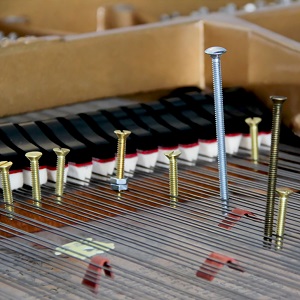
John Cage threw a wrench in the Western music tradition when he invented the prepared piano in 1940. Presented with the challenge of writing dance music for a small stage, he created his own percussion orchestra inside a piano by placing screws, bolts, and pieces of rubber between the strings.
The Sonatas and Interludes was his magnum opus for the iconoclastic instrument. Pianist Susan Svrcek lends her fingers to the Cage classic in this stunning recording, pulling the percussive melodies out of a mess of strings and hardware supplies with sincerity, warmth, and an ever so delicate touch. – Maggie Molloy

Tune in to Second Inversion in the 12pm hour today to hear this piece.


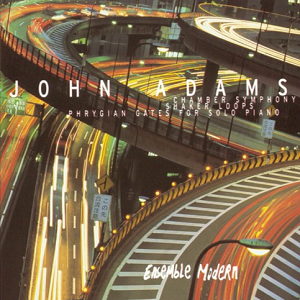
John Adams: Phrygian Gates (RCA Records)
Hermann Kretzschmar, piano

Sometimes, instead of a complicated meal full of newly-invented ingredients and prepared with exotic techniques, it is preferable to have a simple salad composed of greens, oil, and salt. John Adams’s Phrygian Gates is the musical equivalent of this, in my opinion. This piece confirms that a construction built from the simplest ingredients can unfold into a supremely delicious and satisfying experience. – Seth Tompkins

Tune in to Second Inversion in the 4pm hour today to hear this piece.


So Percussion and Matmos: “Flame” from Treasure State (Cantaloupe Music)

Electronic music and modern composition collide in Treasure State, the collaborative album from Matmos and So Percussion.  In “Flame,” a melancholy guitar and phonoharp are joined and propelled by ripples of vibraphone, glockenspiel, and stomping as the song transitions from alluring to pure cacophony.

Matmos is notorious for bizarre sampling, having previously used sounds of “the amplified neural activity of crayfish,” lasers, and even surgical procedure noises to produce gorgeous experimental techno. Treasure State is a showcase for both Matmos and So Percussion, as well as an interesting study in unusual musical resources—and “Flame” will thank your ears for “sampling” the album with its stylized cascading groove. – Rachele Hales

Tune in to Second Inversion in the 8pm hour today to hear this piece.


David Leisner: Dances in the Madhouse (Centaur Records)
Clayton Haslop, violin; Jack Sanders, guitar

An early 20th century lithograph, entitled “Dance in a Madhouse,” depicts a scene in an insane asylum that inspired composer David Leisner to write four dances for the highlighted patients. The first movement, “Tango Solitaire,” is for the stylish woman dancing solo in the center of the frame. “Waltz for the Old Folks” corresponds with the happy couple in front of her, who seem completely comfortable with their insanity. Third, “Ballad for the Lonely” represents the despairing women on the sidelines, and “Samba!” is for the couple on the left, dancing with wild, dizzying energy.

The recognizable dance rhythms move through lenses of distortion as they may be perceived by individual patients in the scene. The melodies and cadences are largely harmonious and accessible, conveying a sense of joy in spite of circumstance, with “Ballad for the Lonely” evoking a swell of sympathy for those unable to take part in the celebratory moment. Jack Sanders’ guitar and Clayton Haslop’s violin respond seamlessly to one another, delivering a remarkably rich and unique listening experience. – Brendan Howe

Tune in to Second Inversion in the 9pm hour today to hear this piece.

Sneak Peek Audio Leak: “Disarm” by Tristan Eckerson

by Maggie Molloy

Composer and pianist Tristan Eckerson is a bit of a nomad—both literally and musically. Moving from city to city since his teenage years, he’s developed an ear for musical exploration and a willingness to follow the melodies wherever they lead him.

His compositions draw musical inspiration from around the world, distilling it through the uniquely tender, quiet introspection that only solo piano music can express. The music itself is nomadic, balancing a restless, forward momentum against moments of silence, reflection, and restraint.

Eckerson’s new album Disarm, which comes out September 16 on 1631 Recordings, features a collection of solo piano works which blend elements of minimalism and modal jazz with more traditional classical idioms.

But you don’t have to wait until September 16 to get a taste. We’re thrilled to premiere the title track off the album right here on Second Inversion. Give it a listen and read through our interview with Eckerson below.

Second Inversion:  What was the inspiration behind “Disarm”?

Tristan Eckerson: I had been getting really into modal writing and listening to a lot of Chick Corea, and I wanted to do a piece that was modal all the way through—so that was the basis for “Disarm.” I also think it was inspired by listening to a lot of Alberto Ginastera for the same reasons. I didn’t want to get into tonal harmony at all, but I still wanted to do something that had some variation, a chord progression, and excitement.

SI: How would you describe the sound of this piece?

TE: It’s definitely modal and you could say it has a modern, minimalist sound, at least to me. It also harkens back a little bit to Ginastera, or at least that’s what I hope. I think it’s energetic and I was really trying to fuse the sounds of jazz and world with contemporary classical—to make something that wasn’t outwardly “jazzy,” but that incorporated elements of modal jazz, was composed, and could still fit into the world of what’s considered “contemporary classical” music.

SI: How does this piece relate to the rest of the album?

TE: I think it is the lynchpin of the album. I wanted to do something minimal, ethereal, and modal, but also contemporary, genre-bending, and exciting. And I think that “Disarm,” being the title track, is a fusion of all of those things. Some of the other pieces have elements of one or the other, but “Disarm” combines the many elements that I like in classical and contemporary music into one composition.


Tristan Eckerson’s full-length album Disarm comes out September 16 on 1631 Recordings. Click here to view tour dates for his European tour in September.