

Max Richter writes a lot of music.
Music for film, music for ballet, music for rainy days and quiet reflection, music for political protest—even music for sleep. Drifting amid a collection of keyboards and synthesizers, Richter writes pensive melodies that sparkle with elusive subtleties of texture and timbre. His delicate electroacoustic sound worlds have unfolded across eight solo albums to date, and this coming Tuesday, you can hear music from two of them performed live in Seattle at the Moore Theatre.
Joined by the American Contemporary Music Ensemble, Max Richter will perform his album Infra in its entirety, along with selections from his 2004 album The Blue Notebooks, which was reissued earlier this summer with new arrangements, remixes, and a previously unreleased track.
We caught up with Richter by phone to talk about the world of sleep, the power of literature, and the politics of music.
Second Inversion: The Blue Notebooks has just been reissued after 15 years. How have you and your music changed during that time?
Max Richter: Re-encountering an old work is, in a way, meeting a previous version of yourself. Some things are different, some are the same. The central concerns are pretty much constant, but part of creativity is moving beyond what you know. There is a little pool of light that we inhabit, of things that we know, and each project is a step out of that and into the dark, into something different. So it’s interesting to re-engage with these pieces. Seeing them from the perspective of today, they feel fresh.
SI: You have said before that The Blue Notebooks was written as a protest album in the run-up to the 2003 invasion of Iraq. The music also draws from the writings of Franz Kafka’s The Blue Octavo Notebooks and Czesław Miłosz’s Hymn of the Pearl and Unattainable Earth. How are those literary works connected to the Iraq War in your creative mind?
MR: The catalyst really was my sense that our political processes were moving into the realm of fiction. Kafka struck me as somebody very appropriate to invoke at that time. Kafka is so much the patron saint of doubt, in a way, and his use of the absurd to critique power structures in the society around him felt very relevant. And then Czesław Miłosz, writing about another war at another time, but very beautifully—and also about the redeeming powers of art. That last text, which prefaces The Trees on the record, is really about what can creativity do to make the world in some way better?
SI: Do you consider your music to be political?
MR: Yes, I do. I think if we’re making a creative contribution to society, we’re taking part in the conversation that is society, then we are engaging in political action, just by default. I’m not against the idea that art should have a kind of a social use, a kind of a utility. It’s for something. Music is for dancing, it’s for getting married, it’s for being buried, it’s for all sorts of activities. And it can also be a tool for thinking, and for engaging with the issues of society.
SI: At this concert you’re also performing Infra in its entirety. What is the story behind that album?
MR: Infra comes from a ballet I made for the Royal Opera House in London with Wayne McGregor. The starting point for the ballet was really the 7/7 bombing attacks in London. Wayne was interested also in one of the texts from T. S. Eliot’s The Waste Land, as a kind of jumping off point.
From a musical standpoint, because these attacks happened during rush hour, the victims were travelers. Of course, there’s a big history of traveling music within classical music. My favorite traveling music is probably the Winterreise of Schubert, so I submerged elements of Schubert’s music in the texture of Infra. You hear echoes of Winterreise and other bits of Schubert floating around in the background.
SI: Storytelling is a big part of your work, especially considering the amount of music you have written for film and dance. Do you always have a narrative in mind when you’re writing music? What about your more ambient compositions, like the 8-hour Sleep?
MR: Well, Sleep is a bit different because all the usual dynamics of music performance are sort of upended, really. In the case of Sleep, the piece is really an accompaniment to something, rather than the thing itself. So when we perform Sleep, the theme is the experience of the sleeping listener. And when we play the piece, we very much have the impression that we’re accompanying what’s happening in the room. It is the polar opposite of the ordinary performance dynamic, where you’re trying to project a story or a text to the audience. So it’s a very, very interesting situation for us. Everything is topsy-turvy in the world of Sleep.

SI: Did you write Sleep at night?
MR: Yes, I write a lot at night anyway. When we had tiny children I became sort of nocturnal, because that was the only time I could get any quiet—and the habit stuck. My writing hours for years and years have been late night hours.
SI: Do you listen differently at night?
MR: Well, at night everything’s quiet. You have a different kind of a mental space. At nighttime, it’s not the fact that the phone doesn’t ring, but it’s the fact that you know it won’t ring. That’s what makes it special.
SI: What is the ideal listening environment for people to experience your music?
MR: The records are conceived as records—they’re not individual tracks. I would love people to experience them as a whole, if possible. But at the same time, I’m very interested in what people bring to it. The pieces themselves are really propositions—they’re “what if?” questions. I have ideas about The Blue Notebooks, I have ideas about everything that I’ve written, but actually it’s the encounter with the listeners that turns that theory into something real.
SI: Many of your fans are not traditional classical music concert-goers. What do you think it is about your music that attracts a broader audience?
MR: It’s partly to do with a deliberate decision of mine which I took way, way back. When I was a student, I was writing in a kind of new complexity style—very, very dense modernist music. Which is what you were supposed to be writing if you were a university composer at that time. I just became dissatisfied with the reach of that material. I felt like I was talking to a tiny, tiny group of specialist listeners, who were either composers or new music professionals. I felt like that was somehow selling the idea of what creativity could be—sort of selling it short.
So I deliberately set out to develop a language which was more direct and plainspoken—something that could convey ideas in a very straightforward way. That meant engaging with different musical cultures, with electronics in the studio, and all these different things. It was a deliberate choice on my part, to rebuild my language from the ground up and remove a lot of the intellectual baggage.

Photo by Wolfgang Borrs.
SI: Do you believe classical music should be made more accessible in general, or do you think there’s a place for more challenging music too?
MR: There are a lot of questions about what makes music accessible—it’s in part to do with the material itself. Schoenberg remarked that if it’s popular it’s not art. And that became a kind of badge of honor—who cares if you listen? That kind of idea, from Milton Babbitt. It’s not that I’ve got anything against that material. There is some amazing music within that tradition. But it is a rather totalitarian kind of a viewpoint, and I find it politically troubling.
I think we kind of have a hangover from that era. Of course things have changed a lot, and it’s a very lively scene now, but we still have a lot of work to do to recover a broader constituency which just went away after the 60s, 70s, and 80s, when these sorts of attitudes were more prevalent. Actually I think most people don’t have a sense of prejudging material, and there’s nothing in itself about atonal music which makes it difficult. After all, people very happily listen to all kinds of stuff while they’re sitting in the movie house and the orchestra is screeching away in a very atonal situation. And people quite happily sit there eating their popcorn and it’s great. It isn’t the sounds per se, but it is the cultural baggage around it which has made things very difficult in terms of just letting people in. I think that’s a great pity, but a more direct, inclusive aesthetic is certainly a good starting point.
SI: What influence did studying with Luciano Berio have on your music?
MR: When I went to Berio I had just finished at the Royal Academy of Music in London, so I was firmly embedded in the modernist project. My music was very, very complicated and kind of impenetrable. He basically just subverted all my expectations and deflated a few of my grander ideas, and tried to lead me back to the origins of what it was I was trying to say. I trusted that he knew what he was doing because I really admired his music, and I think his music has an extraordinary generosity toward music history in it. To an extent unusual amongst the modernists of that time, his work embraced other music. There wasn’t that sense of erasing the past that you find in Boulez or someone like that.
I engaged with his ideas about a coexistence of different musical traditions and these things sort of talking to one another. A piece like Recomposed is very much in the footsteps of Berio. When you think about his Sinfonia, what he does with the Mahler for example in the second movement—it’s “Mahler Recomposed”! So his influence is everywhere in my work, in some ways.
Max Richter and the American Contemporary Music Ensemble perform at the Moore Theatre on Tuesday, Oct. 2 at 7:30pm. Click here for tickets and more information.

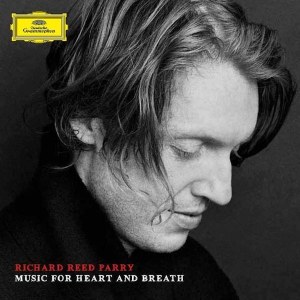 I have to admit: this Staff Pick was a tough choice for me. It was a toss-up between Richard Reed Parry’s For Heart, Breath and Orchestra, and Christopher Cerrone’s How to Breathe Underwater. In one corner, a piece by a guy from one of my favorite bands, wherein he had musicians and the conductor listen to their own heartbeats through stethoscopes and asked them to play along as closely as possible to their own heartbeats—a beautiful existential notion and a beautiful thing to listen to.
 In the other corner, a piece that’s kind of about depression, which is based on a Jonathan Franzen character from the book Freedom, of whom Franzen said, “[she] was all depth and no breadth. When she was coloring, she got lost in saturating one or two areas with a felt-tip pen.” If you are not weeping by the end of that sentence and by the end of this heartbreakingly hopeful piece, check your pulse, man. Ultimately, I loved them both so much that I had to just close my eyes and pick one. But…oops! I wrote about both of them. Now you’ll never know which one I picked! –
 “Every city produces its own set of harmonies,” Michael Gordon writes in his program note for this piece. In Beijing Harmony, those chords are dazzling and majestic, shimmering magnificently across the orchestra.


