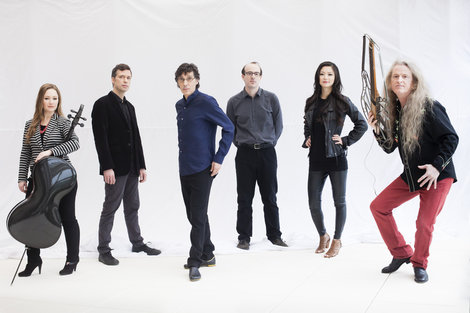
NEW VIDEOS: Matt Haimovitz and Christopher O’Riley at the Tractor Tavern

In case you missed these on Facebook and Twitter, be sure to check out these videos with Matt Haimovitz and Christopher O’Riley from the iconic Tractor Tavern in the heart of Seattle’s Ballard neighborhood.

(Yes, that is a styrofoam cup in Matt’s cello)

(Beethoven in a Bar… why not?!)

ALBUM REVIEW: The Knights: the ground beneath our feet

by Jill Kimball

groundbeneathourfeet

For centuries, the concerto grosso form has served to play up the strengths of a chamber group by highlighting its best virtuosi and calling for a conversation between soloists and orchestra. The Knights, a Brooklyn-based collaborative ensemble, believe that composition form still has room to grow.

They’ve dedicated their latest album, the ground beneath our feet, to the concerto grosso. The album features both classic and new examples of the form, from Bach to Stravinsky to some of the group’s very own composers. The result is a collection of music that’s grounded in a common cause but weightless in execution.

Steve Reich’s Duet for Two Violins and Strings is a lovely way to start off any album. Accessible and dreamy, it’s pleasing to the ear of everyone from classical aficionados to newcomers. Though it’s puzzling to me that an album called the ground beneath our feet would begin with something so gravity-defying, this interpretation soared effortlessly and beautifully enough to make me forget my confusion.

“Effortless” is also the primary word I’d use to describe the performance of Bach’s Concerto for Violin & Oboe. Sometimes it’s difficult to gauge the quality of musicianship in a new-music ensemble whose oeuvre consists mostly of world premieres. But when the Knights pull off a live recording whose quality rivals classic recordings with Hilary Hahn and Yehudi Menuhin, they really prove their mettle. The strings sound a bit less dark, rich and precise than in a classic recording, but that may have more to do with the concert’s setting than with the musicians themselves.

Stravinsky’s “Dumbarton Oaks” concerto is like a mashup of Bach’s Brandenburg Concertos and The Rite of Spring, a really fascinating listen. Stravinsky once said of the piece, “Whether or not the first theme of my first movement is a conscious borrowing from the…Brandenburg set, I do not know. What I can say is that Bach most certainly would have been delighted to loan it to me; to borrow in this way was exactly the sort of thing he liked to do.” It’s true: to borrow an idea from a predecessor and turn it into something that’s unmistakably yours is so like both Bach and Stravinsky. The Knights’ rendition is a little slower than usual–all the better to revel in the complex but very listenable themes interwoven throughout the piece.

If you love recordings from the Silk Road Ensemble, headed by the world-famous cellist Yo-Yo Ma, you’ll probably love the next piece: a joint effort between two composers who met while they played in Silk Road together. One of them, Siamak Aghaei,  spent a lot of time in his native Iran gathering field recordings of folk musicians, and played them back to an excited Colin Jacobsen. Over the years, those field recordings have inspired three co-compositions; this latest effort features violin and santur, a kind of hammered dulcimer dating back to ancient Babylonia.

The title track is a very different sort of concerto, one whose composition was a group effort that drew on The Knights’ individual strengths and musical interests. The whole thing is tied together with a bass line taken from Tarquino Merula’s Ciaccona, and with that common thread is able to morph organically from Baroque symphonic music to creatively syncopated Irish folk music, from melodies influenced by Romani and Indian culture to improvisational drumming and jazzy, Spanish-inspired dance music, complete with claves. It all works for me until the very end, when there’s a silence before Christina Courtin sings “Fade Away,” her own original song. The bass line connection is seemingly lost, and the cartoonish fanfare backing Courtin was odd paired with her lyrics (“I’m not saying I’m afraid of dying, baby / I count my blessings with you every day / But you know I can’t go on this way”). Despite the fact that “Fade Away” would be more at home on a Sufjan Stevens album, I liked its sound.

I reached the end of the CD puzzling, once again, over the title of the disc. What, in this instance, is “the ground beneath our feet?” Common thought is that Bach laid the ground on which all musicians stand today. But the fact is, many contemporary composers choose to leave the ground and explore new frontiers in space.

Take a look at the album art and you’ll see a portrait of Stravinsky cut open and peeled back to reveal a dark, starry abyss. I’ll take this as a sign that The Knights acknowledge the great forces of the past but will sometimes refuse the pull of their gravity.

If the ground beneath our feet has indeed disappeared in parts of this album, that’s okay: outer space sure sounds pretty good to me.

LIVE CONCERT SPOTLIGHT: February 13-15

by Maggie Molloy

Messiaen, new music marathons, and more are bound to make your Valentine’s Day weekend memorable!

Seattle Symphony’s [untitled 2]
SSO Musicians at LPR (c) Brandon Patoc

(Photo Credit: Brandon Patoc)

Get into the Valentine’s Day spirit this weekend with an intimate late-night contemporary music performance in Benaroya Hall’s breathtaking Samuel and Althea Stroum Grand Lobby. Seattle Symphony musicians will be performing the second installment of this season’s [untitled] series, a unique musical sequence which presents new and contemporary music in a more casual concert setting.

This Friday’s performance features Jacob Druckman’s avant-garde “Synapse” for tape as well as his virtuosic “Valentine” for solo double bass. The program also includes Vladimir Martynov’s timeless “Schubert-Quintet (Unfinished)” and John Adams’ dynamic String Quartet, a piece which restlessly explores elements of minimalism, folk melodies, and more.

Here’s a great interview feature produced by Seattle Symphony!

The performance is this Friday, Feb. 13 at 10 p.m. in Benaroya Hall’s grand lobby.


Bang on a Can Marathon

002_boac_-tmserling_2014_2900

(Photo Credit: Peter Serling)

An entire marathon of new music is coming through Seattle this Sunday—literally. Six full hours of new music, to be exact. This Sunday the New York-based contemporary classical music collective Bang on a Can is taking over Seattle’s Moore Theatre to present a wide variety of new musical works by local, national, and international artists.

One of the evening’s highlights includes the electric chamber band Bang on a Can All-Stars and red fish blue fish performing the Seattle premiere of Steve Reich’s masterwork, “Music for 18 Musicians.” You can also look forward to a performance of Brian Eno’s ambient classic, “Music for Airports” and a musical set by Seattle’s own experimental hip-hop duo Shabazz Palaces. The jam-packed program also includes an indie-orchestral collaboration featuring Seattle composer Jherek Bischoff with Scrape Ensemble and Jim Knapp, a piano-percussion duo featuring Gust Burns and Greg Campbell, signature works by Bang on a Can co-founders, and so much more!

The marathon kicks off this Sunday, Feb. 15 at 4 p.m. at the Moore Theatre. Doors open at 3 p.m.


Simple Measures Presents “Messiaen Around with Time”

Messiaen_Facebook-2

What classical music enthusiast doesn’t love a good music pun? Fill your weekly corny music joke quota this weekend at Simple Measures’ “Messiaen Around with Time.”

Celebrate 20th century French composer Olivier Messiaen as Seattle artists bring to life his enduring eight-movement masterpiece, “Quartet for the End of Time.” Messiaen wrote and premiered the piece while in a prisoner-of-war camp in Görlitz, Germany in 1940. The piece combines birdsong and beautiful imagery to create poignant and powerful music. Simple Measures will share the full story behind the piece before clarinetist Sean Osborn, violinist Cordula Merks, pianist Mark Salman, and cellist Rajan Krishnaswami perform it.

The performances are this Friday, Feb. 13 at 7:30 p.m. at the Chapel Performance Space at the Good Shepherd Center in Wallingford and this Sunday, Feb. 15 at 2 p.m. at Town Hall in Seattle.

ALBUM OF THE WEEK: Jessica Meyer’s “Sounds of Being”

by Maggie Molloy

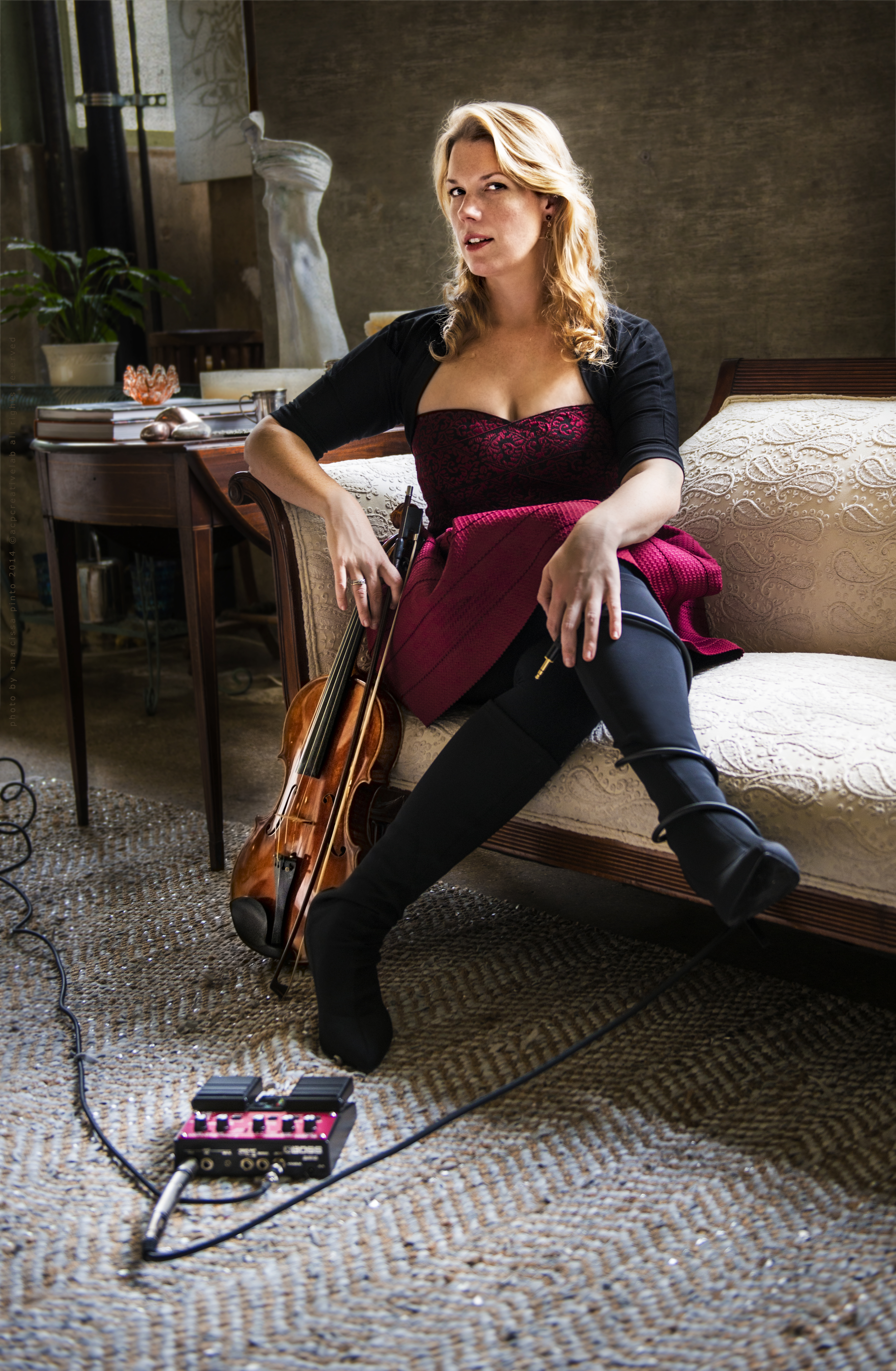
3 JESS PRESS PIC_byAnaPinto

Traditionally the viola has always played more of a supporting role in classical music—crammed between the violin and the cello, its rich, luscious tone sometimes gets lost in larger orchestras. And so, violist and composer Jessica Meyer decided to create a new musical album in which viola is the star—in fact, viola is the entire orchestra.

Meyer’s “Sounds of Being” is an electroacoustic album featuring her own original compositions for viola and loop pedal. The seven pieces utilize the full range of her instrument (and the full range of her pedal) in order to take the listener through different emotional states of being, ranging from blissful joy to tormenting anger—and everything in between.


Meyer’s diverse background in Baroque, classical, jazz, and contemporary music informs her compositions, which combine elements from a wide variety of musical styles to create an innovative, avant-garde sound.

“My music is inspired by sounds I have either performed over the years as a classically trained violist or listened to while driving my car—from Bach, Brahms, and Blues, to Flamenco, Indian Raga, and Appalachian fiddling,” Meyer said.

The loop pedal allows her to multiply her gorgeous, expressive tone, and the delicately layered textures blend to create an ambient one-woman orchestra. Throughout the album, her viola paints beautiful soundscapes of surprisingly varied colors and timbres.

“I love performing fragile timbres, wailing gestures, and percussive grooves to make my instrument sound like a drum, an electric guitar, an Indian sarangi, or an extension of my own voice,” Meyer said. “The loop pedal helps me combine all of these sounds together to form an entire orchestra of emotion.”

One of the simplest human emotions is captured in Meyer’s “Hello,” a piece which explores the simple and innocent joy of truly connecting with another person.

“This is that warm and fuzzy feeling you have when you’re spending time with a person and they move from just being an acquaintance to something more meaningful,” she said of the piece. “Nothing is particularly said, but the connection is clearly felt.”

A gentle opening melody flows sweetly and simply, rising higher and higher in pitch like the butterflies you get in your stomach when you’re around a new crush. The piece develops into a series of charming, happy, hopeful variations on a simple theme, capturing the innocence and joy of truly falling for someone.

“Into the Vortex” transports the listener to the opposite end of the emotional spectrum: anger. Meyer describes it as a “bluegrass-meets-death-metal” piece about the way it feels when you allow negative energy to suck you in.

The piece starts out soft, calm, and inquisitive, but a little over a minute in is when you fall into the vortex, spinning and whirling, picking up speed until everything is frenzied and chaotic. Strong, visceral bow strokes and extended techniques create an aggravated, rhythmic texture that encompasses the listener in a blur of fury.

Meyer’s “Touch” explores yet another uniquely human feeling: the body’s response to human contact.

“This piece strives to illuminate what happens inside your body on a cellular level when this basic human need is met,” Meyer said.

The piece begins with dramatic pizzicato hairpins which gradually give way to delicately overlapping melodic phrases, creating a constantly shifting soundscape which is grounded in its softly pulsing rhythm. The music repeatedly swells in intensity and shrinks back into calmness, imitating the vivid and varied perception of touch.

The album closes with the dramatic “Duende,” a musical exploration of passion and power. Broad, sweeping bow strokes soar across a wispy, high-pitched backdrop, with Meyer’s freeform solo playing steadily growing in intensity throughout. She layers in a lively, repetitive percussive groove to serve as a vibrant and captivating musical backdrop for her dynamic melodies, ending album with a bold and beautiful bang.

“‘Duende’ is a concept the poet Lorca wrote about—the moment when someone is inhabited by a mysterious and powerful force that everyone around them can feel, but no one can explain,” Meyer said. “This last piece is the quest for that moment; when the spirits rise up from the soles of your feet, and you don’t give a damn about anything anymore…and you just play.”

NEW VIDEO: Third Coast Percussion and Joshua Roman

We took our video crew on the road to Town Hall, Seattle for a video session with Third Coast Percussion & Joshua Roman on January 11, 2015.

Be sure to check out all of our other videos, too!