Programming a Classical Season

by Joshua Roman

Joshua Roman by Hayley Young 7

My mandate from the beginning was clear and concise: Town Music’s programming should reflect my musical interests. A live iPod playlist, if you will. Well, my interests are broad and evolving! What can I say?

Nine seasons in, I’ve seen the development of an audience that comes for an experience. We’re lucky, in this sense, to be tied to an organization like Town Hall Seattle, which fosters community discussion and debate around issues important to Seattle. This spirit of engagement naturally flows over into the music series, and has prompted me to explore musical connections that might not be obvious based on traditional metrics. When an audience member leaves one of the Town Music concerts, I want them to have had an experience that generates curiosity and excitement. Hopefully, they will have been surprised at some point, whether by unknown sounds or their own reaction to something of which they previously had a different expectation.

But how to do this without having a total mishmash of unrelated projects? There are several things which remain consistent from season to season:

Every season includes music by J.S. Bach, whether it’s a concert of Bach or mixed in other programs. I love Bach, and find it an ideal anchor for explorations of many kinds of music. In past seasons, Bach has been played by Baroque specialists like Catharina Meints and paired with other music, like Karen Gomyo’s evening of Bach and Piazzolla. This season, Johnny Gandelsman plays all six Sonatas and Partitas. Yesss…

Every season ends with a commission. A musical series which seeks legitimacy must, in my mind, be a part of the continuing tradition of creativity and innovation which is classical music. This means commissioning and/or performing new works. End of story!

Every season has at least one concert where I perform. My relationship with Town Hall Seattle began with a solo performance, before I was asked to join the team as an Artistic Director. My identity is very much wrapped up in performance, and I learn so much from sharing the stage time and time again in front of an audience that I know, and that knows me.

So how to bring it all together? Several of my past seasons have had an arc, or a particular focus. The season of extra-musical influence comes to mind, where concerts had textual, dance, or other non-musical influence. Or the season where each concert had a different number of players. However, I find that these ideas work best when they develop naturally during the planning process. I like to start with one or two intriguing performers or programs, and then find the connections (obvious or not, at this point) to at least one other idea that’s been on my mind. From there, I might consciously begin to search for other performances that will enhance or contrast the developing theme.

My best example of this process is a season from several years ago, where each concert featured a composer/performer playing their own work and works that had inspired them. I had already decided on a couple of the performers when I realized the commonality: they were also composers. It wasn’t hard to find other people I’d already wanted on the series who also composed. In the end, we had Derek Bermel, So Percussion, the JACK Quartet, Gabriela Lena Frank, and to bring it all back home to Seattle, players from the Seattle Symphony who also compose.

Which leads me to the last piece of the puzzle: maintaining a connection and sensitivity to the community I serve with this series so I can properly inhabit my role as provocateur. Some of that comes from talking regularly with friends and colleagues in Seattle, during my many (many!) trips there or over the phone and email. I also like to find special occasions to highlight local musicians, whether in an all-cello ensemble or the composer/performer concert. One of the more gratifying endeavors was in June, where we managed to pull Seattle Youth Symphony players, alumni, and mentors from the Seattle Symphony and other orchestras together to share the stage in a program of inspiring string ensemble music.

And, my most frequent activity as an Artistic Director: listening. Hours are spent scouring the internet for music and musicians I haven’t heard. Following trails of interesting ideas to see where they originate. Going to concerts when I can (usually at home in NYC) and asking colleagues what’s new and what’s great as I travel around the country.

In the end, I’m on the hook for the programming decisions, and I take this job very seriously. This is a never-ending path of discovery that has taken me far beyond simply programming my own recitals, and it has had a profound impact on how I see my artistic voice developing. Sharing is such an important part of being human, and as an artist I see opportunities to improve that quality in myself, and they are certainly not limited to the concert stage. I love the the feeling of giving someone else a chance to share their voice with an audience and enjoy the dialogue this beautiful interaction spawns.

Take a look at this upcoming Town Music Season and past concerts.

Music I’m listening to:
Ieyoka: “Say Yes Evolved”
Bela Fleck: “Bela Fleck and Abigail Washburn”
Xenakis: Complete String Quartets (JACK Quartet)

STAFF & COMMUNITY PICKS: September 10, 2015

A weekly rundown of the music our staff and listeners are loving lately! Are you interested in contributing some thoughts on your favorite new music albums? Drop us a line!


Joshua Roman on Gyorgy Ligeti’s String Quartet No.1:

51ixgsgCNyL._SY300_

This is one of my favorite pieces by Gyorgy Ligeti.  It’s an eight movement quartet, but since each movement is quite short, it’s similar in length to most string quartets.  With these eight movements, there are some absolute stand outs.  The first movement starts out rather creepily with slow-moving scales underneath a melody that has all sorts of twists, turns, and oddities.  I also really love the fourth movement, a presto. It is a kind of wild dance – little canonic episodes and lots of division between the quartet.  For instance, two players will play the same thing at the same time but a half step apart. These minor seconds create a very odd sound that’s quite energetic.  There are some beautiful shimmering colors in the fifth movement.  In the sixth movement, Ligeti plays around with the waltz, and of course, never lets it stay the same for very long.


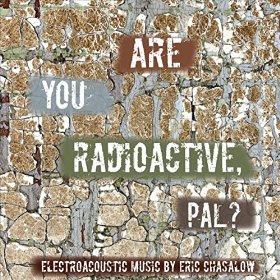
Rachele Hales on Eric Chasalow’s Are You Radioactive, Pal?:

61s4W-6654L._SS280

Lots of pizzicato and vocal fragments give the album great energy, but this is one of those
collections that demands focused listening to be really appreciated.  Definitely not a good option for your next dinner party.  The juxtaposition of audio elements felt bizarre on my first pass, but when I listened again they formed interesting musical stories.  For adventurous listeners only.


David Wall on The Gnostic Trio’s In Lambeth: Visions from the Walled Garden of William Blake:

MI0003637663Ethereal, lush, and lyrical, In Lambeth: Visions from the Walled Garden of William Blake conveys a deep sense of mystery born out of the art and poetry of the 18th Century English Romantic , William Blake. As the title implies, one feels upon listening as though they are indeed peering through the hedges to catch a glimpse of a garden full of other-worldly characters; characters from Blake’s personal mythology, who are brought to life by The Gnostic Trio’s unusual but perfectly apropos combination of instrumentation (guitar, harp, and vibraphone) and John Zorn’s compositions. These pieces, as with Blake’s writing and artwork, are both rooted in tangible history, having distinct touches of jazz, minimalism, and even folk, yet at the same time transcend these genres to become a force unto itself.

ALBUM REVIEW: Feral Icons

by Maggie Molloy

P1050765-e1366912850353

When you hear the word “feral” used to describe a musical instrument, the first thing that comes to mind is probably something wild and ferocious like an electric guitar, a saxophone, maybe even a double bass—but probably not a viola.

Unless, of course, you are composer Peter Vukmirovic Stevens. In his latest album, titled “Feral Icons,” he explores the tempestuous and untamed territory of solo, unaccompanied viola. The performer on the album is violist Mara Gearman, a Seattle native and a member of the Seattle Symphony.

Stevens is a Seattle-based composer, pianist, and multimedia artist whose music is deeply influenced by visual media, literature, and travel—and “Feral Icons” is no exception. The music was inspired, in part, by his travels and his interest in art history.

“I’ve been surrounded by icons my whole life, growing up,” said Stevens, whose first musical influences came from the Serbian Orthodox church where he sang during church services as a child. His new album was especially inspired by the rich history of icon paintings in places like Cyprus and Bulgaria, where he recently visited.

“I was doing my research on that art form, which I think is unique in the Western world in that it’s very symbolic,” he said. “The work is done anonymously by the artist, and the amount of symbolism that is present in icons was a great vehicle for adding live musical ideas as musical representations of icons and people that I admire…Each piece is sort of an icon, a painting in itself of a particular attribute.”

The album is a suite of six pieces for solo, unaccompanied (and very assertive) viola which combine the instrument’s rich tone with an exotic harmonic language and a thematically rich musical arc. For Stevens, the pieces on the album collectively represent a single entity, though each is varied in its symbolism and character, as is brought out through Gearman’s commanding performance.

“Watching her play is like a display of power,” Stevens said. “She is a tremendous player. In order for solo instrument pieces to be communicated, having somebody of her caliber is really important to bring the music to life.”

The opening title track, “Feral Icons,” begins with broad, full-bodied bow strokes that highlight the viola’s rich, raw tone. The expressive melodies are perfectly balanced against double-stop harmonies and unrelenting rhythms, creating a gorgeous contrast of musical textures.

It is followed by the melancholy reveries of “Sovereign, I,” a pensive and heartfelt musical meditation. The musing melodic lines ring across the viola’s entire pitch range above rich harmonies. In fact, Stevens considers the spacing of harmonies to be one of the most important aspects of his harmonic thinking.

“The benefit of working with a string instrument is that you can play the same note sometimes on three or four different strings, and it allows you to create different tonal effects and different timbral effects,” he said. “And it’s nice that it’s not a piano, because you have all these different strings available to think about the color of the sound you want and where it is on the fingerboard.”

The third work on the album, “Sanctuary,” is an opulent exploration of color, with textural interest created through dreamy, sweetly ringing melodies contrasted with lush chords, percussive flourishes, and the occasional, deliberate silence.

The next piece, “Ex Nihilo,” takes its title from the Latin phrase meaning “creation out of nothing.” Expressive melodies, aggressive rhythms, forceful double-stops, and shifting tempos create a richly varied tapestry of musical textures.

“Bloodlines” follows with its haunting, romantic melodies dancing above a low drone, and the album comes to a close with the breathtaking lyricism and visceral energy of “Black and Gold.”

And balanced against the power and intensity of 45 minutes of solo viola, Stevens manages to maintain the sincerity, the vulnerability, and above all, the beauty of a single, unaccompanied instrument.

“It’s a wonderful challenge to write for a single instrument,” he said. “That a single instrument can carry the entire musical vehicle that is needed for a good piece of music to be realized. And that challenge is so exposed. It’s a wonderful metaphor for the individual, for a single person just trying to process the world around them. The solo instrument is a wonderful means of expressing that individuality and that complexity within each of us.”

A “Feral Icons” CD release party and performance featuring Gearman will take place at Seattle’s Steve Jensen Gallery on Capitol Hill this Saturday, Sept. 12. Doors open at 7:30 p.m. and the performance begins at 8 p.m.

cover

ALBUM REVIEW: “American Dreams”

by Maggie Molloy

shq_new

“I got piano lessons when I was 5 years old from the widow of the town doctor in a little farm town in Iowa,” said composer Ken Benshoof. “I would go there after school, she would give me bread with brown sugar and butter, and we would have a music lesson.”

And it was there, in America’s heartland, that Benshoof got his very early start to a career in music composition.

“It wasn’t very long before I felt that the pieces she was asking me to play were not very good, and that I probably could write better pieces,” he laughed. “So, I found a piece of paper and drew some lines on it and started putting notes. I’m sure whatever I wrote wasn’t any better than what I was playing, but the impulse to make the world better by writing a better piece stayed with me for my whole life.”

In many ways, that’s the dream—finding one’s passion, pursuing it with unbridled determination and dedication, creating a life for oneself, and maybe even making the world a better place along the way. In fact, some would even consider that to be the American Dream.

Benshoof is just one of four American composers featured on the Seattle-based Saint Helens String Quartet’s debut album, “American Dreams.” Comprised of violinists Stephen Bryant and Adrianna Hulscher, violist Michael Lieberman, and cellist Paige Stockley, the quartet is committed to exploring adventurous and uncharted musical territory.

The modern-day musical pioneers’ latest creative endeavor explores the beautiful and bold diversity of American music, mixing contemporary classical with elements of folk tunes, blues and jazz grooves, American spirituals, and more. The album was recorded and produced at Jack Straw Cultural Center, the Northwest’s only nonprofit multidisciplinary audio arts center.

“What we found attractive about [these composers] is that their music is warm, it’s approachable, it doesn’t turn you off,” cellist Paige Stockley said of the album. “It’s not hard to grasp. It helps audiences just immediately connect to the music because it’s heartfelt and it’s beautiful. One of the rules that I use when I’m choosing repertoire is ‘Is this music that I love? Is this music that I want to hear? Is this music that feeds my soul?’”

The album’s title track is Grammy Award-winning composer Peter Schickele’s five-movement String Quartet No. 1, “American Dreams.” The piece evokes images of rural America through an adventurous combination of jazz and Appalachian folk elements over waltzing basslines, rustic melodies, sustained harmonics, and energetic syncopations.

“This piece is so beautiful because it has birds at dawn, it has barn dances, it has Indian chants played by the viola,” Stockley said of the piece. “If you can picture American Midwest and the wheat fields at 4 o’clock in the morning and birds chirping and the distant, fading sound of a barn dance—that’s ‘American Dreams’ quartet.”

Ken Benshoof’s “Swing Low” is similarly nostalgic. Based on the historic spiritual, “Swing Low, Sweet Chariot,” the work is comprised of eight very short pieces, each about one minute in length. The work makes use of folk-like pentatonic melodies in both major and minor harmonic contexts, with the original melody peeking through in ever-changing shapes and structures. Benshoof uses a colorful palette of textures and timbral details to explore the deceptively buoyant tune’s dismal subject matter.

The work is followed by Janice Giteck’s somber and lyrical one-movement quartet, “Where Can One Live Safely, Then? In Surrender.” Based on a cantus firmus by Johannes Fux, the piece portrays a sense of calm yearning, making use of the Dorian mode in a meditation on the unraveling of Western culture.

Bern Herbolsheimer’s five-movement “Botanas” explores a very different perspective: the piece is based on the rich melodies, flavorful food, and exquisite culture of the Yucatán region of Mexico.

“I always have been interested in the similarities between food, cooking, eating, creating music, and consuming it with our ears,” Herbolsheimer said of his inspiration for the piece. “So I thought I would combine each movement with a traditional Mayan melody and the name of a traditional Mayan botana or appetizer.”

From spicy salsa to roasted squash seed humus to traditional tamales eaten on the Day of the Dead, each piece has its own lively and distinct flavor. And while each one may be just a little tidbit of flavorful timbres and textures, together the piece is an entire feast of dynamic colors and characters.

The work is followed by Giteck’s “Ricercare (Dream Upon Arrival),” a slow and dreamy piece with lines of poetic counterpoint softly weaving in and out of each other.

Benshoof follows with his “Diversions” for violin and piano, performed by violinist Stephen Bryant and pianist Lisa Bergman. The six short movements include a variety of folk and blues elements which give each a warm, whimsical, and often playful character.

The final piece on the album is Benshoof’s “Remember,” a short, sweet, and hopelessly heartfelt piece inspired by the classic American folk song “Get along Home, Cindy.” (You know the one: “I wish I was an apple / Hangin’ on a tree / And every time my Cindy’d pass / She’d take a bite of me.”)

“The piece has a rich, romantic feel about it,” Benshoof said. “There’s a warmth in it and there is a little bit of ‘biting the apple’ and there’s a little bit of some third thing in there which I’m not going to try to describe.”

Perhaps that third thing might be wishing or wistfulness, melancholy longing or maybe even unrequited love—but whatever it is, it’s certainly nostalgic.

“‘American Dreams’  captures that early pioneer spirit,” Stockley said of the album, “The America that we wish we still had, or maybe we never even had it at all, but that feeling of hope and nostalgia, memory and warmth—and looking to a bright future.”

The Birth of a Cello Concerto

by Joshua Roman

Roman_13

Damn. This is hard! My respect for composers has gone through the roof since I first began scrawling on manuscript paper, and at no time has it been higher than the present. The focus and skill required to compose a work for soloist and orchestra are not easy to come by. Taking a few initial ideas – whether they come as a sound, a form, a gesture, a transitional mechanism – and turning them into a cohesive musical narrative is a process that can only be learned through experience.

There have got to be as many ways to do this as there are composers. I’ve gone through several myself, even on this one piece. To begin with, I had the idea to write from the piano. Supposedly, this would help me focus on the relationship between soloist and orchestra, rather than writing a solo line with incidental backup music behind it. Ironically, I realized several weeks into this method that all of the best moments were in the orchestra part, and the solo line was now secondary! Not to mention, it was taking forever due to my rudimentary keyboard skills.

A fun fix for this came from my growing experience playing the great concertos each season. I close my eyes, cello in hand, and imagine this scene: Walking out onto stage, bowing, shaking hands with the concertmaster (a friend), looking over at the conductor (another friend), and nodding that it’s time to begin. At that point, what happens? Who starts? What have I always wanted to do and hear that has not yet existed?

This method is very fun for me; involving more than one sense in the creative process. Picturing people I know helps, too. When I see them in my mind’s eye, I want to give them something meaningful to do musically. The natural outcome is that the orchestra becomes a partner, and the dynamic between solo line and ensemble is one that takes on a malleable quality. In the end, it even affects the form of this piece, and shapes the climactic moments, as a metaphor for individuality and life purpose emerge.

A little bit of a teaser: my concerto is in five sections, or movements (attacca). The rough outline follows that of a love affair, beginning and ending without the love interest. Of course, this is mostly a structure, the themes and motifs themselves interact on their own terms, and in the end, their momentum supersedes any story I might be using as inspiration. The orchestra is sometimes the broader setting, sometimes a reflection of the solo line, and sometimes used in smaller units as a partner or even antagonist.

It’s difficult to describe this process completely without musical examples. The work is not quite finished, but it’s getting there. Along the way, much has fallen to the cutting floor, and many moments and connections undergo intense scrutiny and revision. And yet, there is so much more that could be done. I understand both the desire to continue working on a piece forever – revising every few years as Stravinsky might – and the feeling of wanting to leave it behind and go on without looking back, taking along only the lessons learned.

Composing is a tough path, and I’m beginning to see that one must really earn their way to a good piece every time. It is a beautiful thing, something I hope we all learn to turn to from time to time as our artistic journeys deepen. And for those who are already in the thick of it, I offer my heartfelt gratitude as you bare your souls to give your music that touches something unique in each of us, and ignites our shared humanity.

Spotify Playlist
Taking a break from other music until I’ve finished the concerto, at which point the regularly scheduled playlist will resume… AKA, Silence, until I’ve finished the concerto!