Women in (New) Music: The Pure Cold Light in the Sky

Kin of the Moon is an improvisation-centric chamber series featuring three cutting-edge and iconoclastic women performers. Violist and composer Heather Bentley reflects on the music and meaning behind their debut concert, The Pure Cold Light in the Sky this Saturday, Nov. 18 at 8pm at the Good Shepherd Chapel.


by Heather Bentley

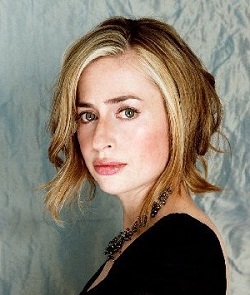
Kin of the Moon violist, improviser, and composer Heather Bentley.

It’s Armistice Day today, also known as Veteran’s Day, also acknowledged in astrology to be a particularly high vibrational day for the planetary deity Venus, who supports us to think with our hearts, and not just with our heads. It’s a good moment for reflection on this past year of seismic cultural upheaval that is continuing without abatement as I write.

The existential importance of music in my life has been magnified through the lens of all the enormous societal challenges we face. Creating Kin of the Moon is the outgrowth of a powerful desire to combine my private discipline of improvisation with my lifelong experience of presenting and performing concert music. Becoming an improviser in my late 20s was an attempt to liberate my own voice through my instrument. While I have always held composers like Brahms, Bach, and Shostakovich deeply in my heart as my best friends, there are aspects of professional classical music life that challenge my sense of creative agency.

I met Kaley Eaton on stage at the Royal Room, doing an improvised show with Steve Treseler’s Game Symphony. We’ve been close collaborators ever since, working together on her electroacoustic opera Lily, and co-creating our piece Atmokinesis for improvisers and SuperCollider processing. Leanna Keith is simply a spectacular flutist/improviser—we have been playing shows together since this summer and I couldn’t be happier with our Kin of the Moon team!

Here is our statement:

Kin of the Moon is an improvisation-centric chamber music series incubated in Seattle’s rich musical scene. Headed by violist/improviser/composer Heather Bentley, vocalist/composer Kaley Eaton, and flutist/improviser Leanna Keith, the group explores sonic rituals, promotes cross-pollination of genres, emphasizes the communicative power of specific performance locales and celebrates the creativity that multiplies itself through the collaboration of performers and composers. The artists of Kin of the Moon devote their lives to reaching higher vibrational levels through sound creation.

Kin of the Moon flutist and improviser Leanna Keith.

I was asked about the fact that our first concert features all women performers and composers. Actually, we were aiming to create the most compelling program to go with our new piece Atmokinesis and Kaley’s new sound installation wilderness, and it happens that we were very excited by Jessi Harvey’s quantum physics-inspired work The Multiverse and Pulitzer Prize-winning composer Kate Soper’s Only the Words Themselves Mean What They Say for voice and various flutes.

Kin of the Moon vocalist and composer Kaley Lane Eaton.

I am inspired to work with artists who exhibit a spirit of creative inquiry and practice a discipline of collaborative generosity. That many people who hold these qualities dear are women is not surprising. There are also countless men I have worked with who are equally inspiring in this way. And there are non-binary people I have worked with who are inspiring, generous, and boundlessly creative. Our choices about who we present and who we work with have everything to do with these considerations.

Back to Armistice Day. Last Nov. 11, 2016 was very difficult for so many of us. I am fortunate to co-own and operate ELF House, a music space/artist retreat on Whidbey Island, with the magnificent composer, saxophonist, and flutist Jessica Lurie. I went up by myself after the horrific election and had the opportunity to regroup. This is what I wrote, and it feels very much like a statement of purpose about my music:

“I’ve had a moment to recoup from the dreadful election result up at my sanctuary by the water on Whidbey. Here there’s no internet yet and the sunrise pinks up the sky and water birds carry on like nothing has changed—and in this world that is true. I needed space and time to reflect on how to carry on. First of all, I want to acknowledge
my sons Miles, 19, and Aaron, 29, for their response to the debacle of this election.
Representing the two halves of the millennial generation, Aaron reminded me to stay
levelheaded and through his lead, I greatly increased my contribution (now monthly) to
the ACLU, an organization that has stood at the frontline of defending the marginalized
in the US for decades. And Miles took to the streets to protest on Nov 9. Feet on the
ground. I know my sons are aware of their privilege as white, cis, straight men of
comfortable economic status. I am beyond proud that they immediately took steps to
exert what influence they can on behalf of those who stand to lose the most under the
new administration.

For myself, I needed time for darkness. I felt like it wasn’t time for kumbaya or sentiments that we can just unify now that the election is over. Or pretend that a nice concert can heal our divisions. This is what I think today, on Veterans Day: as artists, we are aware of our ability to conjure heaven on earth. The moments come seldom, and they are hard won through the assiduous honing of our craft, but the allure of creating deep, unassailable beauty and terrible and ferocious gorgeousness from a deep vein, is what compels us in the face of economic absurdity to continue. Relentlessly. This is the truth and depth and gift that artists hold and offer. Let our vein flow for the world. Let the truth of our witness and offering stand as a real testament to the fragile and tenacious beauty of existence in this sphere. Let us always, always encourage the outpouring of our colleagues and treasure our audiences and followers.

Let us actively conspire to collaborate. Let our vision extend to radical inclusiveness of those in our midst as well as those out of sight.”

Kin of the Moon takes its name from a W.B. Yeats poem, “The Cat and the Moon.”

THE CAT AND THE MOON
by W. B. Yeats (1865-1939)

The cat went here and there
And the moon spun round like a top,
And the nearest kin of the moon,
The creeping cat, looked up.
Black Minnaloushe stared at the moon,
For, wander and wail as he would,
The pure cold light in the sky
Troubled his animal blood.
Minnaloushe runs in the grass
Lifting his delicate feet.
Do you dance, Minnaloushe, do you dance?
When two close kindred meet,
What better than call a dance?
Maybe the moon may learn,
Tired of that courtly fashion,
A new dance turn.
Minnaloushe creeps through the grass
From moonlit place to place,
The sacred moon overhead
Has taken a new phase.
Does Minnaloushe know that his pupils
Will pass from change to change,
And that from round to crescent,
From crescent to round they range?
Minnaloushe creeps through the grass
Alone, important and wise,
And lifts to the changing moon
His changing eyes.


Kin of the Moon’s debut concert is this Saturday, Nov. 18 at 8pm at the Good Shepherd Chapel. For more information, click here.

ALBUM REVIEW: The Perfect Nothing Catalog by Conrad Winslow

by Brendan Howe

Photo by Kim Winslow.

Growing up in Homer, Alaska, Conrad Winslow watched his parents build their log cabin in the woods from scratch—little did he know, those building blocks would shape and inspire his future as a composer.

As with building a log cabin that is to become a home, the world Winslow creates in his debut album The Perfect Nothing Catalog is significantly more emotionally involved than rendering walls of sound from various materials. The technical choices made in orchestrating the album are perhaps less relevant than the sensitivity with which the Cadillac Moon Ensemble and producer Aaron Roche execute them. Foot stomps and sawtooth waves interspersed with cello and flute are all well and good, but Winslow and Roche’s attention to detail—along with the ensemble’s agility—give them gravity, fire, adrenaline, and airy bliss.

Winslow originally composed The Perfect Nothing Catalog as an acoustic score in 2014, but says that he “always imagined it like an abstract radio play.” He recorded an acoustic version and asked Roche to “riff on these aural objects, process them in myriad ways.” Roche did just that with distortions and elements of musique concrète, lending the piece a subtle sense of narrative.

The title work is made up of 50 miniatures, each less than a minute long and cataloged by compositional approach: “tunes” are melodic lines, modulating and harmonizing themselves, “materials” are simply musical textures, “devices” are rhythmic vignettes, “controls” explore variations on a single parameter, and “code” layers the movements together in new ways.

Though a piece as meticulously organized as this may be expected to sound clinical, the end result is full of surprises. It is music of simultaneous—rather than reflective or whimsical—experience.

The other pieces on the album, Abiding Shapes, Ellipsis Rules, and Benediction, reveal the composer’s consistency in his craft. The entire album may be enjoyed either while sitting back in an armchair with a glass of wine or while painting a giant canvas on the living room floor.


The Perfect Nothing Catalog is available for pre-order through Innova.mu. It will be released on November 17, 2017.

LIVE VIDEO STREAM: A Far Cry’s “The Blue Hour” on Friday, Nov. 10 at 5pm PT / 8pm ET

by Maggie Molloy

One woman’s story comes to life through the voice of five composers tonight in A Far Cry’s performance of The Blue Hour. Based on Carolyn Forché’s abecedarian poem “On Earth,” the song cycle explores the last hour of one woman’s life, the fleeting memories from A to Z that flash before her eyes—and how her one single story is ultimately many stories: an intimate snapshot of our shared humanity.  

Grammy-winning jazz singer Luciana Souza joins the chamber orchestra in this song cycle written by a collaborative of five leading composers: Rachel Grimes, Sarah Kirkland Snider, Shara Nova, Angélica Negrón, and Caroline Shaw.

And although the concert itself is in Boston, you can still hear every minute of this musical tour de force right here on Second Inversion during our live video stream of the performance this Friday, November 10 at 5pm PT / 8pm ET. Visit the video link below to tune in to tonight’s live stream, or click here to stream directly from Facebook.

In anticipation of tonight’s performance, we asked each of the five composers one question about the poetry, music, and meaning behind The Blue Hour:

Second Inversion: What is this poem about, and how did it inspire the music?

Rachel Grimes: Carolyn Forché’s remarkable poem “On Earth” is a profoundly beautiful and devastating exploration of the last moments before death from the perspective of a woman recollecting her life in shards of crystalline memories. Through the lens of these visceral personal moments are glimpses into different points in time in human history, recalling childhood, the fallout of war, a sense of home, intimacy, loss, nostalgia, the mundane, and the epic. 

In a phone conversation with all of the composers, the poet welcomed us to excerpt the poem in order to better serve the music and the new work as a whole. We were overwhelmed at this generous invitation, and vowed to honor the poem and to be true to the feeling of the whole work. We set about to excerpt it, choosing passages that felt ripe for music-making, while maintaining her original abecedary form. We consulted with Joseph Cermatori to sculpt a unified libretto, and to follow that original intent of the form. The poem was endlessly inspiring: so many images, particular and visual, and so many emotions and opportunities to investigate the human experience on a very intimate scale. Especially inspiring was the chance to explore, through this perspective of this one life coming to an end, the experience of facing death and the treasury of life’s myriad experiences that are in so many ways universal to all.

SI: What makes Luciana Souza the perfect singer for this song cycle’s premiere?

Shara Nova: When we composers first got together, we knew we wanted to find a singer who was able to read what we anticipated to be a challenging score, who had a wide vocal range and also had a sound closer to folk or jazz. Luciana Souza (pronounced like Loo-See-Ah-Nah Soh-za) has a dynamism and a warm, natural voice that really excited us.

Once I knew that she was going to be the singer, I started writing some of the movements on guitar, influenced by the great Brazilian songwriters like Caetano Veloso and Gilberto Gil, and then once I had that foundation, I expanded the arrangements for A Far Cry and removed the guitar parts. I wanted the music to be very tuneful and song oriented, as well as take the opportunity to really show off and explore the color and vibrancy of this extraordinary ensemble.  

SI: What was the composition process like?

Sarah Kirkland Snider: We got together one weekend and spent a lot of time reading through the text together, talking about it, brainstorming ideas. We each highlighted the bits of text that we felt the strongest connection to and then divided it up along those lines, with the idea that we’d interweave our voices in movements of varying length, texture, style, and emotion.

We decided there would be moments of spoken text, moments in which the ensemble sang and spoke, and a canonic refrain that happened three times, written by Caroline. Shara was the first one to start writing, and she sent us some computer mock-ups of her drafts. Some of my assigned bits of text followed hers, so in those movements I used a motive of hers as an ostinato or jumping-off point, or made harmonic and rhythmic decisions based upon hers, depending on whether I wanted contrast or continuity.

We all worked in this fashion, brick by brick, sharing our drafts with each other and responding to them musically, striving to maximize cohesion between the movements and forward momentum in the overall form. It was great fun getting inside the compositional mind of some of my favorite fellow composers. What I love about this piece is that, to my ear, it hangs together as a single journey, but you can hear our different voices emerge at different moments. This lends the music the same sense of collective consciousness that is innate to the poem itself. 

SI: How does the process of collaborative composition serve to illustrate or enhance the meaning behind this poem?

Angélica Negrón: There’s moments of deep sorrow, empathy, mystery, despair, warmth, confusion, intimacy and so many other layers and nuances in between. By bringing together five different composers each with a unique perspective and a distinctive sound, we’re able to explore more profoundly these layers of meaning and capture the complexity of this person’s life. Each composer opens up a new world of possibilities of the text and by allowing ourselves to being vulnerable and receptive of other’s interpretations, we find new connections and make new discoveries.

I feel this piece weaves together not only each composers’ individual interpretation of the text but also the common ground among us that we found along the way.  I’ve never been a part of such a deeply meaningful and truly collaborative project in which everyone’s voices are highly complementary to each other yet add a unique and essential ingredient to the whole. There’s a shared sensibility and an unusual connection between the composers that’s hard to describe, and this poem is at the center of it all. 

SI: What does this piece sound like?

Caroline Shaw: I’d say it sounds like micro and macro visions of the earth—precious sonic details emerging from and receding into a mysterious whole.


Visit our website on Friday, November 10 at 5pm PT / 8pm ET to watch a LIVE video stream of A Far Cry’s The Blue Hour with Luciana Souza. To learn more about our live-streaming video broadcasts of A Far Cry, click here.

Early Music Seattle and the Electric Theorbo: Aaron Grad’s Strange Seasons

by Micaela Pearson

Music and atmospheric phenomena intertwine in Aaron Grad’s new concerto for electric theorbo, Strange Seasons, which receives its world premiere this Saturday in a performance by theorbist John Lenti with Early Music Seattle.

Inspired in part by Vivaldi’s Four Seasons, the concerto is a four-movement celebration of weird Seattle weather featuring melodic musings about meteorology and accompanying sonnets for each season (narrated this weekend by former KING 5 meteorologist Jeff Renner).

Grad not only composed the music and the poetry, but also conceptualized and built the electric theorbo that will take center stage at Saturday’s concert. Much like the double-necked nature of the electric theorbo, new music and early music harmonize on the program with Grad’s composition celebrating the similarities shared between new and old, jazz and baroque.

I’m lucky to begin my research for Strange Seasons during a snowy spell in late autumn, living something like the damp, cold Pineapple Express as heralded by movement one of his composition. Already, we have had tastes of the Gray, Gray, Gray Emerald Blues looming on the horizon in the endless blanket of clouds.  And on this particularly clear and cold morning, I fondly recall the once warm, summery Paradise with Rainier illuminated in gold, and the scattered, hopeful Sun Breaks of springtime feel an eternity away.

Grad is a friend of Second Inversion and a champion of new music in the community.  Second Inversion co-founder Maggie Stapleton interviewed Grad in 2014 about his electric theorbo and the composition he wrote to debut it, Old-Fashioned Love Songs, which is an epic, evening-long love letter to the composer’s wife, showcasing the electric theorbo’s ancestral role as the ultimate accompaniment.  Grad’s electrified innovation gives a common thread of bass and strumming capabilities, mellow tone, and nuanced attitude to an evening of dreamy, pining lyrics that span the centuries.  

In this new composition, which is again dedicated to his wifebut now with the addition of their newborn childGrad gives the electric theorbo its day in the sun. Brought forward from the ranks of background music, Strange Seasons puts the range of the electric theorbo front and center, expressing the melancholic and vibrant variety of Pacific Northwest weather patterns.

In contrast to how Old-Fashioned Love Songs pays tribute to the historic use of the instrument, Grad uses Strange Seasons “to defy the theorbo’s traditional role, taking full advantage of the electromagnetic pickups routed through tone-altering effects pedals and punchy amplification.”

The diversity of color and texture available on the electric theorbo lends itself well to the constant shifting of Seattle weather, allowing the instrument to explore a wide breadth of sound. The winter movement, for instance, gives a taste of jazzy blues swirling with baroque ornamentation.

To bring the Seattle seasons to life, Grad enlisted the help of a friend. He explains in his program notes: “It struck me that I should write a concerto—the ultimate showcase for star power—and I realized that I could make the spotlight even brighter by handing off my instrument to a world-class virtuoso: Seattle’s own John Lenti, my friend and theorbo idol.”

In fact, Grad first met Lenti when he was working to on designing his new instrument—up until then, he had never actually played a real theorbo. Lenti, a theorbist specializing in Renaissance and Baroque music, was able to give him some guidance.

“Consulting with him really helped me clarify my design,” Grad said. “Even though we come from different musical backgrounds, I feel a lot of kinship in how much we both value heartfelt expression and total commitment to the music at hand.”

Lenti is also the first musician other than Grad to perform with the electric theorbo, and given Lenti’s virtuosity on the instrument, the sky is the limit for this concerto.

“John makes certain techniques look and sound easy that I could never manage in my wildest dreams, and I wasn’t shy about showcasing his virtuosity,” Grad said.  “Any hesitancy I had about handing over my ‘baby’ vanished once I heard what he could do with the piece and the instrument. Besides, I have a real baby now who is only three weeks old, so it worked out very well that the electric theorbo is in John’s hands now and little Felix is in mine!”


Seattle Baroque Orchestra and Early Music Seattle perform Forces of Nature on Saturday, Nov. 11 at 7:30pm at Benaroya’s Nordstrom Recital Hall. The concert includes the premiere of Strange Seasons by Aaron Grad in addition to other weather-inspired works by baroque favorites Jean-Féry Rebel and Jean-Baptiste Lully.  For tickets and information, click here.

A Single String, An Infinite History: The Art of the Berimbau

by Maggie Molloy

At first glance, the berimbau looks like a pretty simple instrument. A wooden bow strung with a single steel string and a hollow gourd resonator—how complicated could it be?

But despite its simple appearance, the berimbau is actually quite rich with history and musical nuance. The instrument originated in Sub-Saharan Africa before making its way to Brazil via the transatlantic slave trade. It became integral musical accompaniment for the Afro-Brazilian capoeira, which was in itself an art of liberation. Capoeira was a martial art disguised as dance and practiced among the African slaves in Brazil as an inconspicuous means of survival, self-defense, and cultural identity.

Arcomusical is a nonprofit organization that seeks to preserve and expand the history of the berimbau through composition, performance, community, research, and education. This weekend, Projeto Arcomusical is travelling to Washington to share the music and history of the berimbau through performances in Bellingham (Nov. 5) and Seattle (Nov. 6).

The program features a blend of original works from Projeto Arcomusical’s album MeiaMeia, traditional bow music from Brazil and Angola, a new composition by ensemble member Kyle Flens, and a Chamber Music America commission by composer Elliot Cole.

We were thrilled for the opportunity learn more through our conversation with Arcomusical founder and director Gregory Beyer, a composer, percussionist, and educator who embodies the nonprofit’s commitment to both the history and the future of the berimbau:

Second Inversion: Can you tell us about the historical significance of the berimbau? Why is the advancement of this instrument (and musical bows in general) important in the 21st century?

Gregory Beyer: The berimbau is an icon of African musical culture in Brazil and, thanks to its association with the worldwide practice of capoeira, throughout the world. It is precisely this connection to the popular body game which, scholars argue, saved it from an otherwise certain extinction. Other African bows that once existed in Brazil are either near extinction or are totally forgotten. And it should be said that the relationship of the berimbau and capoeira is mutually beneficial. Capoeira, too, faced harsh oppression in Brazil’s history. It is capoeira’s connection to the berimbau that allowed it to disguise itself as a musical pastime, as a dance, and kept it from further persecution and elimination. And through the poetry of the music, capoeira and the berimbau have become powerfully laden with a collective African cultural consciousness in Brazil.

SI: What inspires you most about the instrument?

GB: Its elegant simplicity and the intimacy of its voice. Unlike most other musical instruments that have a “mouth” that points outward to an intended audience, the “mouth” of the cabaça of the berimbau faces the belly of the performer. In fact, the stomach becomes an integral surface to create the instrument’s signature timbral shift, the “open/close” or “wah-wah” of its voice. I met a wonderful Brazilian capoeirista in Belo Horizonte who told me that when she was twice pregnant, in each pregnancy she would hold the instrument particularly close to her belly and play softly so that her yet-to-be born daughters could hear. I like to think that the instrument is capable of some of the most intimate lullabies on the planet.

SI: You first discovered the berimbau through the music of Brazilian percussionist Naná Vasconcelos. How did he inspire you in your training, and how is Arcomusical expanding upon (or contrasting with) his work?

GB: My introduction to the instrument was not through capoeira but through the work of Naná Vasconcelos. Naná was my hero and first big inspiration to play the berimbau at a high level. His virtuosity coupled with the immediacy of the voice of the instrument, and his own signature ability to blend his own voice with the instrument to create a meta-instrument, were powerfully moving to me. I had two opportunities to spend time with him, and each time was sheer joy. I was so thankful to him for his connection to the instrument and to his musical voice. And I know that I am not alone in this. Naná has inspired so many of my friends and colleagues who play or appreciate the musical bow.

Arcomusical sees Naná as a guiding spirit to our mission to spread awareness of the musical bow here in the United States (where it is little known) and to bring majesty to its voice. In doing this work, we aim to create a culture and a community in the United States that will enjoy playing musical bows for years to come. We know that Naná’s spirit will live on in the work that we do. I love the fact that Arcomusical has become a 501(c)(3) organization because it legally belongs to no one. This is a legal underpinning of an idea that has taken hold for us rather intensely this past year. This work we do is not about us. Rather, Arcomusical is a vehicle through which the berimbau and its African cousins will live long and prosper.

SI: In what ways is the music of Projeto Arcomusical similar to and different from the Western classical tradition?

GB: We definitely approach our music making like a classical chamber music group. We discuss form, phrasing, dynamics, intonation, cueing, and so on. Yet we take very distinct cues from the tradition of capoeira that make our shows and our music-making in general very special to us.

Because the berimbau is played in an oral tradition, we memorize everything that we perform to remove the music stand from the stage. Furthermore, capoeira is such an expressive physical activity that we feel compelled to move, to dance, to breathe, to step in time, together, as a single unit, to enhance our connection with our shared music-making. And because the berimbau is, unlike a violin or any member of the Western classical string family for that matter, a very limited instrument in terms of its available pitches at any given moment, our compositions are not unlike those written for a handbell choir. Each member of the group is responsible for only certain notes in a given melodic line, in a given harmonic field, etc. So our melodies and counterpoint lines are literally shared and dispersed throughout the ensemble constantly. And the audience can literally SEE the music being passed around the ensemble. In this sense, we bring a synergy of the Western and non-western traditions to our unique form of chamber music-making.

Beyond this, the music itself takes many cues from the tradition. My most recent sextet for the ensemble, Berimbau Sextet no. 2, “Traíra” takes huge inspiration from the first commercial recording of capoeira released in Brazil. When in 1963 Mestre Traíra and his companions released “Capoeira da Bahia,” that recording became the gold standard for a generation of capoeiristas that now hold the highest positions of mastery and leadership in the capoeira community. On my Fulbright and sabbatical in Belo Horizonte, I generated over 70 pages of transcriptions from this recording and I utilized elements of those transcriptions as inspiration for the work. This kind of music composition, alongside singing traditional songs and engaging the audience in the capoeira roda experience, make for a unique and unforgettable concert experience. [Editor’s note: The roda is a circle (or half-circle) formed by the musicians, inside of which the capoeiristas perform movements.]

SI: Can you tell us about the new grant-funded work on the program, “Roda” by Elliot Cole?

GB: Working together with Elliot Cole over the past year has been richly rewarding. Cole, a deeply sensitive and intelligent artist, sensed the seriousness of purpose that Arcomusical brings to its work. While preparing to write “Roda,” he purchased and learned how to play a berimbau, studied our scores from MeiaMeia, and found a capoeira community in his hometown of Jersey City with whom he trained (and continues to train!) capoeira. In “Roda,” Cole utilizes elements from the capoeira tradition in his own unique way. The result is incredible. “Roda” is the most powerful commission that Arcomusical has received from a composer outside of the organization.

I am thrilled about our current concert program, “Rodar na roda,” and Elliot’s new work is the grand finale. It is an incredible journey for us—a four-movement, 21-minute composition that is easily the most thrilling work we have yet to bring to life.

SI: What are you most looking forward to with this performance, and what can audience members expect?

GB: My research in Brazil in 2015-2016 has completely transformed the content and presentation of Arcomusical’s live performances. In concerts, Projeto Arcomusical now presents capoeira music in between our original chamber music selections and we actually invite the audience to come up on stage and create a “roda” as we play capoeira in the penultimate break immediately prior to our performance of Elliot Cole’s “Roda.” After our shows, we always invite audiences onto the stage to talk and to try playing our instruments. The tactile immediacy of holding a unique musical instrument for the first time always brings joy and smiles. We especially love it when we have children and families in the audience because it makes this audience interaction afterward all the more vibrant and engaging.


Projeto Arcomusical performs at Western Washington University’s Performing Arts Center on Sunday, Nov. 5 at 7:30pm, and at Cornish College of the Arts’ Kerry Hall on Monday, Nov. 6 at 8pm. For tickets and additional information, please click here.