
Second Inversion hosts share a favorite selection from their weekly playlist. Tune in on Friday, June 30 to hear these pieces and plenty of other new and unusual music from all corners of the classical genre!
Florent Ghys: “An Open Cage” (Cantaloupe Music)
Bang on a Can All-Stars
 If you don’t have five hours to listen to John Cage’s sprawling, narrated sound art piece Diary: How to Improve the World (You Will Only Make Matters Worse), Florent Ghys’s “An Open Cage” offers a compelling (and surprisingly catchy) four-minute summary. In Ghys’s version, a solo pizzicato bass line dances within the rhythms of Cage’s calm and serene narration, painting his deadpan delivery with a funky groove and a distinctly contemporary color. The unconventional duet expands as the piece grows in musical force, gradually adding more and more instruments until finally a small chorus of voices appears, echoing Cage’s words:
“The avant-garde is flexibility of mind and it follows like day the night from not falling prey to government and education. Without avant-garde, nothing would get invented.”
Tune in to Second Inversion in the 12pm hour today to hear this piece.
Anthony Barfield: Soliloquy (Albany Records)
Joseph Alessi, trombone; Stentorian Consort Quartet

Here at Second Inversion, I hear new music every single day. But sometimes, no matter how far you’ve traveled, you need to go home. So…I picked trombone music this week. Anthony Barfield’s Soliloquy is a delightful and thoughtful piece. There is a lightness here that belies the seriousness of this piece’s genesis. Beyond the composition, the quality of the performance on this recording is exceptional. In case you’re wondering what good trombone playing sound like, this is it. – Seth Tompkins
Tune in to Second Inversion in the 3pm hour today to hear this piece.
Augusta Read Thomas: “Incantation” (MSR Classics)
Stephanie Sant’Ambrogio, viola

In 1995, Augusta Read Thomas wrote three iterations of “Incantation” for solo strings—violin, viola, and cello—as a tribute to her friend Cathryn Tait. Tait, battling cancer at the time, premiered the piece a few weeks before her death—a piece which celebrates her generosity of spirit with grace, richness, and elegance.
Stephanie Sant’Ambrogio’s solo viola performance of “Incantation” speaks with a distinctly eloquent, present, and meditative atmosphere. She moves through the short, five-minute work’s loose ABA form and concludes on a major seventh, unresolved, as though ending with a question. – Brendan Howe
Tune in to Second Inversion in the 4pm hour today to hear this piece.
Bright Sheng: Silent Temple II (Telarc Records)
Ying Quartet

I’ve always been a big fan of the pizzicato obbligato movement, which, in limiting all performing instruments to one motion (the plucking of strings), immediately achieves a unique character. Bright Sheng creates mystery with his pizzicato in Silent Temple II, evoking droplets of water, the creaking and cracking of old wood planks, or the rustling and knocking of bamboo. Or is it the plucked Chinese zither instrument, the guzheng, that we hear? In any case, he succeeds at evoking the stunning environment of his inspiration for the work, an abandoned Buddhist temple he visited in the 1970s in northwest China. Left empty and unattended at the height of Mao’s Cultural Revolution and falling into disrepair, it retained its quiet grandeur. In the case of the pizzicato here, only the smallest gestures of the quartet are necessary to paint a vivid picture.
– Geoffrey Larson
Tune in to Second Inversion in the 8pm hour today to hear this piece.
 There is so much good music coming out of Iceland that sometimes it’s a challenge just to keep up with all of it. Icelandic composer and conductor Daníel Bjarnason is a staple on my personal playlist—his gorgeously textured, celestial soundscapes blur the line between classical and electronic musical idioms, drawing freely from the intellectual rigor of the classical tradition while living in the spontaneity and experimentalism of new music.
 It occurs to me that this track could be heard as mournful or melancholy, but I have an alternative interpretation. Despite the Donnie Darko aesthetic, Golden Times 2 seems to be a relaxed and optimistic meditation. I especially love the extra-low bass that creeps around for most of the track and the swingy cymbal groove that completely transforms the vibe upon entry. Grab a cold beverage and a seat in the sunshine and enjoy!
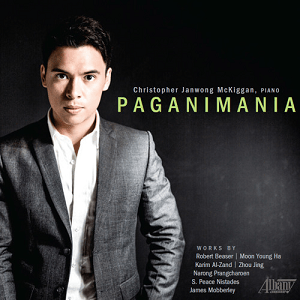 Pianist Christopher Janwong McKiggan was the 2009 collegiate gold medalist from the Seattle International Piano Competition. As he moves forward in his career, he is charting a path of new music, commissioning seven composers in 2012 to compose works for piano inspired by Niccolò Paganini’s 24th Caprice. Beaser’s Pag-Rag is both undeniably fun and a deliciously mean technical challenge for the pianist. A far cry from most listeners’ straightforward idea of a rag, this piece is full of lightning-fast changes of character and texture, giving it unexpected depth and variety. It’s a wonderful showcase of McKiggan’s playing. –
 Cello rock! Heck yeah! You may already be familiar with Break of Reality if you’re one of the 11 million people who have viewed their “Game of Thrones Theme” cello cover on YouTube (it’s badass!), but this group was totally unknown to me until recently. If you like metal you’ll dig this. If you like tribal beats you’ll dig this. If you like classical you’ll dig this. “The Farewell” is cinematic, textural and so beautifully harmonious. –
 I’ll be honest: I don’t really like harpsichord. Even when I hear really good harpsichord music, my first thought is still always “Wow, but imagine if that was played on piano instead!”