ALBUM REVIEW: The Knights: the ground beneath our feet

by Jill Kimball

groundbeneathourfeet

For centuries, the concerto grosso form has served to play up the strengths of a chamber group by highlighting its best virtuosi and calling for a conversation between soloists and orchestra. The Knights, a Brooklyn-based collaborative ensemble, believe that composition form still has room to grow.

They’ve dedicated their latest album, the ground beneath our feet, to the concerto grosso. The album features both classic and new examples of the form, from Bach to Stravinsky to some of the group’s very own composers. The result is a collection of music that’s grounded in a common cause but weightless in execution.

Steve Reich’s Duet for Two Violins and Strings is a lovely way to start off any album. Accessible and dreamy, it’s pleasing to the ear of everyone from classical aficionados to newcomers. Though it’s puzzling to me that an album called the ground beneath our feet would begin with something so gravity-defying, this interpretation soared effortlessly and beautifully enough to make me forget my confusion.

“Effortless” is also the primary word I’d use to describe the performance of Bach’s Concerto for Violin & Oboe. Sometimes it’s difficult to gauge the quality of musicianship in a new-music ensemble whose oeuvre consists mostly of world premieres. But when the Knights pull off a live recording whose quality rivals classic recordings with Hilary Hahn and Yehudi Menuhin, they really prove their mettle. The strings sound a bit less dark, rich and precise than in a classic recording, but that may have more to do with the concert’s setting than with the musicians themselves.

Stravinsky’s “Dumbarton Oaks” concerto is like a mashup of Bach’s Brandenburg Concertos and The Rite of Spring, a really fascinating listen. Stravinsky once said of the piece, “Whether or not the first theme of my first movement is a conscious borrowing from the…Brandenburg set, I do not know. What I can say is that Bach most certainly would have been delighted to loan it to me; to borrow in this way was exactly the sort of thing he liked to do.” It’s true: to borrow an idea from a predecessor and turn it into something that’s unmistakably yours is so like both Bach and Stravinsky. The Knights’ rendition is a little slower than usual–all the better to revel in the complex but very listenable themes interwoven throughout the piece.

If you love recordings from the Silk Road Ensemble, headed by the world-famous cellist Yo-Yo Ma, you’ll probably love the next piece: a joint effort between two composers who met while they played in Silk Road together. One of them, Siamak Aghaei,  spent a lot of time in his native Iran gathering field recordings of folk musicians, and played them back to an excited Colin Jacobsen. Over the years, those field recordings have inspired three co-compositions; this latest effort features violin and santur, a kind of hammered dulcimer dating back to ancient Babylonia.

The title track is a very different sort of concerto, one whose composition was a group effort that drew on The Knights’ individual strengths and musical interests. The whole thing is tied together with a bass line taken from Tarquino Merula’s Ciaccona, and with that common thread is able to morph organically from Baroque symphonic music to creatively syncopated Irish folk music, from melodies influenced by Romani and Indian culture to improvisational drumming and jazzy, Spanish-inspired dance music, complete with claves. It all works for me until the very end, when there’s a silence before Christina Courtin sings “Fade Away,” her own original song. The bass line connection is seemingly lost, and the cartoonish fanfare backing Courtin was odd paired with her lyrics (“I’m not saying I’m afraid of dying, baby / I count my blessings with you every day / But you know I can’t go on this way”). Despite the fact that “Fade Away” would be more at home on a Sufjan Stevens album, I liked its sound.

I reached the end of the CD puzzling, once again, over the title of the disc. What, in this instance, is “the ground beneath our feet?” Common thought is that Bach laid the ground on which all musicians stand today. But the fact is, many contemporary composers choose to leave the ground and explore new frontiers in space.

Take a look at the album art and you’ll see a portrait of Stravinsky cut open and peeled back to reveal a dark, starry abyss. I’ll take this as a sign that The Knights acknowledge the great forces of the past but will sometimes refuse the pull of their gravity.

If the ground beneath our feet has indeed disappeared in parts of this album, that’s okay: outer space sure sounds pretty good to me.

ALBUM OF THE WEEK: Anja Lechner and François Couturier’s Moderato Cantabile

by Maggie Molloy

lechner-coutourier

“I believe that the music belongs to the true interpreter, the true artist,” said 20th century Spanish composer and pianist Federico Mompou. “Here is the music. What does it suggest to you?”

German cellist Anja Lechner and French pianist François Couturier took that challenge head-on in their new album, “Moderato cantabile.”

In addition to featuring compositions by Mompou, the album also includes works by two other influential 20th century scholars and composers: the Armenian priest, singer, musicologist, and composer Komitas and the Greco-Armenian philosopher and spiritual teacher George Ivanovitch Gurdjieff. The spiritual implications of these treasured works are counterbalanced by three of Couturier’s own new compositions which also appear on the album.

cover

Though “Moderato cantabile” is Lechner and Couturier’s first recording as a duo, they have worked together over the past 10 years in music projects such as the Tarkovsky Quartet, created to celebrate the works of Russian filmmaker Andrei Tarkovsky, and “Il Pergolese,” in which they reimagined the music of Neapolitan composer Giovanni Battista Pergolesi as improvisational works.

For their first album together, the two carefully selected a rich palette of pieces featuring elements of folk melodies, Eastern music, spiritualism, minimalism, improvisation, and even jazz. It’s unusual to come across an album with such a vast range of musical inspirations, yet “Moderato cantabile” spins them together seamlessly.

The album showcases both the individual musicianship of each performer as well as their complex musical understanding of each other. Together they bring out the warmth, sincerity, and vibrant colors of each piece.

Mompou’s compositions show an Impressionist influence, softly blending melodies into sparkling mystical images. His “Canción y danza” begins with delicately shimmering piano motifs which later give way to a lyrical cello melody. The piece then transitions into a folk dance, adopting a lively and spirited cello part over a percussive piano backdrop.

Lechner and Couturier also bring to life Mompou’s “Música Callada,” a gentle meditation on the interplay between sound and silence. A simple but thoughtful piano part gently supports the delicate, introspective cello melody. The piece is slow but deliberate; each note is patient and perfectly-crafted, enchanting the listener with each and every melodic gesture.

The duo’s performance of Komitas’s “Chinar es” again toys with elements of folk melodies. Komitas was one of the first music scholars to notate secular Armenian folk songs, and “Chinar es” was one of them. The piece switches back and forth from repetitive piano motifs glimmering above a rhythmic cello bass part to gorgeously resonant cello melodies singing over top of a textured piano backdrop. The result is a timeless and captivating glance into the Armenian folk music tradition.

Gurdjieff’s featured compositions give the album a slightly Eastern sound. Gurdjieff was not a formally trained musician; most of his music was composed of central Asian folk melodies he hummed from memory to composer Thomas de Hartmann, who then transcribed and harmonized them.

His “Sayyid chant” showcases an ethereal, Eastern lyricism woven together with glistening piano phrases and rich, graceful cello melodies, while his “Hymn No. 8 Night Procession” features elegant piano melodies circling around deep, growling cello phrases to create a dark and dramatic ambience.

The album’s more historic works are balanced by a few of Couturier’s own contemporary compositions. The pieces showcase his studies in both classical and jazz, as well as his ear for improvisation. Couturier’s “Voyage,” features warm, ringing cello melodies over softly pedaled piano harmonies.

By contrast, his rhythmic “Soleil Rouge” experiments with elements of dissonance and jazz, while “Papillons” abandons conventional cello techniques in favor of an airy, hollow sound and sparse piano texture. The soft melodies and unique timbres flirt with silence throughout the piece, giving it an unmistakably modern sound.

Lechner’s and Couturier’s interpretation of all the works on the album show a deliberate emphasis on melody and lyricism. The two truly took their time with each piece, their patience and attention to detail ensuring that each and every note echoes with perfect resonance.

ALBUM OF THE WEEK: Jake Schepps Quintet: “Entwined”

by Rachele Hales

jake-schepps-quintet

When I saw Jake Schepps’ latest album sitting in the review pile I chuckled a little remembering an old joke told to me by a friend after I chose the music of Earl Scruggs and Ricky Skaggs as accompaniment on our long road trip:

Friend: Can you read music?

Banjo Player: Not enough to hurt my playing.

Schepps didn’t start playing the banjo until he was 21, which is ancient considering most classical virtuosos are practically born playing their instrument.  Why the banjo?  In an interview with the Wall Street Journal Schepps says, “There are a lot of guitar players out there, but the banjo is different.”

Entwined is not his first ambitious banjo project, but he’s done something unique here by commissioning classically-trained composers to write music meant for a traditional bluegrass string band (banjo, guitar, violin, mandolin, and bass).  The result is progressive, mature, and fun to listen to.  “Everybody wrote pieces to their personalities,” says Schepps, “and I think that this variety really makes a big statement about how much potential there is with the string band for playing new music.”

Like what you hear? Buy it here!

The disc opens with Flatiron, a set of eight pieces composed by Marc Mellits that start with exuberance and capriciousness before relaxing into poise and serenity.  He takes us out of the series with “Dreadnought,” a lively piece that will make you want to grab a pair of spoons and play along on your knee.

Matt McBane is up next with Drawn, a beautiful five-movement composition in which gentle strumming gets stretched almost to minimalism.  Drawn takes typical bluegrass style out of its stiff denim jeans and lets the bareness of it spin and sway across an expansive wilderness.

Matt Flinner, a banjo prodigy and acclaimed mandolin player, returns us to the spirit of bluegrass in Migrations.  He’s ramped up classic Appalachian folk elements and created pieces more balladic than anything else on Entwined.

Gyan Riley concludes the album with something distinct.  Stumble Smooth, which Schepps calls “the burliest piece of music I’ve ever worked on in my life,” draws influence from bluegrass for sure, but also from modernism and free jazz.  The slow buildup highlights the percussive capabilities of the banjo before the piece evolves into what sounds like a fun, frenzied jam session.

Entwined is an adventurous project that champions the versatility of the bluegrass ensemble.  Schepps and his collaborators have given us a loosened-up bluegrass collection that even modern classical lovers will enjoy.  The only question I have is… have you hugged your banjo today?

ALBUM OF THE WEEK: “American Chamber Music” from Seattle Chamber Music Society

by Maggie Molloy
2015-Winter-Festival-Subscription-Image

The U.S. is home to many rich musical traditions. From jazz to country, funk to rock ‘n’ roll, and hip hop to house music, our country has made a name for itself as an innovative and imaginative purveyor of popular music.

But America has also made great contributions to the contemporary classical music genre. Though our country is often overshadowed by Europe’s vibrant and influential musical history, over the past century American composers have played an important role in shaping the future of classical music.

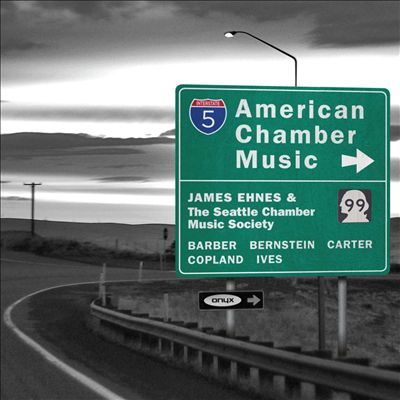
As such, this week’s album celebrates contemporary classical music a little closer to home: the Seattle Chamber Music Society performing an array of works by American composers.

MI0003772297

The album, titled “American Chamber Music,” features several musicians from the Seattle Chamber Music Society, including the group’s artistic director, renowned violinist James Ehnes. Recorded at the Seattle Chamber Music Society’s 2013 Summer Festival, the album is a compilation of works composed by Aaron Copland, Charles Ives, Leonard Bernstein, Elliott Carter, and Samuel Barber.

Ehnes and pianist Orion Weiss begin the album with Copland’s Sonata for violin and piano, a truly lyrical and theatrical work. Copland’s talent for composing balletic music is fully apparent in the piece’s gentle, glistening melodies and its poetic interplay between voices. Ehnes and Weiss play with the grace and elegance of dancers, transitioning flawlessly from the sweet and spirited Andante to the slow and somber Lento before closing with the sprightly, syncopated Allegretto.

Ives’s Largo for violin, clarinet, and piano is next on the program, catching the listener’s ear with its sweet, solemn piano introduction. The piece slowly builds in intensity with the addition of violin and clarinet, the music expanding into rich textures, striking harmonies, and unexpected syncopations before gradually retreating back to a soft, delicate ending.

The work is followed by Bernstein’s Trio for violin, cello, and piano, a theatrical piece with plenty of characters. The first movement features broad, beautiful violin and cello melodies soaring above sparkling piano harmonies. The second movement brings a change in texture, using pizzicato and stressed bowings to craft a busy, energetic soundscape. A lively, fast-paced, and purposeful third movement brings the piece to a dramatic close.

Carter’s “Elegy” for viola and piano is nothing short of enchanting. Violist Richard O’Neill and pianist Anna Polonsky perform the work with sincerity and tenderness, bringing to life melodies at once passionate and vulnerable. Their expressive and poignant performance makes it one of the album’s highlights.

The album finishes strong with Barber’s String Quartet in B minor, Op. 11. The musicians move gracefully through the first movement’s three themes: the first a dramatic motif presented by all four instruments in unison, the second a softer, chorale-like theme, and the third a tender, lyrical melody. The famous second movement features a slow, extended melody which moves through all of the instruments and climaxes dramatically at the quartet’s highest possible pitch range. The short but compelling closing movement brings the piece to dynamic and powerful end.

The passion and urgency of the quartet’s final movement serves as a beautiful, memorable coda for an album full of works by American composers whose determination and imagination helped pave the way for what contemporary classical music is today.

ALBUM OF THE WEEK: Gerald Cohen’s “Sea of Reeds”

by Maggie Molloy

seaofreedsgerald cohen


Of all common woodwind instruments, the clarinet has the largest pitch range. And with over a dozen types of clarinets in its instrument family—with most clarinets ranging around four octaves—the musical possibilities are endless.

Composer Gerald Cohen is exploring that vast ocean of possibilities in his new album for clarinet and chamber ensemble, Sea of Reeds.

“The album is a continuation of my exploration of the clarinet,” Cohen said. “Clarinet has always been an instrument that I love, though I’ve never played a wind instrument. Because it’s so varied in its timbre, range and dynamics, it’s just a wonderful instrument whenever you have a small ensemble, because it gives a lot of varied character and different kinds of sounds to the ensemble.”

The compositions explore the clarinet’s colorful palette of sounds by combining elements of classical, Jewish, and jazz music. A singer and pianist himself, Cohen’s music is heavily influenced by vocal music and lyrical melodies.

“My style is generally within the modern classical realm,” Cohen said. “It tends to be very lyrical and dramatic.”

Cohen’s music is also inspired by his work as a synagogue cantor at Shaarei Tikvah in Scarsdale, N.Y., and as a teacher of cantors at the Jewish Theological Seminary and Hebrew Union College.

“All those three roles—of composer, cantor, and teacher—all nourish and enrich each other,” Cohen noted. “I love the idea of taking materials of Jewish music and Jewish text and writing them in my music in a way that is making it part of concert music; seeing those two worlds come together in very fruitful and interesting ways, and in artful ways as well.”

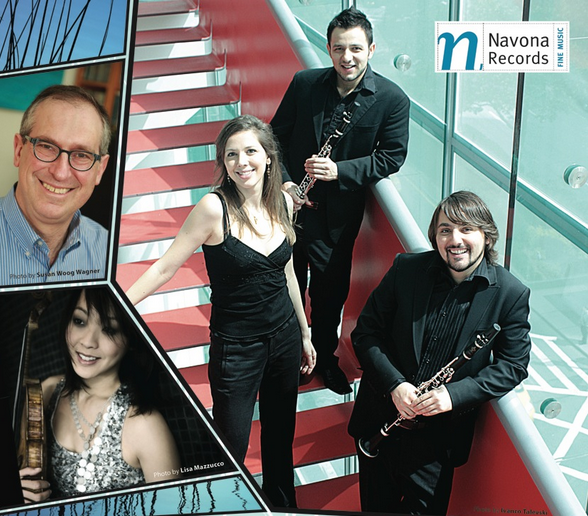
In fact, the album’s title track, “Sea of Reeds” is a set of instrumental arrangements of five of Cohen’s songs on sacred texts. The piece is performed by the Grneta Ensemble, which is made up of clarinetists Vasko Dukovski and Ismail Lumanovski and pianist Alexandra Joan. The piece maintains the melodic expressiveness of the original songs while exploring new timbral and textural possibilities, showcasing both clarinetists’ virtuosity as they gracefully dance through swelling melodies and delicately intertwining musical motifs.

The Grneta Ensemble is also featured in Cohen’s “Grneta Variations.” In fact, Cohen wrote both “Sea of Reeds” and “Grneta Variations” with the ensemble in mind. Having worked closely with the trio over the past five years, Cohen was inspired by their virtuosic playing in both classical and folk music realms.

“To have developed the musical and personal relationship with [the Grneta Ensemble] and for them to have performed these pieces many times and to really have taken them into their musical hearts and souls very fully, that has been very meaningful,” Cohen said. “For me, writing music for wonderful performers who enjoy playing the music is one of the key motivating elements for me as a composer. I love working with great performers and writing music that they’ll love playing.”

“Grneta Variations” is written in the character of a Jewish folk melody, with vivid lyricism and rich rhythmic diversity. The lively melodies and spirited performances from all members of the trio highlight the folk elements of the composition while also showcasing each performer’s virtuosity and individual musical personality.

Another set of variations which appears on the album is “Variously Blue,” which features a sprightly theme using the 12-bar blues progression. The piece, composed for the Verdehr Trio, combines elements of jazz with concert music while exploring the unique timbral possibilities of clarinet, violin, and piano. Cohen’s trademark lyricism shines through the expertly interwoven clarinet and violin melodies dancing above sparkling piano backdrops.

“What I love about sets of variations is I take a musical idea and then just improvise and play with it a lot,” Cohen said. “And then the variations are almost like putting a puzzle together and seeing how the different, widely varying ideas or themes can come together and make a single piece.”

The final piece on the album, “Yedid Nefesh,” is based on a simple, sweet Sephardic setting of a mystical Jewish poem. Cohen wrote the piece for his friend, violist Maria Lambros, who performs on the recording along with clarinetist Vasko Dukovski and pianist Alexandra Joan of the Grneta Ensemble. Together, the three bring to life the piece’s rich tone and vibrant colors, highlighting both the vivacious and the meditative aspects of the delicate melody.

Though each piece on “Sea of Reeds” has its own distinct character and style, Cohen’s gorgeous lyricism flows sweetly through each of them, tying together his exploration of the clarinet’s many diverse colors and dynamics.

“I’d say that every composition that I do—and I think this is true for many composers—is a new exploration, taking your particular voice and finding new ways of expressing yourself within that voice,” Cohen said. “Each piece on ‘Sea of Reeds’ is different.”